Frequently Asked Questions About Capacitors A Comprehensive Guide for Engineering and Procurement Professionals
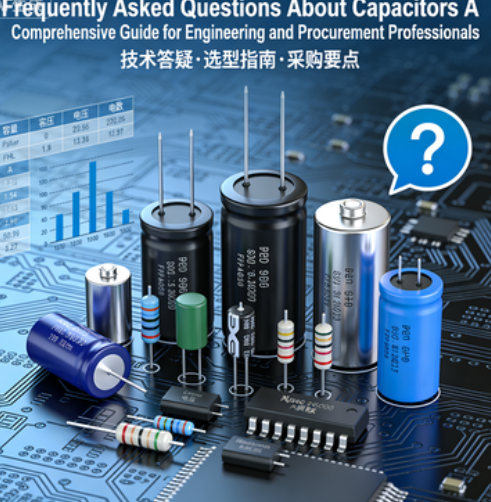
Frequently Asked Questions About Capacitors: A Comprehensive Guide for Engineering and Procurement Professionals
Capacitors are fundamental electronic components that play a critical role in energy storage, signal filtering, voltage regulation, and noise suppression across a wide range of applications, including industrial machinery, automotive systems, consumer electronics, and medical devices. Despite their ubiquity, many engineering and procurement professionals encounter uncertainties when selecting, deploying, or maintaining capacitors. This article addresses the most common questions regarding capacitors, providing authoritative, evidence-based answers to support informed decision-making and optimal component performance.
1. What Are the Key Differences Between Major Capacitor Types, and How to Select the Appropriate Type for Specific Applications?
The selection of a capacitor type is contingent upon application requirements, including capacitance range, voltage tolerance, physical size, operating temperature, and reliability standards. The primary capacitor types and their respective use cases are as follows:
- Multi-Layer Ceramic Capacitors (MLCCs): Characterized by their compact form factor, low equivalent series resistance (ESR), and high frequency response, MLCCs are well-suited for miniaturized electronic devices, such as IoT sensors, smartphones, and automotive control modules. They are available in capacitance ranges from 1pF to 100µF and operate reliably across temperatures ranging from -55°C to +125°C, making them ideal for high-density circuit designs.
- Aluminum Electrolytic Capacitors: Designed for high capacitance applications (1µF to 10,000µF), these capacitors are commonly used in power supply units, audio equipment, and industrial power systems. While cost-effective for bulk capacitance needs, they have a larger footprint and shorter operational lifespan (1,000–10,000 hours at 105°C) due to electrolyte degradation over time.
- Tantalum Capacitors: Renowned for their high reliability, stable capacitance, and low leakage current, tantalum capacitors are preferred for critical applications such as medical devices, aerospace systems, and military equipment. They offer moderate capacitance ranges (0.1µF to 100µF) but are more expensive and sensitive to voltage overstress.
- Film Capacitors: Suitable for high-voltage, high-frequency applications (e.g., power inverters, industrial motor drives), film capacitors exhibit low dielectric loss, high insulation resistance, and excellent temperature stability. They are available in capacitance ranges from 100pF to 100µF and are resistant to voltage spikes and mechanical stress.
Selection should be guided by a thorough assessment of the application’s electrical requirements, environmental conditions, and cost constraints. For most modern compact electronics, MLCCs are the preferred choice, while aluminum electrolytic or film capacitors are recommended for high-capacitance or high-voltage scenarios.
2. What Factors Contribute to Capacitance Degradation, and How Can It Be Mitigated?
Capacitance degradation is a common issue that can compromise device performance and lead to premature component failure. The primary factors influencing capacitance loss vary by capacitor type, and proactive measures can be implemented to mitigate this phenomenon:
- DC Bias Effect: This is a critical concern for MLCCs, where capacitance decreases proportionally with the application of DC voltage. For example, applying 50% of the maximum rated voltage to an X7R dielectric MLCC can result in a 10–30% reduction in capacitance, while Y5V dielectrics may experience a capacitance drop of over 50%. Mitigation involves oversizing the capacitor’s voltage rating by 50–100% and selecting stable dielectrics (e.g., X7R, C0G) for applications requiring consistent capacitance.
- Temperature Fluctuations: Extreme temperatures can accelerate capacitance loss, particularly in electrolytic capacitors. High temperatures cause electrolyte drying, while low temperatures increase dielectric resistance. To address this, select capacitors with temperature ratings that exceed the application’s operating range and avoid placing capacitors near heat-generating components.
- Aging and Environmental Exposure: Over time, capacitors degrade due to chemical reactions within the dielectric material. Exposure to humidity, dust, and corrosive substances can further accelerate this process. Implementing proper enclosure design and selecting capacitors with hermetic sealing (where applicable) can extend component lifespan.
Regular testing and maintenance, including capacitance measurement with a calibrated multimeter, can help detect degradation early and prevent costly system failures.
3. How to Determine the Appropriate Voltage Rating for a Capacitor in a Given Circuit?
Selecting the correct voltage rating is essential to ensure capacitor safety and performance. Using a capacitor with an insufficient voltage rating can result in dielectric breakdown, component failure, or even catastrophic damage to the circuit. Conversely, overrating a capacitor may increase cost and physical size unnecessarily. The following steps outline the process for determining the appropriate voltage rating:
- Calculate the Maximum Circuit Voltage: Determine the peak voltage (not the average RMS voltage) in the circuit, including any voltage spikes or transients that may occur during operation. Voltage spikes are common in power supply circuits, motor-driven systems, and inductive loads.
- Apply a Safety Margin: For most industrial and consumer applications, a safety margin of 1.5–2 times the maximum circuit voltage is recommended. For example, if the peak circuit voltage is 12V, a capacitor with a 25V rating should be selected. For high-temperature or high-reliability applications (e.g., automotive, aerospace), a safety margin of 2x or higher is advised to account for voltage derating due to heat.
- Consult Manufacturer Datasheets: Verify the capacitor’s voltage derating curve, which specifies how the maximum safe voltage decreases with increasing temperature. This is particularly important for MLCCs and electrolytic capacitors, which are more sensitive to temperature-induced voltage limitations.
4. Are Capacitors Interchangeable, and What Are the Risks of Using an Incorrect Capacitor?
Capacitors are not interchangeable unless they meet all critical specifications, and substituting an incorrect capacitor can lead to severe performance issues or system failure. The key specifications that must be matched include:
- Voltage Rating: Using a capacitor with a lower voltage rating than required will result in dielectric breakdown, leading to capacitor failure and potential damage to other circuit components. A higher voltage rating is safe but may not be economically or physically feasible.
- Capacitance Value: A capacitor with a capacitance value lower than specified may fail to filter noise effectively, store insufficient charge, or cause voltage regulation issues. A higher capacitance value can lead to excessive current draw, circuit delays, or damage to sensitive components such as microcontrollers.
- Dielectric Type: For MLCCs, dielectric types (e.g., X7R, Y5V, C0G) have distinct stability characteristics. Swapping dielectrics can result in unpredictable capacitance changes, particularly under varying voltage or temperature conditions.
- Equivalent Series Resistance (ESR) and Equivalent Series Inductance (ESL): ESR and ESL affect the capacitor’s performance at high frequencies. Using a capacitor with higher ESR/ESL than specified can cause overheating, signal distortion, or reduced filtering efficiency.
If a capacitor substitution is necessary, it is imperative to match voltage rating, capacitance, and dielectric type first. Additional parameters, such as ESR, ESL, and temperature rating, should be verified against the manufacturer’s datasheet to ensure compatibility.
5. What Compliance Requirements Apply to Capacitors, and How to Ensure Compliance?
Capacitors must comply with global regulatory standards to ensure safety, environmental sustainability, and market access. The primary compliance requirements include:
- RoHS Compliance: The European Union’s Restriction of Hazardous Substances (RoHS) directive restricts the use of lead, cadmium, mercury, and other hazardous substances in electronic components. Capacitors must contain less than 0.1% lead by weight to be RoHS-compliant.
- REACH Compliance: The Registration, Evaluation, Authorization, and Restriction of Chemicals (REACH) regulation requires manufacturers to register and evaluate the safety of chemicals used in capacitors, ensuring they do not pose a risk to human health or the environment.
- Automotive Standards: For automotive applications, capacitors must comply with IATF 16949 (quality management system) and AEC-Q200 (stress test qualification for passive components), ensuring reliability under harsh automotive conditions.
- Medical Standards: Capacitors used in medical devices must comply with ISO 13485 (quality management for medical devices) and relevant regional regulations, such as the U.S. FDA’s Good Manufacturing Practices (GMP).
To ensure compliance, procurement professionals should source capacitors from reputable suppliers who provide valid certification documents (e.g., RoHS certificates, REACH declarations). Additionally, verifying the capacitor’s marking (e.g., Pb-free symbol, RoHS label) and conducting periodic compliance audits can help mitigate risks.
Conclusion
Capacitors are integral to the functionality of modern electronic systems, and understanding their characteristics, selection criteria, and compliance requirements is essential for engineering and procurement professionals. By addressing the common questions outlined in this guide, professionals can make informed decisions, optimize component performance, and minimize the risk of system failures. For specialized applications or further guidance on capacitor selection, consulting with experienced component manufacturers or engineering experts is recommended.
Barron MLCC offers a comprehensive range of high-quality capacitors, including MLCCs, aluminum electrolytic capacitors, and film capacitors, all compliant with global regulatory standards. Our team of engineering experts is available to provide personalized advice and support to meet your specific application needs.
Top 5 Rarely Addressed Challenges in MLCC Selection
Common Capacitor Questions Expert Answers to Solve Your Design Sourcing Challenges
مقالات لها صلة