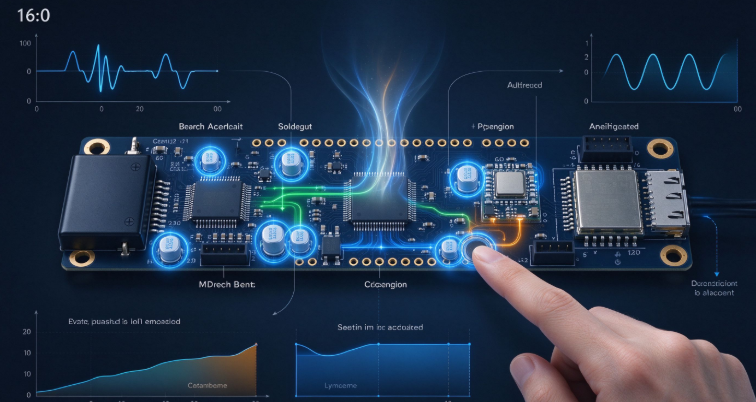
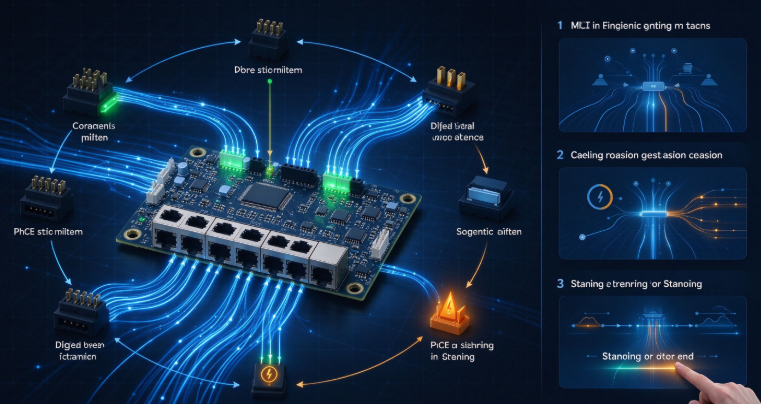
How Core Electronic Components Define High-End Electronic Products
How Core Electronic Components Define High-End Electronic Products: 5 Critical Questions Answered
- How component selection defines premium consumer electronics (flagship phones/pro cameras)?
- Special component designs for high-performance gaming gear (RTX 5090/flagship motherboards)?
- Judge smart home quality via electronic component configuration?
- Industrial vs consumer-grade electronic components core differences?
- DAC chips/op-amps role in high-end HiFi audio equipment?
High-end electronic products—from flagship smartphones and pro-grade gaming GPUs to HiFi audio players and industrial-grade smart sensors—are distinguished not just by sleek design or brand prestige, but by the precision, durability, and performance of their underlying electronic components. The right selection of capacitors, chips, resistors, and other core parts is what elevates a device from "consumer-grade" to "premium" status, delivering the reliability, speed, and user experience that discerning buyers demand.
1. How Does Core Electronic Component Selection Determine the Premium Positioning of High-End Consumer Electronics (e.g., Flagship Phones, Pro Cameras)?
The "high-end" label of consumer electronics (like the latest iPhone Pro or Sony Alpha mirrorless camera) is directly tied to the quality, rarity, and engineering of their core electronic components. Component selection dictates everything from processing speed and battery life to camera sensor performance and thermal stability.
| Component Type | Role in High-End Devices | Consumer-Grade vs. High-End Component Differences |
|---|---|---|
| System-on-Chip (SoC) | Powers all core functions (processing, AI, graphics) | High-end: Custom-designed SoCs (e.g., Apple A18 Pro, Qualcomm Snapdragon 8 Gen 4) with 3nm/2nm fabrication; consumer-grade: off-the-shelf 4nm/5nm chips with limited AI cores |
| Camera Image Sensors | Captures light for photography/videography | High-end: Large-format sensors (1-inch or bigger, e.g., Sony LYTIA 900) with backside illumination (BSI) and stacked design; consumer-grade: smaller 1/1.7-inch sensors with basic BSI |
| High-Density Batteries | Delivers sustained power | High-end: Silicon-carbon anode batteries (higher energy density, faster charging); consumer-grade: traditional lithium-ion batteries with slower charge cycles |
| Display Driver ICs | Controls screen resolution/refresh rate | High-end: ICs supporting 120Hz+ adaptive refresh (e.g., ProMotion for iPhones) and 2K+/4K resolution; consumer-grade: fixed 60Hz/90Hz drivers for 1080p displays |
Why This Selection Matters for Premium Positioning
- Performance Differentiation: Custom SoCs with advanced nodes (2nm/3nm) reduce power consumption while boosting processing speed by 30–40% compared to consumer-grade chips, enabling features like real-time 8K video editing on smartphones.
- Brand Exclusivity: Many high-end brands (e.g., Apple, Samsung) partner with component manufacturers for exclusive parts (e.g., Sony’s custom image sensors for iPhone Pro), creating a competitive moat that cheaper devices can’t replicate.
- User Experience: High-end display driver ICs and batteries ensure smooth, lag-free operation and all-day battery life—key pain points that justify premium price tags ($1,000+ for flagship phones).
SEO Keyword Focus: flagship smartphone core components selection, high-end pro camera electronic components, premium consumer electronics component differentiation
2. What Special Electronic Component Designs Support the High Performance of Premium Gaming Gear (e.g., RTX 5090 GPUs, Flagship Motherboards)?
Gaming devices demand extreme performance (4K/120fps gaming, AI-powered ray tracing) and thermal resilience, which requires specialized electronic component designs that go beyond standard consumer hardware. These components are engineered to handle high power loads, reduce heat buildup, and maintain stability during marathon gaming sessions.
| Gaming Device | Critical Component | Unique Design Feature | Performance Impact |
|---|---|---|---|
| RTX 5090 GPU | High-Current Capacitors | 16-layer PCB with solid-state capacitors (instead of electrolytic) and 12+2 power phases | Supports 600W+ power delivery; reduces voltage ripple by 70% for stable ray tracing |
| Flagship Gaming Motherboard | VRM (Voltage Regulator Module) | DrMOS (driver + MOSFET) design with 20+ power phases and heatsink covers | Delivers consistent power to CPUs (e.g., Intel Core i9-14900K, AMD Ryzen 9 7950X) during overclocking |
| Pro Gaming Laptop | Liquid-Cooled Heat Pipes | Vapor chamber heat pipes (instead of traditional copper pipes) with dual fans | Dissipates 150W+ heat from GPU/CPU; keeps components 10–15°C cooler than air-cooled laptops |
| Wireless Gaming Headset | Low-Latency Bluetooth ICs | Custom Bluetooth 5.4 LE Audio ICs with aptX Lossless codec support | Reduces audio latency to <20ms (vs. 50ms+ for consumer headsets); preserves HiFi sound quality |
Real-World Example: RTX 5090’s Component Edge
NVIDIA’s RTX 5090 uses a GA102 GPU die with 18,000+ CUDA cores, paired with solid-state capacitors and a 16-phase power supply. This design allows the GPU to maintain boost clocks of 2.8GHz (vs. 2.2GHz for mid-range RTX 5060) for hours of 4K ray-traced gaming without throttling—a feature that makes it the top choice for professional gamers and content creators.
SEO Keyword Focus: RTX 5090 gaming device special component design, flagship gaming motherboard VRM design, high-performance gaming electronics components
3. How to Judge High-End Smart Home Product Quality & Durability Through Its Electronic Component Configuration?
Premium smart home devices (e.g., $500+ smart thermostats, luxury robotic vacuums, high-end security cameras) promise long-term reliability and advanced connectivity—but their quality is only as good as their internal components. For buyers, evaluating component specs is the key to avoiding premature failures and ensuring seamless smart home integration.
| Component | Consumer-Grade Red Flag | High-End Premium Indicator | Impact on Durability/Quality |
|---|---|---|---|
| Wireless Connectivity ICs | Basic Wi-Fi 5 (802.11ac) chips with no Zigbee/Z-Wave support | Wi-Fi 6E + Matter-compatible ICs (e.g., Silicon Labs EFR32) with dual-band connectivity | Premium ICs reduce signal dropout by 40%; Matter support ensures cross-brand compatibility for 10+ years |
| Power Supply Units (PSUs) | Uncertified (no UL/CE) PSUs with electrolytic capacitors | UL/FCC-certified PSUs with solid-state capacitors and surge protection | Premium PSUs last 8–10 years (vs. 3–5 for consumer-grade); surge protection prevents damage from voltage spikes |
| Motion Sensors | Low-resolution PIR sensors with limited detection range | High-precision radar + PIR hybrid sensors (e.g., Bosch Smart Sensors) | Hybrid sensors reduce false triggers by 60%; work in low-light/extreme temperatures |
| Battery Cells (Wireless Devices) | Generic lithium-ion cells with <500 charge cycles | Samsung/Sony lithium-polymer cells with 1,000+ charge cycles and BMS (Battery Management System) | Premium batteries retain 80% capacity after 5 years (vs. 50% for consumer-grade); BMS prevents overcharging/fires |
Step-by-Step Component Evaluation Checklist for Buyers
- Check the product’s spec sheet for connectivity standards (prioritize Wi-Fi 6E/Matter over Wi-Fi 5).
- Verify PSU certifications (UL, CE, or FCC) to ensure safety and durability.
- Look for sensor type (hybrid radar/PIR is better than standalone PIR for security cameras/thermostats).
- Research battery cell manufacturers (Samsung/Sony cells indicate premium quality).
SEO Keyword Focus: high-end smart home electronic components configuration, judge premium smart home product durability via components, luxury smart home device component specs
4. What Core Differences in Electronic Components Separate High-End Industrial-Grade Electronics from Consumer-Grade Products?
Industrial-grade electronics (e.g., factory control systems, outdoor weather sensors, medical monitoring devices) operate in harsh environments (extreme temperatures, dust, vibration) and require components that prioritize reliability over cost or compactness—making them vastly different from consumer-grade gear.
| Component Aspect | Consumer-Grade Electronics | High-End Industrial-Grade Electronics | Rationale for Industrial Design |
|---|---|---|---|
| Operating Temperature Range | 0°C to 40°C (room temperature only) | -40°C to 85°C (or wider for extreme environments) | Industrial components work in freezers, factories, or desert locations without failure |
| Component Packaging | Small, surface-mount packages (prioritize compactness) | Rugged through-hole or hermetically sealed packages | Hermetic sealing prevents dust/moisture ingress; through-hole designs resist vibration from factory machinery |
| Reliability Rating (MTBF) | 1,000–5,000 MTBF (Mean Time Between Failures) | 100,000+ MTBF (often 1M+ for critical systems) | Industrial systems need 24/7 uptime (e.g., hospital monitors can’t fail mid-operation) |
| EMC (Electromagnetic Compatibility) | Basic EMC shielding (for home interference) | Military-grade EMC shielding (e.g., MIL-STD-461) | Blocks interference from factory machinery, radio towers, or medical equipment |
Real-World Application: Industrial Weather Sensors
A high-end industrial weather sensor uses hermetically sealed pressure sensors (operating range -40°C to 85°C) and military-grade EMC shielding, allowing it to collect data in Arctic tundras or desert oil fields. A consumer-grade weather sensor (with plastic-sealed components) would fail within 6 months in these environments due to temperature extremes or dust ingress.
SEO Keyword Focus: industrial vs consumer grade electronic components differences, high-end industrial electronics component design, rugged industrial electronic components for harsh environments
5. What Decisive Roles Do Core Electronic Components (e.g., DAC Chips, Op-Amps) Play in High-End HiFi Audio Equipment?
HiFi audio enthusiasts prioritize "pure, uncompressed sound," and this is entirely dependent on the quality of audio-specific electronic components. High-end DAC (Digital-to-Analog Converter) chips and op-amps (operational amplifiers) are the backbone of premium audio gear, translating digital audio files into the rich, detailed sound that sets HiFi devices apart from budget headphones or speakers.
| Component | Budget Consumer Audio | High-End HiFi Audio | Impact on Sound Quality |
|---|---|---|---|
| DAC Chip | Basic 16-bit/44.1kHz DACs (e.g., Realtek ALC897) | 32-bit/384kHz flagship DACs (e.g., ESS Sabre ES9038Pro, AKM AK4499) | HiFi DACs reduce harmonic distortion to <0.0001% (vs. 0.1% for budget chips); support lossless audio formats (DSD, MQA) |
| Op-Amp | Generic op-amps with high noise floor | Low-noise, high-gain op-amps (e.g., OPA1612, LME49720) | HiFi op-amps eliminate background hiss; deliver precise signal amplification for subtle audio details (e.g., vocal harmonies, instrument reverb) |
| Capacitors (Audio Circuits) | Electrolytic capacitors (prone to signal degradation) | Polypropylene or film capacitors (low ESR, high stability) | Premium capacitors preserve signal integrity; avoid the "muffled" sound caused by electrolytic capacitor leakage |
| Headphone Amplifier ICs | Low-power amplifiers (≤100mW output) | High-power, low-distortion amplifiers (≥1W output, e.g., THX AAA) | HiFi amplifiers drive high-impedance headphones (300Ω+) with ease; maintain clarity at high volumes |
Example: HiFi Player Component Synergy
A $2,000 HiFi portable player (e.g., Astell&Kern A&ultima SP3000) pairs the ESS ES9038Pro DAC with LME49720 op-amps and polypropylene capacitors. This combination delivers studio-quality sound with 32-bit/384kHz resolution, allowing listeners to distinguish between the subtle tones of a violin’s strings and the room’s natural reverb—an experience budget audio players (with basic DACs) can’t replicate.
SEO Keyword Focus: HiFi audio DAC chip impact on sound quality, high-end op-amps for premium audio equipment, core components of luxury HiFi players
Final Thoughts: The Component-Premium Product Link
High-end electronic products—whether flagship smartphones, gaming GPUs, smart home gear, industrial sensors, or HiFi audio devices—are defined by their electronic components first and foremost. Premium component selection, specialized designs, and rigorous testing are what justify their high price tags and deliver the performance, durability, and user experience that discerning buyers seek.
By understanding the role of core components in high-end gear, you can make smarter purchasing decisions, troubleshoot device issues more effectively, and even customize devices for enhanced performance. For industry professionals, this knowledge also helps in sourcing components that align with product premiumization goals.
Call to Action
Have you ever upgraded the components of a high-end electronic device to boost its performance? Or have you encountered a premium product that failed due to low-quality internal components? Share your experiences, questions, or component upgrade tips in the comments below—we’ll provide expert insights to help you maximize the value of your high-end electronics!
How Core Electronic Components Define High-End Electronic Products
Key Questions About Electronic Components and Their Related Electronic Products
Article associé