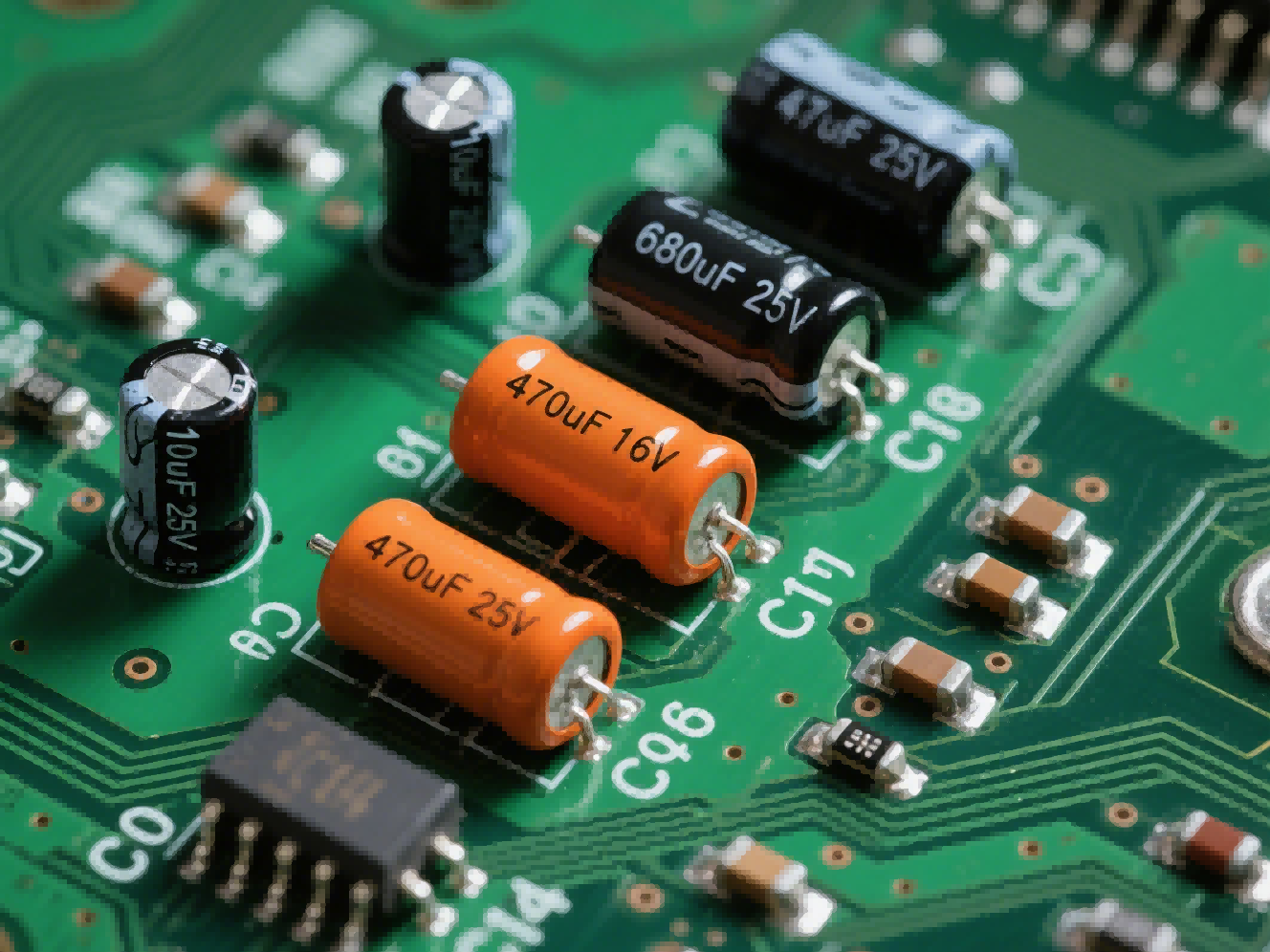
MLCCs for Gaming Consoles Supporting High Performance Processors and Stable Power Delivery
MLCCs for Gaming Consoles: Supporting High-Performance Processors and Stable Power Delivery
ceramic capacitors for gaming consoles, MLCCs for GPU power circuits, gaming console PCB components, MLCC selection for electronics
Modern gaming consoles are powerful electronic systems designed to process complex graphics, run demanding software, and deliver smooth gaming experiences. Their main circuit boards contain high-performance processors, graphics processing units (GPUs), memory devices, storage controllers, and multiple high-speed interfaces.
These components require carefully designed power distribution networks. Fast changes in processor activity can create sudden current demands, making local decoupling and power supply stability important design considerations.
Multilayer ceramic capacitors (MLCCs) are widely used in gaming console circuit boards. Their compact size and electrical characteristics make them suitable for high-density PCB designs.
This article explains the major applications of MLCCs in gaming consoles and the factors engineers should consider when selecting them.
1. CPU and GPU Power Delivery
The CPU and GPU are among the most demanding components in a gaming console. They process game logic, graphics, physics calculations, and other workloads.
Their power consumption can change rapidly depending on the game and processing activity.
MLCCs are commonly placed around processor power circuits to support local decoupling and reduce high-frequency power supply impedance.
Typical applications include:
- Decoupling around CPU and GPU power rails
- Filtering near voltage regulator modules (VRMs)
- Supporting transient current response
- Reducing high-frequency supply noise
X5R and X7R MLCCs are commonly considered for general-purpose power decoupling. Engineers must evaluate effective capacitance under actual DC bias and operating temperature conditions.
The final capacitor arrangement should follow the processor and power management reference designs.
2. Memory Power Supply Circuits
Gaming consoles use high-speed memory to store and access data required by the processor and GPU.
Memory systems may include GDDR memory, DDR memory, or other storage technologies, depending on the platform architecture.
MLCCs can be used near memory power pins to provide local decoupling and support stable supply conditions.
Important design considerations include:
- Recommended capacitance for each power rail
- Capacitor placement near memory devices
- Power distribution network impedance
- Operating voltage and temperature
- PCB layout and grounding
Engineers should follow the memory manufacturer's technical documentation rather than selecting capacitors based only on nominal capacitance.
3. Voltage Regulator Modules and Power Filtering
Gaming consoles contain multiple voltage regulator circuits to convert input power into the voltage levels required by different components.
These circuits may supply the CPU, GPU, memory, storage, and other electronic sections.
MLCCs are often used at the input and output of power regulators according to the regulator manufacturer's design requirements.
Their applications may include:
- Input voltage filtering
- Output ripple filtering
- High-frequency decoupling
- Local power supply stabilization
The selection process should consider regulator stability requirements, capacitor effective capacitance, ripple conditions, and PCB layout.
MLCCs work alongside other components, such as inductors and bulk capacitors, in the overall power management system.
4. High-Speed Data Interfaces
Gaming consoles connect to displays, storage devices, controllers, and network equipment through high-speed interfaces.
Examples may include HDMI, USB, PCIe, and other platform-specific interfaces.
MLCCs may be used in supporting power supply circuits and, where required by the interface design, as AC coupling or filtering components.
However, not every interface capacitor is interchangeable. Signal integrity depends on the interface specification, transmission line design, PCB stack-up, and component characteristics.
Engineers should follow the interface controller manufacturer's reference design and verify the required capacitor values and placement.
5. SSD and Storage Controller Circuits
Many modern gaming consoles use solid-state storage to load games and access large amounts of data quickly.
Storage systems may include SSD controllers, flash memory, and high-speed communication interfaces.
MLCCs are commonly used for local power decoupling around storage controllers and memory devices.
They can also support power filtering in the surrounding circuits.
When selecting capacitors, engineers should consider the storage controller's power requirements, transient current behavior, operating temperature, and recommended layout.
6. Wireless and Network Communication
Gaming consoles often include Wi-Fi, Bluetooth, and wired Ethernet connectivity.
These communication systems allow users to access online games, download updates, connect wireless controllers, and communicate with other devices.
MLCCs may be used in:
- Power decoupling for wireless modules
- High-frequency power filtering
- RF matching networks where specified
- Local filtering around communication ICs
C0G/NP0 capacitors may be suitable for selected RF matching applications where stable capacitance and low dielectric loss are important.
X5R and X7R capacitors are commonly used for general power decoupling.
The final component selection should follow the communication module manufacturer's reference design.
7. Thermal and Mechanical Design Considerations
Gaming consoles can operate for extended periods under demanding workloads. Their internal temperatures may increase during intensive gaming or high-performance processing.
Engineers should select MLCCs with suitable temperature characteristics and consider the thermal conditions around the PCB.
Mechanical stress is another important factor. Large PCBs, heavy components, assembly processes, and enclosure-related stress can contribute to board flexure.
Excessive PCB bending may cause cracks in ceramic capacitors.
For designs exposed to mechanical stress, engineers should consider:
- Suitable capacitor placement
- PCB layout and board support
- Assembly and depaneling procedures
- Flexible or soft-termination MLCC options where appropriate
These measures should be evaluated as part of the complete mechanical reliability design.
8. How to Select MLCCs for Gaming Consoles
Selecting suitable MLCCs requires consideration of both electrical and mechanical requirements.
- Capacitance: Choose values according to the power rail, filtering function, or interface specification.
- Rated Voltage: Ensure the rated voltage is appropriate for the operating conditions and design margin.
- Dielectric Material: X5R and X7R are common for general power decoupling. C0G/NP0 may be suitable for selected RF and precision circuits.
- DC Bias Performance: Class II MLCCs can experience significant capacitance reduction under DC voltage. Check the manufacturer's bias curves.
- Package Size: Common packages include 0402, 0603, 0805, and larger sizes. Selection depends on electrical performance, available PCB space, and assembly requirements.
- Temperature Range: Verify that the capacitor can operate within the expected thermal environment.
- Mechanical Reliability: Consider PCB bending, assembly stress, and termination options for mechanically demanding locations.
9. Common MLCC Selection Mistakes
When designing gaming console circuit boards, engineers and purchasing teams should avoid several common mistakes:
- Selecting capacitors only by nominal capacitance
- Ignoring DC bias effects
- Using unsuitable dielectric materials in RF circuits
- Overlooking voltage and temperature margins
- Replacing components without checking regulator stability requirements
- Ignoring PCB bending and assembly stress
- Assuming that capacitors with the same package size are electrically equivalent
A reliable replacement process should compare the complete datasheet specifications and verify compatibility with the original circuit design.
Frequently Asked Questions
Q1: Where are MLCCs used in gaming consoles?
They are commonly used in CPU and GPU power circuits, memory supplies, voltage regulators, storage controllers, wireless modules, and interface-related circuits.
Q2: Which dielectric is commonly used for gaming console power circuits?
X5R and X7R MLCCs are commonly considered for general power filtering and decoupling. C0G/NP0 may be used in selected RF or precision applications.
Q3: Why are MLCCs important in GPU power circuits?
GPUs can experience rapid changes in current demand. MLCCs provide local decoupling and help reduce high-frequency power supply impedance as part of the overall power distribution network.
Q4: Can a higher-capacitance MLCC replace an existing capacitor?
Not automatically. Engineers must check voltage rating, effective capacitance, tolerance, ESR, package size, and power regulator stability requirements.
Q5: What should buyers provide when sourcing MLCCs for gaming consoles?
Buyers should provide capacitance, tolerance, rated voltage, dielectric type, package size, manufacturer preference, and estimated order quantity.
Conclusion
Gaming consoles combine powerful processors, high-speed memory, storage, and advanced communication technologies in compact electronic systems.
MLCCs support these circuits through power decoupling, filtering, and selected high-frequency applications. Choosing the right components requires attention to DC bias, voltage rating, dielectric characteristics, temperature range, PCB layout, and mechanical stress.
For more MLCC product information and sourcing options, visit Barron MLCC at //www.barronmlcc.com/. You can also submit your required specifications and target quantities to discuss suitable component options for your gaming console projects.
Contact Us For MLCC Inquiry
Email: hyc2355937758@gmail.com
WhatsApp:8615913754866
Tel: 86+18824523083
Website: www.barronmlcc.com
Why Choosing a Reliable Manufacturing Partner Matters for Global Buyers
Related Article


From the extreme precision of Advanced Beauty Devices to the decade-long durability required by Smart Meters (Water/Gas/Electricity), our MLCCs bridge the gap between industrial rigor and consumer elegance. We offer full-scale Production, OSAT, and Processing services to ensure your high-end consumer tech remains safe and accurate.
? Explore our specialized product catalog: https://barronmlcc.com