MLCCs in PoE Equipment Design Considerations for Ethernet Switches and Powered Devices
MLCCs in PoE Equipment: Design Considerations for Ethernet Switches and Powered Devices
Power over Ethernet (PoE) technology allows compatible network equipment to transmit electrical power and data through the same Ethernet cable. It is widely used in applications such as IP cameras, wireless access points, VoIP phones, and network-connected sensors.
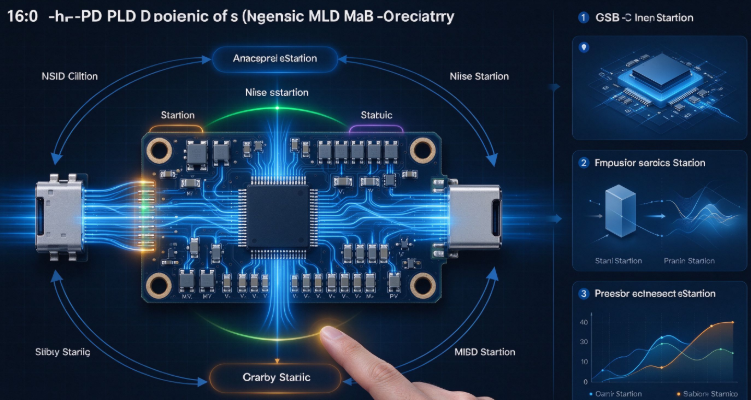
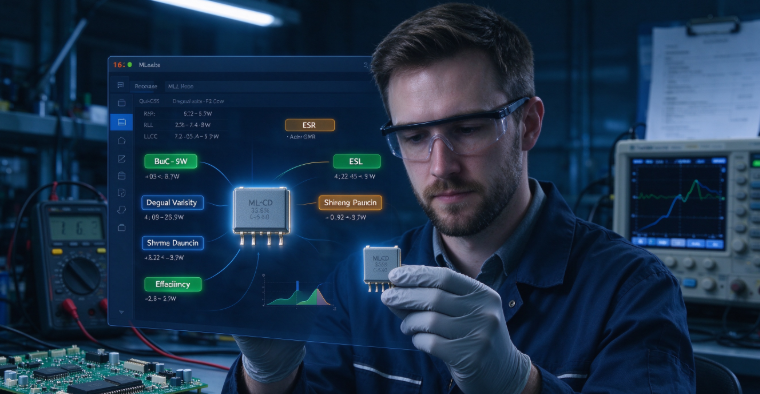
Inside PoE equipment, multilayer ceramic capacitors (MLCCs) help stabilize power rails, filter high-frequency noise, and support the operation of power conversion circuits. Their performance can affect power integrity, electromagnetic compatibility, and the reliability of the overall device.
However, selecting MLCCs for PoE equipment requires more than matching a capacitance value. Engineers must consider the circuit location, operating voltage, transient conditions, effective capacitance, temperature, and PCB layout.
This guide explains the main roles of MLCCs in PoE systems and provides practical considerations for component selection and validation.
1. Understanding the Role of MLCCs in PoE Systems
A typical PoE system includes two major device categories:
- Power sourcing equipment (PSE): Supplies power through Ethernet ports. Examples include PoE switches and midspan injectors.
- Powered devices (PDs): Receive power from the Ethernet connection. Examples include IP cameras, wireless access points, and VoIP phones.
Both device types may contain several power-related circuit blocks, although the exact architecture varies by product.
MLCCs may be used for:
- Input filtering and local bypassing
- DC-DC converter input and output decoupling
- Power supply noise reduction
- Controller and processor supply stabilization
- High-frequency filtering in selected signal and control circuits
The required capacitor specifications depend on the electrical function. A capacitor near a low-voltage processor supply has different requirements from one connected to a higher-voltage PoE power path.
Identifying each capacitor's role is therefore the starting point for effective selection.
2. Input Filtering and Voltage Considerations
PoE powered devices receive DC power through the Ethernet connection. Their input circuitry may include protection components, rectification or polarity-handling circuitry, filtering, and a downstream DC-DC converter.
MLCCs can provide local high-frequency bypassing and help reduce unwanted noise on suitable DC nodes.
When selecting capacitors for these circuits, engineers should review three factors.
Rated voltage and transient conditions
The selected capacitor must tolerate the maximum voltage that can appear across it during normal operation and relevant transient events.
Do not select a capacitor using only the nominal input voltage. Account for the circuit topology, voltage variation, protection strategy, and potential switching transients.
Voltage ratings should be evaluated at the actual component terminals rather than inferred from the overall system voltage alone.
Effective capacitance
Class II ceramic dielectrics, including X7R and X5R, can provide relatively high capacitance in compact packages. However, their capacitance may decrease under DC bias.
For a filter or converter input, this reduction can change the circuit's actual performance. Engineers should consult the manufacturer's capacitance-versus-voltage data and verify that sufficient capacitance remains under operating conditions.
Protection coordination
MLCCs are not substitutes for the complete input protection network. Depending on the design, surge protection, current limiting, and other protective measures may be required.
The capacitor must be selected as part of the overall circuit rather than treated as an independent solution to every input disturbance.
3. MLCCs in PoE DC-DC Converters
A powered device commonly converts the received DC power into one or more regulated voltages for processors, image sensors, memory, wireless circuitry, and other loads.
The converter may use a flyback, buck, or other topology depending on its input range, output requirements, and isolation needs.
MLCCs can serve as input bypass capacitors, output capacitors, and local decoupling components.
Input-side decoupling
Input capacitors help supply high-frequency current demanded by the switching converter and reduce disturbances on the input rail.
The required capacitance and voltage rating depend on the converter design. Placement is also important: a long connection between the capacitor and switching circuit can add parasitic inductance and reduce high-frequency effectiveness.
Output filtering
Output capacitors work with the converter's inductors, switching elements, and control system to meet output ripple and transient-response requirements.
A design may use ceramic capacitors alone or combine them with other capacitor technologies. The appropriate arrangement depends on the converter's stability requirements, load profile, and expected operating conditions.
Control-loop compatibility
Changing the output capacitance or its equivalent series resistance (ESR) can affect some converter control loops.
Before replacing an approved capacitor with an alternative MLCC, verify the converter manufacturer's requirements and test stability across the intended input and load range.
Simply increasing capacitance does not guarantee improved performance.
4. Managing Switching Noise and EMI
PoE switches and powered devices combine Ethernet communication with power conversion. Switching regulators, digital processors, and high-speed interfaces can create different sources of electrical noise.
MLCCs support noise control by providing low-impedance paths for high-frequency currents, but their effectiveness depends on the circuit and PCB layout.
Keep decoupling paths short
Place decoupling capacitors close to the power pins they serve. Keep the connections to the supply and return paths short and direct.
Unnecessary trace length and vias increase parasitic inductance, which can reduce the effectiveness of a capacitor at high frequencies.
Separate power and sensitive signal considerations
Power conversion circuits and sensitive communication circuitry may require careful layout and return-current management.
Capacitor placement should follow the reference design and the intended current paths. Arbitrarily adding capacitors to Ethernet signal lines can affect signal integrity and should not be used as a substitute for a properly designed interface.
Validate the complete design
EMI performance depends on multiple factors, including switching speed, PCB geometry, grounding, cabling, filtering, and enclosure design.
Engineers should evaluate the complete product using suitable measurements and applicable EMC requirements. A capacitor's low ESR or ESL alone cannot establish compliance.
5. Choosing the Right Dielectric and Package
Different MLCC dielectrics offer different balances of capacitance, stability, and size.
| Dielectric | Typical characteristics | Potential PoE applications |
|---|---|---|
| C0G/NP0 | Excellent capacitance stability and low loss, generally lower available capacitance | Precision timing, sensing, and selected signal circuits |
| X7R | Good balance of capacitance density and temperature stability | Power filtering and decoupling where specifications permit |
| X5R | High capacitance density, with a narrower rated temperature range than X7R in common classifications | Compact power rails where the temperature and bias requirements are satisfied |
These are general characteristics, not automatic application approvals. The specific manufacturer's datasheet must determine whether a part is suitable.
Package size also matters. Smaller packages can save PCB space and may offer favorable parasitic characteristics, but they may provide less capacitance or a lower voltage rating than larger alternatives.
When comparing candidates, check:
- Capacitance and tolerance
- Rated voltage
- Dielectric type
- Effective capacitance under DC bias
- Operating temperature range
- Package dimensions
- ESR and ESL where relevant
- Assembly and mechanical constraints
A technically suitable replacement should be evaluated using all relevant parameters, not merely capacitance and package size.
6. Reliability Considerations for PoE Switches and Powered Devices
PoE equipment may operate continuously in offices, commercial buildings, factories, and outdoor installations. Reliability requirements vary according to the environment and product design.
Several common factors deserve attention.
Temperature
Components located near switching devices, transformers, processors, or other heat sources may experience elevated temperatures.
Check the MLCC's rated operating range and the actual temperature expected in the finished product. The temperature rating alone does not establish that the capacitor will retain the required effective capacitance under bias.
Mechanical stress
MLCCs use brittle ceramic bodies. PCB bending, depanelization, connector insertion forces, and mounting stress can contribute to cracking.
Appropriate component placement, PCB support, assembly procedures, and—where suitable—flexible termination options can help reduce mechanical risk.
Component substitution
A replacement part with the same nominal capacitance may have a different DC-bias response, package, temperature characteristic, or voltage rating.
Before approving a substitute, review the datasheet, compare relevant electrical characteristics, and conduct design validation where necessary.
Long-term operating conditions
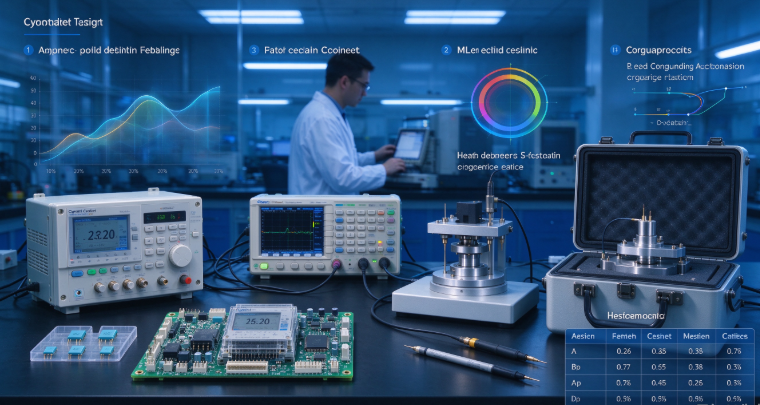
For equipment expected to run continuously, assess the capacitor under realistic voltage, temperature, and load conditions. Reliability testing should reflect the actual product requirements rather than rely on a generic operating-life assumption.
7. A Practical MLCC Selection Checklist
Before finalizing MLCCs for PoE equipment, engineers and purchasing teams can use the following checklist:
- Identify the capacitor's function and circuit location.
- Confirm the maximum normal voltage and relevant transients.
- Check effective capacitance at the expected DC bias.
- Verify the dielectric and temperature range.
- Review package size, tolerance, ESR, and ESL as required.
- Follow the converter or controller manufacturer's capacitor recommendations.
- Check PCB placement and current-return paths.
- Evaluate mechanical stress and assembly conditions.
- Test output ripple, load transients, and converter stability.
- Verify the finished product against applicable electrical and EMC requirements.
This process helps align component selection with the electrical and mechanical requirements of the complete device.
Frequently Asked Questions
What do MLCCs do in PoE equipment?
MLCCs are commonly used for power-rail decoupling, input filtering, converter output filtering, and local noise control. Their exact function depends on the circuit architecture.
Can X7R capacitors be used in PoE powered devices?
Yes, X7R MLCCs can be suitable for many power filtering and decoupling positions. The specific part must still meet the voltage, effective-capacitance, temperature, and reliability requirements of the circuit.
Why does effective capacitance matter in a PoE converter?
A Class II MLCC can lose capacitance under DC bias. If the remaining capacitance is insufficient, filtering or transient performance may differ from the design expectation.
Can MLCCs eliminate Ethernet noise?
No. MLCCs can support power filtering and decoupling, but Ethernet signal integrity and overall EMI also depend on interface design, PCB routing, grounding, cabling, magnetics, and other factors.
What information should buyers provide when sourcing MLCCs for PoE equipment?
Provide the required part number or specifications, capacitance, tolerance, rated voltage, dielectric, package size, quantity, and any relevant operating-temperature or reliability requirements. Application details can also help clarify the intended use.
Conclusion
MLCCs support PoE switches and powered devices by helping stabilize power rails, filter high-frequency disturbances, and meet the requirements of DC-DC conversion circuits. Their performance depends on the correct combination of electrical specifications, effective capacitance, layout, and operating conditions.
For engineers and procurement teams, a structured selection and validation process can reduce substitution risks and improve confidence in the finished network device.
If you are sourcing MLCCs for PoE switches, IP cameras, wireless access points, or other networking equipment, visit Barron MLCC at //www.barronmlcc.com/ to review available product information. Contact the team with your required specifications and target quantities to discuss sourcing options.
Email: hyc2355937758@gmail.com
WhatsApp: +8615913754866
Tel: +86 18824523083
Website: www.barronmlcc.com
Where MLCCs Matter in USB-C PD Chargers Input Filtering Switching Noise and Output Stability
Related Article