
Top 5 FAQs About Associated Products with Chip Capacitors A Practical Guide for Electronics Professionals
автор: 11
2025-12-23
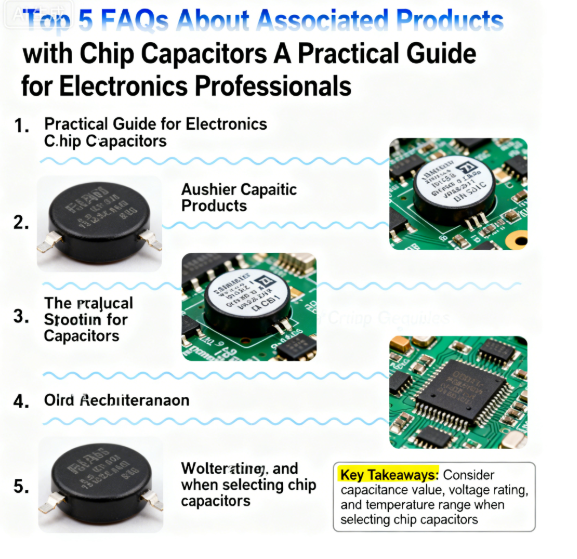
Top 5 FAQs About Associated Products with Chip Capacitors: A Practical Guide for Electronics Professionals
Chip capacitors are the backbone of modern electronic circuits, but their performance and reliability don’t depend on the capacitors alone. The associated products paired with them—from core components and assembly tools to testing equipment and alternative replacements—play a decisive role in circuit functionality, production efficiency, and long-term stability. For electronics engineers, manufacturers, and procurement professionals, understanding these associated products is key to avoiding design flaws, supply chain risks, and performance issues.
Below, we answer the 5 most pressing FAQs about associated products with chip capacitors, packed with actionable insights, industry examples, and SEO-friendly details aligned with Google’s search intent and ranking criteria.
1. What are the core associated components paired with chip capacitors in SMT assembly?
In Surface Mount Technology (SMT) assembly, chip capacitors rarely work in isolation—they are paired with a range of associated components to form functional circuits. The core associated components include:
-
Surface-Mount Resistors (SMRs): The most common associated component. Chip capacitors and SMRs form RC (Resistor-Capacitor) circuits for filtering noise, regulating voltage, and controlling timing. For example, 0402-sized X7R chip capacitors (100nF) are typically paired with 0402 SMRs (1kΩ) in consumer electronics like smartphones and laptops.
-
SMD Inductors: When paired with chip capacitors, they create LC (Inductor-Capacitor) filters or resonant circuits—critical for RF (Radio Frequency) applications like Wi-Fi/Bluetooth modules. Ferrite bead inductors are a popular associated choice for EMI (Electromagnetic Interference) suppression with chip capacitors.
-
Microcontrollers & ICs: Chip capacitors act as decoupling capacitors (a key associated role) for microcontrollers (e.g., Arduino, Raspberry Pi) and integrated circuits. A 100nF X7R chip capacitor is a standard associated component to stabilize power supplies and reduce voltage ripple for ICs.
-
SMD Connectors: High-speed connectors (USB-C, HDMI) rely on chip capacitors as associated components to filter signal interference. For instance, 10pF C0G/NP0 chip capacitors are paired with USB-C connectors to ensure stable data transmission.
Pro Tip: Choose associated components with matching package sizes (e.g., 0201 chip capacitors with 0201 SMRs) to streamline automated SMT assembly and avoid soldering inconsistencies.
2. Which equipment and tools are associated with the mounting and soldering of chip capacitors?
The precision of chip capacitor installation relies heavily on specialized associated equipment and tools. The must-have associated tools for mounting and soldering include:
-
SMT Pick-and-Place Machines: Automated machines (e.g., Juki KE-2070, Yamaha YSM10) are essential associated equipment for high-volume production. They place tiny chip capacitors (down to 01005 size) with sub-millimeter accuracy, reducing human error.
-
Reflow Ovens: A critical associated tool for soldering. Controlled heat profiles (e.g., Ersa Hotflow 3/20 reflow ovens) melt solder paste to bond chip capacitors to PCBs—temperature settings must match the capacitor’s thermal rating (typically -40°C to 125°C for industrial-grade parts).
-
Precision Soldering Irons (SMD-Tip): For prototyping or rework, soldering irons with fine nozzles (0.2mm) and temperature control (350–380°C) are key associated tools. They prevent overheating, which can degrade chip capacitor dielectric performance.
-
Anti-Static Tweezers: ESD (Electrostatic Discharge)-safe tweezers (stainless steel or ceramic) are non-negotiable associated tools. They protect sensitive chip capacitors (e.g., MLCCs) from static damage during handling.
-
SMD Rework Stations: Hot air stations (e.g., Hakko FR-810) are associated equipment for removing or replacing faulty chip capacitors without damaging surrounding components.
SEO Insight: Industrial users often search for long-tail keywords like “SMD pick-and-place for chip capacitors” or “chip capacitor soldering tools”—integrating these phrases boosts organic visibility for high-intent traffic.
3. What PCB materials and substrates are associated with chip capacitors in high-frequency applications?
In high-frequency circuits (1GHz+), the performance of chip capacitors is directly linked to their associated PCB materials and substrates. Poorly matched substrates cause signal loss or capacitance drift. The top associated PCB materials include:
-
High-Tg FR-4: A cost-effective associated substrate for low-to-mid frequency (≤1GHz) applications. High-Tg FR-4 (Tg ≥170°C) is paired with X7R chip capacitors in automotive and industrial electronics, offering thermal stability and durability.
-
Rogers High-Frequency Substrates: For RF/microwave circuits (2.4GHz Wi-Fi, 5G modules), Rogers RO4003C or RO4350B are industry-standard associated materials. These low-loss substrates complement C0G/NP0 chip capacitors (zero capacitance drift) to minimize signal attenuation.
-
PTFE (Teflon) Substrates: For ultra-high frequencies (10GHz+), PTFE-based PCBs are the ideal associated substrate for chip capacitors. They maintain impedance stability in radar, aerospace, and satellite applications.
-
Aluminum PCBs: For power electronics (LED drivers, motor controllers), aluminum PCBs are associated with high-voltage chip capacitors (100V+ MLCCs). They dissipate heat efficiently, preventing thermal failure of both the capacitor and the circuit.
Expert Insight: Always check the chip capacitor’s datasheet for recommended PCB dielectric constant (Dk). Mismatched Dk values between the capacitor and associated substrate can cause unintended capacitance changes in high-frequency circuits.
4. Which testing instruments are associated with verifying the performance of chip capacitors?
Validating chip capacitor performance requires specialized associated testing instruments to avoid field failures. The key associated instruments include:
-
LCR Meters: The gold standard associated instrument for measuring capacitance, ESR (Equivalent Series Resistance), and impedance. Models like the Keysight E4980AL LCR Meter test chip capacitors at their operating frequency (1kHz for low-frequency, 1MHz for high-frequency) for accurate results.
-
Impedance Analyzers: For high-frequency applications, impedance analyzers (e.g., Rohde & Schwarz ZNB) are critical associated instruments. They measure chip capacitor performance across a range of frequencies (100kHz to 8.5GHz) to identify resonance or loss issues.
-
Oscilloscopes (with Passive Probes): Oscilloscopes are associated tools for detecting voltage ripple or noise caused by faulty chip capacitors. Use a 10:1 passive probe to measure decoupling capacitor performance near ICs.
-
Thermal Imaging Cameras: FLIR E8 Pro or similar thermal cameras are associated instruments for identifying overheating chip capacitors— a sign of ESR issues or incorrect voltage ratings in live circuits.
-
ESD Testers: These associated instruments verify that chip capacitors (and their surrounding circuits) meet ESD protection standards (IEC 61000-4-2), preventing static damage during use.
Practical Tip: For mass production, use automated LCR test fixtures as associated equipment to quickly validate batch consistency of chip capacitors before PCB assembly.
5. What alternative associated components can replace chip capacitors during supply shortages?
Supply chain shortages are common for specialized chip capacitors. The following alternative associated components maintain circuit performance without costly redesign:
-
Same-Dielectric MLCCs (Different Manufacturers): MLCCs from Murata, TDK, or Kemet with identical capacitance, voltage rating, and dielectric (e.g., 100nF X7R 25V) are direct drop-in associated alternatives. Ensure they meet AEC-Q200 compliance for automotive applications.
-
Tantalum Chip Capacitors: For higher capacitance needs (10µF+), tantalum chip capacitors are reliable associated alternatives in low-voltage circuits (e.g., 3.3V IoT devices). Note that tantalum capacitors are polarity-sensitive, unlike most MLCCs.
-
Film Chip Capacitors: For high-temperature (up to 150°C) or high-voltage (1000V+) applications, film chip capacitors (polyester/polypropylene) are ideal associated alternatives. They replace MLCCs in industrial control equipment like motor drives.
-
SMD Electrolytic Capacitors: For bulk capacitance (100µF+), SMD electrolytic capacitors are cost-effective associated alternatives to large MLCCs in power supplies. The tradeoff: a larger footprint, but lower cost and easier availability.
Critical Warning: Never substitute C0G/NP0 chip capacitors (used in high-frequency circuits) with X7R/X5R types. Capacitance drift in X7R/X5R will degrade circuit performance at GHz frequencies.
Final Thoughts: Choosing the Right Associated Products for Chip Capacitors
The success of any electronic circuit relying on chip capacitors hinges on selecting the right associated products. From matching SMRs and inductors for circuit functionality to choosing compatible PCB substrates and reliable testing instruments, every associated component impacts performance, cost, and scalability.
For procurement professionals, understanding alternative associated components is a critical strategy to mitigate supply chain risks. For engineers, aligning associated products with chip capacitor specifications (dielectric, voltage rating, frequency) ensures long-term reliability.
Have questions about specific associated products for your chip capacitor application? Leave a comment below, or contact our team of electronics experts for personalized recommendations.
Recommended Associated Products for Chip Capacitors
High-precision placement for 01005-1206 chip capacitors, ideal for mass production.
Low-loss substrate for 2.4GHz/5G applications, compatible with C0G/NP0 chip capacitors.
Precision testing for chip capacitor capacitance, ESR, and impedance at multiple frequencies.
ESD-safe handling for sensitive MLCC chip capacitors (01005-0603 sizes).
Direct drop-in for SMT assembly, paired with 0402 SMRs and SMD inductors.
5 Critical Chip Capacitor Questions Answered A Guide for Electronics Professionals
About Products Used With Chip Capacitors A Complete Guide for Engineers
Связанная статья
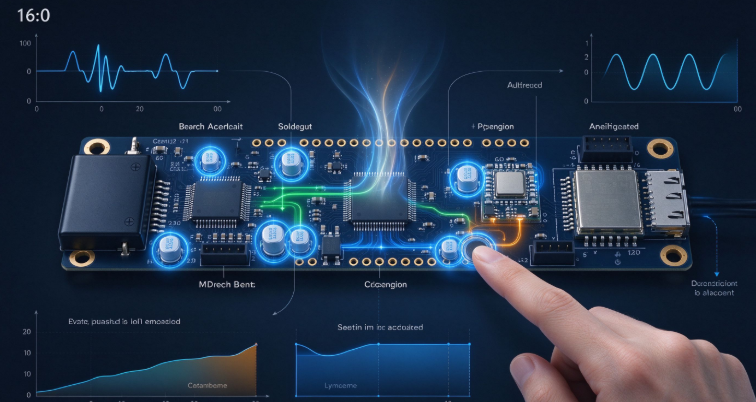
Датчики Интернета вещей (IoT) с батарейным питанием предназначены для сбора данных и передачи информации, потребляя при этом как можно меньше энергии. Типичные примеры включают датчики температуры, мониторы окружающей среды, устройства отслеживания активов, беспроводные дверные датчики и устройства удаленного промышленного мониторинга.
MLCC для датчиков Интернета вещей с батарейным питанием. Стабильность электропитания. Низкое энергопотребление и надежность.

Технология Power over Ethernet (PoE) позволяет совместимому сетевому оборудованию передавать электроэнергию и данные по одному и тому же кабелю Ethernet. Он широко используется в таких приложениях, как IP-камеры, точки беспроводного доступа, VoIP-телефоны и датчики, подключенные к сети.
MLCC в вопросах проектирования оборудования PoE для коммутаторов Ethernet
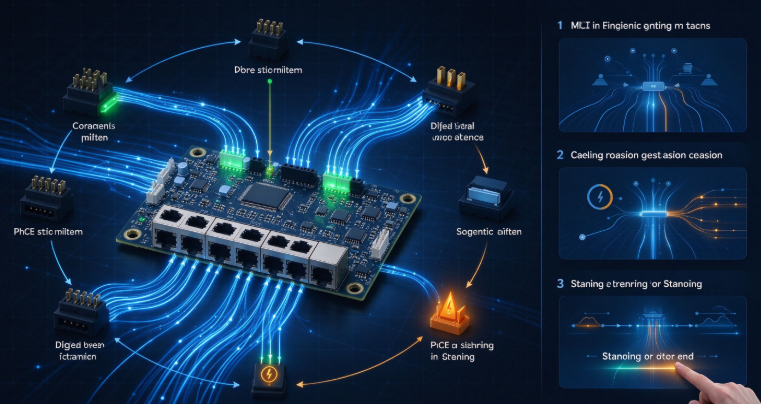
Внутри оборудования PoE многослойные керамические конденсаторы (MLCC) помогают стабилизировать шины питания, фильтровать высокочастотные шумы и поддерживать работу схем преобразования энергии. Их производительность может повлиять на целостность электропитания, электромагнитную совместимость и надежность всего устройства.
MLCC в вопросах проектирования оборудования PoE для коммутаторов Ethernet и устройств с питанием

Зарядные устройства USB-C Power Delivery (PD) должны обеспечивать регулируемую мощность при различных сочетаниях напряжения и тока, оставаясь при этом компактными, эффективными и надежными. Внутри этих адаптеров многослойные керамические конденсаторы (MLCC) помогают стабилизировать шины питания, снизить высокочастотный шум и поддерживать работу импульсных преобразователей мощности.
Где важны MLCC в зарядных устройствах USB-C PD Фильтрация входного шума при переключении и стабильность выходного сигнала
