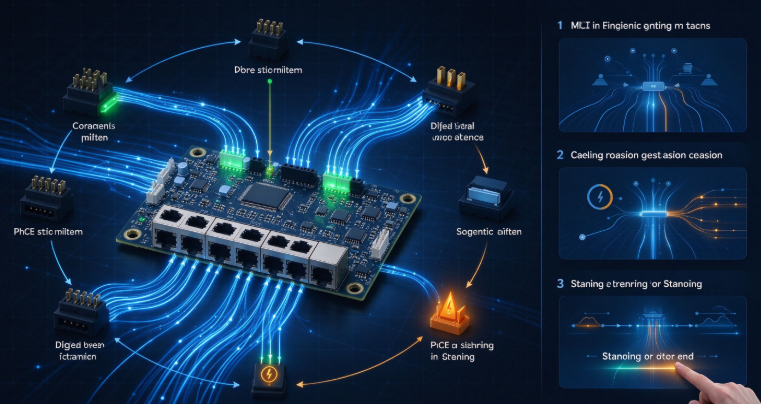
Top 5 Most Common Electronic Component Peripheral Usage Problems
Electronic components — including integrated circuits (ICs), MLCCs, resistors, diodes, transistors, and connectors — are the foundation of all electronic products. While component quality matters, peripheral usage issues cause over 65% of field failures, downtime, and warranty claims. These problems are the most searched topics by electronic engineers, production technicians, and component buyers on Google, as they directly affect product reliability, cost, and delivery.
1. Why Do Electronic Components Fail Due to Improper Storage, and How to Store Them Correctly?
Improper storage is the most common peripheral issue for all electronic components. Moisture, dust, temperature extremes, and physical damage quickly degrade components even before assembly, leading to hidden failures in PCBA production.
Root Causes
- High humidity (>60% RH) causes moisture absorption, especially for ICs, MLCCs, and BGA components.
- Extreme temperatures (below 0°C or above 30°C) damage packaging and internal structures.
- Unsealed packaging leads to dust contamination, oxidation, and pin corrosion.
- Rough stacking causes mechanical damage to chips, capacitors, and connectors.
Practical Storage Solutions
- Maintain a dry storage environment (RH 30–50%) with constant temperature (18–25°C).
- Use moisture barrier bags (MBBs) + desiccants + humidity indicators for ICs and sensitive components.
- Store reels and trays vertically to avoid crushing; label batches and expiration dates.
- Bake moisture-sensitive components before assembly if exposed to air for too long.
electronic component improper storage failure, how to store electronic components correctly, moisture damage in electronic parts
2. What Causes Component Damage During Soldering & Rework, and How to Prevent It?
Soldering and rework are the second most frequent causes of electronic component damage. Thermal shock, overheating, and mechanical stress destroy capacitors, ICs, LEDs, and chip components during production.
Root Causes
- Excess soldering temperature (>260°C) burns chip components and melts internal structures.
- Rapid temperature changes create thermal shock, cracking MLCCs and ceramic parts.
- Unskilled rework pulls pads or damages component terminations.
- Unclean solder iron tips or contaminated solder cause cold joints.
Prevention Methods
- Use a temperature-controlled soldering station (peak temp ≤250°C for most components).
- Follow standard reflow profiles; avoid direct heating on ceramic components.
- Use hot air rework stations with even airflow for ICs and BGAs.
- Clean solder tips and use lead-free solder (SAC305) for better reliability.
electronic component damage during soldering, rework damage to electronic parts, prevent thermal shock in components
3. How Does ESD Damage Electronic Components, and What Are Effective ESD Protection Measures?
ESD (Electrostatic Discharge) damage is a hidden but catastrophic peripheral problem. Many components fail immediately or degrade slowly after ESD exposure, with no visible damage — making it one of the top searched industrial questions.
Root Causes
- Human body static (up to 10,000V) damages sensitive ICs, MOSFETs, and sensors.
- Un-grounded workbenches, plastic tools, and dry environments build static electricity.
- Lack of ESD protection during handling, testing, and transportation.
ESD Protection Solutions
- Use ESD-safe workstations, wrist straps, and anti-static mats.
- Wear ESD clothes and gloves; avoid plastic/nylon tools in production.
- Transport components in anti-static bags and trays.
- Control workshop humidity (40–60% RH) to reduce static buildup.
ESD damage to electronic components, ESD protection for electronic parts, how to prevent static damage in components
4. What Are the Risks of Using Wrong Electronic Component Replacements, and How to Select Correct Substitutes?
Component substitution is common in procurement and production, but incorrect replacements lead to functional failure, overheating, short circuits, and safety risks — a top pain point for buyers and engineers.
Common Risks
- Wrong parameters (voltage, current, tolerance, package) cause incompatibility.
- Non‑certified components (e.g., commercial vs automotive grade) fail in harsh environments.
- Counterfeit components lead to mass product failures.
Correct Substitution Rules
- Match key parameters: rated voltage, current, tolerance, package size, and temperature range.
- Do not replace automotive/industrial components with commercial-grade parts.
- Verify authenticity and certifications (AEC‑Q200, RoHS, ISO) from authorized suppliers.
- Test substitute components before mass production.
wrong electronic component replacement risks, how to select component substitutes, electronic component substitution guide
5. How Do PCB Layout & Wiring Issues Cause Electronic Component Failure, and How to Optimize Layout?
Even high-quality components fail if the PCB layout and wiring are poor. Noise, interference, heat concentration, and stress concentration are the most overlooked peripheral usage problems.
Root Causes
- Components placed too close cause thermal crosstalk and overheating.
- Unreasonable trace routing leads to signal interference and voltage drops.
- Components placed on PCB bending points cause mechanical stress and cracking.
- Lack of heat dissipation paths for high-power components.
PCB Layout Optimization Tips
- Separate high-power and low-signal components to reduce interference.
- Leave enough space for heat dissipation; add heat sinks for high-power parts.
- Avoid placing fragile components (MLCCs, chips) on PCB edges or bending areas.
- Use ground planes to stabilize signals and reduce noise.
PCB layout cause component failure, electronic component PCB wiring problems, optimize PCB layout for component reliability
Final Thoughts
Most electronic component failures are not caused by the components themselves, but by peripheral usage mistakes: improper storage, soldering damage, ESD, wrong substitution, and poor PCB layout. Solving these 5 common problems can drastically improve product stability, reduce production losses, and lower after-sales costs.
As a trusted resource in the electronic component industry, we provide professional guidance on component usage, storage, soldering, ESD protection, substitution, and PCB layout.
📩 Email: hyc2355937758@gmail.com
📱 +86 18824523083 | WhatsApp: +86 15913754866
📥 Free Download: Electronic Component Peripheral Usage & Protection Checklist
Electronic Component Peripheral Usage Problems Complete Practical Solutions
Top 5 Most Common Questions About Automotive MLCC Peripheral Issues Solutions
Связанная статья