
5 Key Questions About Chip Capacitors for Electronic Devices | Selection Guide
tác giả: 11
2025-12-24
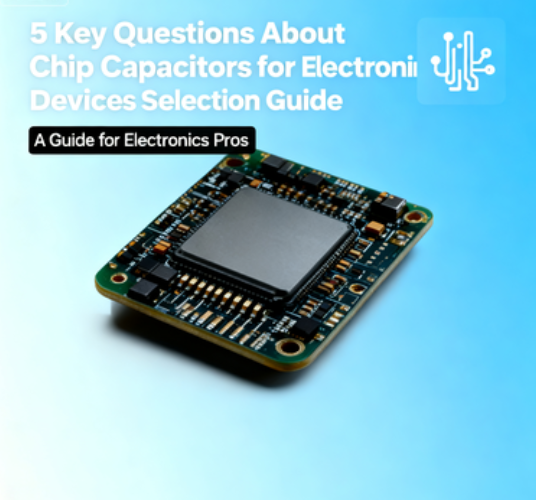
5 Key Questions About Chip Capacitors for Electronic Devices | Selection Guide
Chip capacitors, also known as surface-mount capacitors (SMDs), are essential components in nearly all modern electronic devices. From smartphones to automotive electronics and 5G base stations, their performance directly impacts the reliability and functionality of the end product. If you’re involved in electronic design, procurement, or maintenance, you’ve likely had questions about choosing and applying chip capacitors correctly. In this blog, we’ll answer the 5 most common and relevant questions about chip capacitors in key electronic applications, helping you make informed decisions and optimize your designs.
1. What Are the Common Chip Capacitor Models for Smartphone Motherboards? What Parameters Should Be Considered When Selecting?
Smartphone motherboards require compact, high-performance chip capacitors to fit the limited space while ensuring stable operation. The most common models are those with small form factors, such as 0402 (1.0mm x 0.5mm) and 0603 (1.6mm x 0.8mm) packages. For dielectric materials, X5R and X7R are preferred due to their good temperature stability and low capacitance drift.
When selecting chip capacitors for smartphone motherboards, key parameters to focus on include: Capacitance value (matched to the circuit’s filtering or decoupling needs, typically ranging from 1nF to 100nF), voltage rating (must exceed the maximum operating voltage of the circuit, usually 6.3V or 10V for smartphone applications), size (smaller packages like 0402 are ideal for slim designs), and ESR (Equivalent Series Resistance, lower ESR ensures better high-frequency performance for signal processing circuits).
2. What Role Do Chip Capacitors Play in Automotive Electronic Modules (e.g., ECU, Sensors)? How to Ensure Stability in High-Temperature Environments?
In automotive electronic modules such as ECUs (Electronic Control Units) and sensors, chip capacitors primarily serve three critical roles: decoupling (filtering out voltage noise to ensure stable power supply for sensitive components), bypassing (providing instantaneous current to meet peak load demands), and timing (assisting in precise signal timing for control systems).
Automotive environments are harsh, with temperatures ranging from -40°C to 125°C (or higher in engine compartments), so ensuring high-temperature stability is paramount. To achieve this, select chip capacitors with dielectric materials rated for wide temperature ranges, such as X7R (operating temperature: -55°C to 125°C) or C0G/NP0 (operating temperature: -55°C to 125°C, with near-zero capacitance drift). Additionally, choose components that meet automotive-grade standards (e.g., AEC-Q200), which guarantee reliability under extreme conditions. Pay attention to the voltage derating factor—derate the capacitor’s voltage by at least 20% to avoid failure under high-temperature stress.
3. How to Match the Voltage Rating and Capacitance Requirements of Different Circuits When Selecting Chip Capacitors for Industrial Control Motherboards?
Industrial control motherboards operate in complex environments with varying voltage fluctuations and load demands, making the matching of voltage rating and capacitance critical for system stability. Here’s a step-by-step guide to achieve this:
First, determine the maximum operating voltage of the target circuit. The chip capacitor’s voltage rating should be at least 1.2 to 1.5 times the maximum operating voltage to account for voltage spikes and transient surges common in industrial settings. For example, if a circuit’s maximum operating voltage is 12V, select a capacitor with a voltage rating of 16V or 25V.
Second, calculate the required capacitance based on the circuit’s function. For decoupling circuits near microcontrollers or power supplies, smaller capacitance values (0.1μF to 1μF) are typically sufficient to filter high-frequency noise. For power filtering or energy storage circuits, larger capacitance values (10μF to 100μF) may be needed. Additionally, consider the operating frequency of the circuit—high-frequency industrial control circuits (e.g., those using PWM signals) require chip capacitors with low ESR and ESL (Equivalent Series Inductance) to maintain performance.
Finally, verify the capacitance tolerance. Industrial control applications often require precise capacitance values, so select capacitors with a tolerance of ±10% (X7R) or ±5% (C0G/NP0) instead of wider tolerance options like Y5V.
4. What Are the Application Scenarios of Chip Capacitors in 5G Communication Base Stations? What Special Requirements Do They Have for High-Frequency Performance?
5G communication base stations rely heavily on chip capacitors to support high data transfer rates, low latency, and stable signal transmission. Key application scenarios include: RF front-end modules (filtering and matching high-frequency signals), power supply units (decoupling and stabilizing power for active components like amplifiers), and baseband processing units (timing and signal conditioning).
The high-frequency performance of chip capacitors is critical in 5G base stations, which operate at frequencies up to 30GHz. Special requirements include: Low ESR and ESL—at high frequencies, ESR and ESL can cause signal loss and impedance mismatch, so capacitors with ultra-low ESR (less than 0.1Ω) and ESL (less than 1nH) are preferred. High Q factor—the Q factor (quality factor) indicates the capacitor’s efficiency at storing energy; a high Q factor (greater than 100 at 1GHz) ensures minimal energy loss at high frequencies. Stable capacitance over frequency and temperature—capacitance drift can affect filter performance, so dielectric materials like C0G/NP0 (which have near-zero capacitance drift) are ideal for high-frequency circuits.
5. Why Are Miniaturized Packages Preferred for Chip Capacitors in Smart Wearables (e.g., Watches, Fitness Trackers)? What Are the Common Selection Mistakes?
Miniaturized packages (such as 0201, 01005) are preferred for chip capacitors in smart wearables primarily due to the devices’ ultra-compact design constraints. Smart wearables like watches and fitness trackers require small, lightweight components to fit on tiny PCBs while maintaining a sleek, wearable form factor. Miniaturized chip capacitors also reduce the overall weight of the device, which is critical for user comfort during extended wear.
Additionally, miniaturized capacitors often have lower ESL, making them suitable for the high-frequency circuits used in smart wearables (e.g., Bluetooth, GPS modules). They also consume less power, which helps extend the battery life of wearables—a key user concern.
Common selection mistakes to avoid include: Prioritizing size over performance—some designers choose the smallest possible package without considering ESR, capacitance tolerance, or temperature stability, which can lead to device malfunctions (e.g., unstable Bluetooth connections, short battery life). Neglecting voltage derating—smart wearables use low-voltage power supplies (typically 3.3V or 5V), but failing to derate the capacitor’s voltage (e.g., using a 3.3V capacitor for a 3.3V circuit) can lead to premature failure due to voltage spikes. Overlooking reliability—miniaturized capacitors can be more susceptible to mechanical stress during assembly, so selecting components from reputable manufacturers with automotive-grade or industrial-grade reliability ratings is important.
Final Thoughts
Selecting the right chip capacitor for your electronic device requires a clear understanding of the application’s requirements, including operating environment, frequency, voltage, and form factor. By addressing these 5 common questions, we hope to simplify the selection process and help you optimize your designs for performance and reliability. Whether you’re working on smartphones, automotive electronics, industrial control systems, 5G base stations, or smart wearables, choosing the correct chip capacitor is a critical step in ensuring the success of your product.
If you have more questions about chip capacitor selection or need personalized advice for your specific application, feel free to leave a comment below or contact our team of experts.
5 Key Questions About HEC Chip Capacitor Compatible Components
5 Critical Questions About Chip Capacitors Resistors Answered A Guide for Electronics Pros
Bài viết liên quan
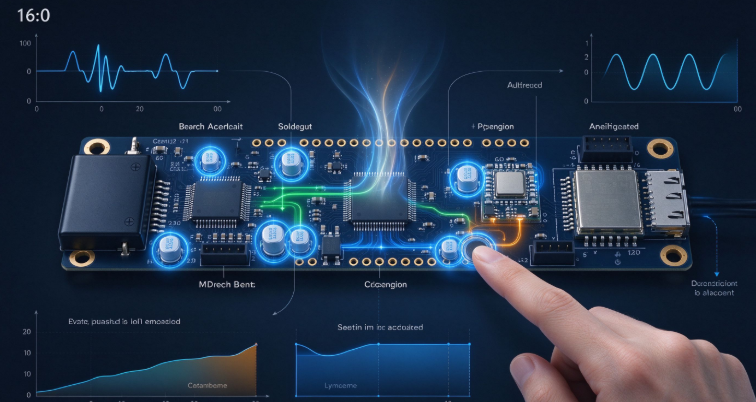
Cảm biến Internet of Things (IoT) chạy bằng pin được thiết kế để thu thập dữ liệu và truyền thông tin trong khi tiêu thụ ít năng lượng nhất có thể. Các ví dụ phổ biến bao gồm cảm biến nhiệt độ, màn hình môi trường, thiết bị theo dõi tài sản, cảm biến cửa không dây và thiết bị giám sát công nghiệp từ xa.
MLCC dành cho cảm biến IoT chạy bằng pin Độ ổn định nguồn điện Thiết kế và độ tin cậy sử dụng điện năng thấp

Công nghệ cấp nguồn qua Ethernet (PoE) cho phép thiết bị mạng tương thích truyền tải điện và dữ liệu qua cùng một cáp Ethernet. Nó được sử dụng rộng rãi trong các ứng dụng như camera IP, điểm truy cập không dây, điện thoại VoIP và cảm biến kết nối mạng.
MLCC trong các cân nhắc về thiết kế thiết bị PoE cho bộ chuyển mạch Ethernet
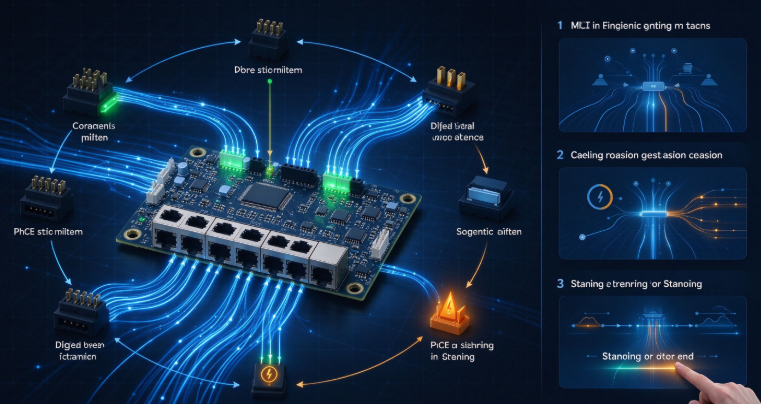
Bên trong thiết bị PoE, tụ gốm nhiều lớp (MLCC) giúp ổn định đường ray điện, lọc nhiễu tần số cao và hỗ trợ vận hành các mạch chuyển đổi nguồn. Hiệu suất của chúng có thể ảnh hưởng đến tính toàn vẹn của nguồn điện, khả năng tương thích điện từ và độ tin cậy của toàn bộ thiết bị.
MLCC trong các cân nhắc khi thiết kế thiết bị PoE cho bộ chuyển mạch Ethernet và thiết bị cấp nguồn

Bộ sạc USB-C Power Delivery (PD) phải cung cấp nguồn điện được điều chỉnh trên nhiều tổ hợp điện áp và dòng điện trong khi vẫn nhỏ gọn, hiệu quả và đáng tin cậy. Bên trong các bộ chuyển đổi này, các tụ gốm nhiều lớp (MLCC) giúp ổn định đường ray điện, giảm nhiễu tần số cao và hỗ trợ hoạt động của các bộ biến đổi nguồn chuyển mạch.
Trường hợp MLCC quan trọng trong bộ sạc USB-C PD Tiếng ồn chuyển mạch lọc đầu vào và độ ổn định đầu ra
