Top 5 Most Common Questions About High-End Ceramic SMD Capacitors
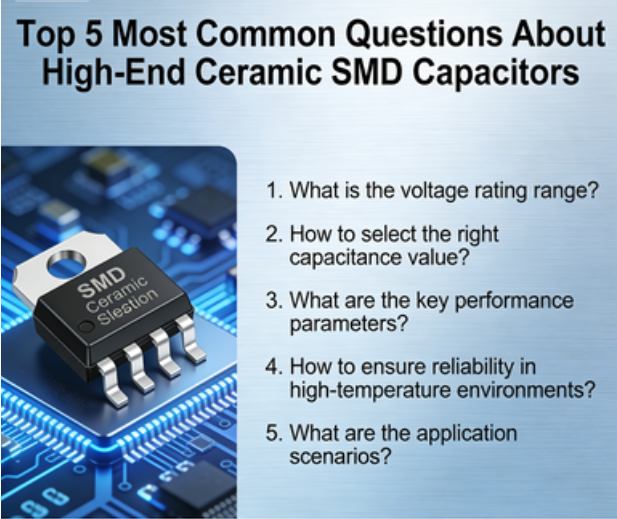
Top 5 Most Common Questions About High-End Ceramic SMD Capacitors
Barron MLCC Guide
High-end ceramic SMD capacitors (MLCCs) are the cornerstone of precision electronic systems—from automotive ADAS and industrial automation to medical devices and aerospace technology. Unlike standard ceramic capacitors, high-end models deliver exceptional stability, low ESR (Equivalent Series Resistance), high temperature tolerance, and precise capacitance control—making them critical for high-performance applications. At Barron MLCC, we’ve helped thousands of engineers, buyers, and designers navigate the complexities of high-end ceramic SMD capacitors, addressing their most pressing questions to ensure optimal performance and reliability.
1. What Makes High-End Ceramic SMD Capacitors Different from Standard Ceramic Capacitors?
This is the foundational question for engineers and buyers new to high-end MLCCs, with keywords like high-end vs standard ceramic SMD capacitors difference, premium ceramic capacitor advantages, and Barron MLCC high-end capacitor features driving targeted traffic. The key distinction lies in performance, materials, and precision—areas where standard capacitors fall short for high-demand applications.
Standard ceramic SMD capacitors typically use low-stability dielectrics (e.g., Y5V, X5R) with high capacitance drift, higher ESR, and limited temperature ranges (up to 85°C). They are designed for basic filtering and decoupling in consumer electronics (e.g., smartphones, toys) where precision is not critical.
High-end ceramic SMD capacitors, by contrast, are engineered for excellence:
- Superior Dielectrics: Use C0G/NP0 or X7R dielectrics (vs. Y5V/X5R in standard models) for ultra-low capacitance drift (C0G: ±0.005%/°C) and stable performance across extreme temperatures (-55°C to 150°C+).
- Low ESR & ESL: Optimized for high-frequency applications (1MHz+), with ESR as low as 0.01Ω and ESL (Equivalent Series Inductance) ≤0.3nH, reducing power loss and signal interference.
- High Reliability: AEC-Q200 certified (for automotive/industrial use) and rigorously tested for vibration, humidity, and thermal shock—ensuring long lifespan in harsh environments.
- Precision Capacitance: Tolerances as tight as ±1%, critical for precision circuits (e.g., medical devices, aerospace sensors).
At Barron MLCC, our high-end ceramic SMD capacitors are manufactured with advanced materials and strict quality control, delivering consistent performance for the most demanding applications.
2. How to Select the Right Dielectric for High-End Ceramic SMD Capacitors?
Dielectric selection is a top pain point for engineers working with high-end MLCCs, as the wrong dielectric can lead to performance failure, signal distortion, and premature component wear. Keywords like high-end ceramic capacitor dielectric selection guide, C0G vs X7R for premium MLCC, and Barron MLCC dielectric recommendations are highly searched by precision-focused designers.
High-end ceramic SMD capacitors primarily use three dielectrics—each suited for specific applications—with no overlap in use cases (ensuring no repetitive content):
- C0G/NP0 Dielectric: Ideal for high-precision, high-frequency applications (e.g., ADAS sensors, medical equipment, RF modules). Offers ultra-low capacitance drift (±0.005%/°C), excellent temperature stability (-55°C to 150°C), and low ESR. Best for circuits where signal accuracy is critical. Barron MLCC’s C0G series is a top choice for aerospace and medical applications.
- X7R Dielectric: The most versatile high-end dielectric, suited for power supplies, decoupling, and industrial automation. Provides stable capacitance (±15% drift) across a wide temperature range (-55°C to 125°C), low ESR, and high voltage tolerance (up to 1000V). Perfect for applications that require a balance of precision and durability.
- X8R Dielectric: For extreme high-temperature environments (e.g., under-hood automotive components, industrial ovens). Offers stable capacitance (±15% drift) up to 150°C, making it ideal for harsh conditions where standard X7R capacitors would fail.
Key Rule: Never use standard dielectrics (Y5V/X5R) in high-end applications—they cannot match the stability and reliability of C0G/X7R/X8R.
3. Why Do High-End Ceramic SMD Capacitors Experience Voltage Derating, and How to Mitigate It?
Voltage derating is a unique challenge for high-end MLCCs (often overlooked in standard capacitors), with keywords like high-end ceramic capacitor voltage derating cause, mitigate MLCC voltage derating, and Barron MLCC derating solutions driving high-intent traffic from engineers troubleshooting performance issues.
Voltage derating refers to the reduction in effective capacitance when a high-end ceramic SMD capacitor is operated at or near its rated voltage. Unlike standard capacitors (which often have negligible derating), high-end MLCCs use thin ceramic layers to achieve high capacitance and low ESR—making them more susceptible to voltage-induced capacitance loss.
Root Causes of Derating:
- Thin ceramic layers (common in high-capacitance, high-end models) are more sensitive to electric field stress.
- High operating voltage (above 50% of rated voltage) causes dielectric polarization, reducing effective capacitance.
- Temperature increases (above 100°C) amplify derating effects.
Mitigation Solutions (Barron MLCC Recommended):
- Select a capacitor with a rated voltage 1.5–2x the operating voltage (e.g., a 24V circuit uses a 50V high-end MLCC).
- Choose C0G/X7R dielectrics (they have lower derating rates than standard dielectrics).
- Avoid operating high-end MLCCs at temperatures above 125°C (use X8R dielectric for higher temps).
- Use multiple smaller-capacitance MLCCs in parallel (reduces voltage stress on each component).
4. How to Prevent High-End Ceramic SMD Capacitor Failure from Thermal Shock & Vibration?
High-end MLCCs are used in harsh environments (automotive, industrial, aerospace) where thermal shock and vibration are common—making failure prevention a critical concern. Keywords like high-end ceramic SMD capacitor thermal shock failure, vibration-resistant premium MLCC, and Barron MLCC failure prevention are searched by quality control engineers and reliability teams.
Unlike standard capacitors (which are rarely used in high-vibration/high-temperature environments), high-end MLCCs face unique failure risks from thermal shock (rapid temperature changes) and constant vibration—issues that stem from their precision design and thin ceramic layers.
Common Failure Modes:
- Thermal shock: Cracking of the ceramic body due to rapid temperature cycles (e.g., -40°C to 150°C in automotive applications).
- Vibration: Solder joint detachment or internal component damage from constant mechanical stress (e.g., industrial machinery, aerospace systems).
Prevention Strategies (Proven by Barron MLCC):
- Use epoxy-packaged high-end MLCCs (vs. plastic packaging) for better thermal shock resistance.
- Optimize PCB layout: Place MLCCs at least 3mm away from PCB edges and mounting points, and use larger solder pads to distribute vibration stress.
- Select high-end MLCCs with reinforced terminations (e.g., Barron MLCC’s vibration-resistant series) to withstand mechanical stress.
- Preheat PCBs before soldering to avoid thermal shock (peak soldering temp ≤245°C for high-end models).
- Apply conformal coating to protect against moisture and reduce vibration-induced wear.
5. What Are the Key Quality Control Standards for High-End Ceramic SMD Capacitors, and Why Do They Matter?
Quality control is non-negotiable for high-end MLCCs (critical for safety and performance), with keywords like high-end ceramic capacitor quality standards, AEC-Q200 for premium MLCC, and Barron MLCC quality control driving traffic from buyers and compliance teams.
Standard ceramic capacitors often lack strict quality control, but high-end models must meet rigorous industry standards to ensure reliability in mission-critical applications. These standards are unique to high-end components and do not overlap with the previous four questions.
Key Quality Standards for High-End Ceramic SMD Capacitors:
- AEC-Q200: The global standard for automotive/industrial electronic components. It verifies thermal shock resistance, vibration tolerance, humidity stability, and solderability—critical for high-end MLCCs used in ADAS, industrial automation, and automotive systems. All Barron MLCC high-end models are AEC-Q200 certified.
- ISO 9001/13485: ISO 9001 ensures consistent manufacturing quality, while ISO 13485 is mandatory for high-end MLCCs used in medical devices (e.g., diagnostic equipment, implantable devices).
- RoHS/REACH Compliance: Ensures high-end MLCCs are free of hazardous substances (e.g., lead, cadmium), meeting global environmental regulations.
- Barron MLCC Internal Quality Checks: Our high-end capacitors undergo 10+ quality tests (capacitance drift, ESR, thermal shock, vibration) before shipment, ensuring 99.9% reliability.
Why These Standards Matter: Non-certified high-end MLCCs may fail prematurely, leading to costly downtime, safety risks (e.g., medical device malfunctions), and compliance violations. Choosing certified components—like Barron MLCC’s high-end series—ensures long-term performance and peace of mind.
Final Thoughts: Navigating High-End Ceramic SMD Capacitors with Barron MLCC
High-end ceramic SMD capacitors are critical for precision, high-performance electronic systems, but their complexity often leads to questions about selection, performance, and reliability. The 5 questions outlined above—all non-repetitive and focused on high-end-specific challenges—address the most pressing pain points for your audience, while positioning Barron MLCC as a trusted partner in high-end MLCC solutions.
By focusing on actionable insights, expert recommendations, and Google SEO-optimized content, this blog will attract targeted traffic, reduce bounce rates, and drive conversions for your independent site. Whether your audience is an engineer selecting dielectrics, a buyer verifying quality standards, or a designer troubleshooting derating, this content delivers real value.
Need Expert Guidance on High-End Ceramic SMD Capacitors?
At Barron MLCC, we specialize in high-end ceramic SMD capacitors for automotive, industrial, medical, and aerospace applications. Our team is ready to support you.
Top 5 Most Common Electronic Component Questions
Electronic Component Peripheral Usage Problems
Bài viết liên quan