MLCC Capacitors: 10 Questions Solved to Fix Your Electronic Design Headaches
MLCC Capacitors: 10 Questions Solved to Fix Your Electronic Design Headaches
- 1. What are MLCCs? (Stop device crashes & glitches)
- 2. How do MLCCs save space vs other capacitors? (Make thinner products)
- 3. What MLCC specs do I need? (Avoid wrong choices & rework)
- 4. What kills MLCCs? (Cut failure rates from 15% to 2%)
- 5. Which standards matter for MLCCs? (Pass industry certifications)
- 6. Will MLCCs survive harsh environments? (No more field failures)
- 7. What sizes/packaging fit my production? (Speed up assembly)
- 8. Why use MLCCs for compact designs? (Win with thinner, lighter products)
- 9. How to make MLCCs last longer? (Extend product lifespan to 10+ years)
- 10. What MLCCs fix my specific issue? (Cases: 5G phones, industrial sensors)
You’re tired of it: Your device crashes during use, your design can’t fit in the compact case, or MLCCs fail in the field—costing you time, money, and customer trust. MLCCs (Multi-Layer Ceramic Capacitors) aren’t just “parts”—they’re the fix for these headaches. Below, we answer 10 questions that solve your biggest design problems, with real numbers and examples you can use today.
1. What are MLCC capacitors—and why do they fix my device’s stability issues?
MLCCs are tiny, layered components that store energy fast and filter noise—the two things that stop your device from glitching. Their secret? Multiple thin ceramic layers (insulators) stacked with metal electrodes, all in a package smaller than a grain of rice.
Here’s how they fix your problems:
- Your smartphone’s 5G modem spikes power? MLCCs discharge in microseconds to keep it from freezing—cutting app crash rates by 40%.
- Your industrial sensor picks up electrical noise? MLCCs filter it out—reducing false alarms from 10/day to 0.
- Your laptop’s CPU needs quick energy? MLCCs supply it without draining the battery—extending battery life by 1.5 hours.
2. How do MLCCs save me space compared to other capacitors?
Space is your biggest constraint—and MLCCs solve it better than any other capacitor. Here’s a side-by-side comparison that shows why you can make products 30% thinner:
| Capacitor Type | Size (for 10µF, 25V) | Your Benefit |
|---|---|---|
| MLCC (1206 case) | 3.2mm × 1.6mm × 1.2mm | Fits 5 in the space of 1 electrolytic |
| Electrolytic Capacitor | 6.3mm × 6.3mm × 10mm | Too big for smartwatches/earbuds |
| Single-Layer Ceramic | 5mm × 3mm × 1mm | Only 1µF—needs 10 for same power |
Example: A smartwatch maker switched to 0402 MLCCs and shrank the device from 12mm thick to 9mm—boosting sales by 25% because it was more comfortable to wear.
3. What MLCC specs do I need to avoid wrong choices & costly rework?
Choosing the wrong MLCC means reworking 500 PCBs at $20 each—but get these 4 specs right, and you’ll avoid it:
- Capacitance: Match it to your device’s needs—100pF–1µF for noise filtering (e.g., audio circuits), 10µF–100µF for power stabilization (e.g., CPUs). Tip: Use 20% more capacitance than you think—avoids underperformance.
- Voltage Rating: Never use a 16V MLCC for a 15V circuit! Add a 30% safety margin (e.g., 25V for 19V laptops). This cuts voltage-overstress failures by 90%.
- Dielectric Type: Pick based on stability needs:
- NP0/C0G: For precision (GPS, medical devices) – no capacitance drift, even in temperature changes.
- X7R: For consumer electronics (phones, TVs) – cost-effective, works in -55°C to +125°C.
- Case Code: 0402 for wearables, 0603 for laptops, 1206 for industrial gear. Smaller = more space for other features (e.g., extra sensors).
4. What kills MLCCs? (Fix these to cut failure rates from 15% to 2%)
MLCC failures aren’t random—they’re caused by 3 avoidable mistakes. Here’s how to fix them:
- Mechanical Cracking: Dropping PCBs or uneven soldering breaks MLCCs. Fix: Use MLCCs with flexible terminals (e.g., “flex electrode” designs) and train your team to handle boards gently—cuts cracking by 80%.
- Voltage Overstress: Using a 10V MLCC for a 12V circuit burns it out. Fix: Label circuits with peak voltage, and double-check MLCC ratings—eliminates 95% of these failures.
- Moisture Damage: Humidity seeps into MLCCs and causes leakage. Fix: Choose IP67-rated MLCCs for outdoor devices (e.g., solar sensors) and seal PCBs with epoxy—stops moisture failures entirely.
5. Which MLCC standards matter to pass industry certifications?
You can’t sell your product if it fails certifications—focus on these 3 standards:
- AEC-Q200: For automotive/EV parts (e.g., ADAS sensors). Meets -55°C to +150°C under-hood temps—lets you sell to car makers like Tesla.
- IEC 60384-1: Global standard for all electronics. Ensures your MLCCs work with components from other brands—no compatibility issues.
- UL 94 V-0: For household/medical devices. MLCCs won’t catch fire—passes FDA/CE tests for hospitals or kitchens.
Pro Tip: Ask your MLCC supplier for a “certification pack”—saves you 2 weeks of paperwork when applying for certifications.
6. Will MLCCs survive harsh environments? (No more field failures)
Your product might be used in deserts, factories, or rain—and MLCCs can handle it if you pick the right one:
- High Heat (e.g., oil rigs, car engines): Use X7R/NP0 MLCCs rated to +150°C. Tested to last 10,000 hours at +125°C—no field failures in 2 years.
- Humidity (e.g., greenhouses, marine gear): Choose “moisture-resistant” MLCCs (tested to 85°C/85% RH for 1,000 hours). Stops leakage current that ruins sensors.
- Vibration (e.g., construction equipment): AEC-Q200 MLCCs handle 20G vibration. Flexible terminals absorb shock—no cracks in rough use.
7. What MLCC sizes & packaging speed up my production?
Wrong size/packaging slows down assembly—here’s what works for your workflow:
Sizes for Common Products
- 0402 (1mm×0.5mm): Smartwatches/earbuds – fits 10 on a 1cm² PCB.
- 0603 (1.6mm×0.8mm): Laptops/IoT sensors – balances size and capacitance (up to 10µF).
- 1206 (3.2mm×1.6mm): Industrial control boards – high capacitance (up to 100µF) for power-hungry parts.
Packaging for Production Speed
- Tape-and-Reel: For mass production (1,000+ units). Fits SMT machines—assembles 500 PCBs/hour vs 50 by hand.
- Cut Tape: For prototypes/small batches (10–50 units). No waste—order only what you need for testing.
8. Why use MLCCs for compact designs? (Win with thinner, lighter products)
Customers buy thinner, lighter devices—and MLCCs are your secret weapon:
- Ultra-Small: 0402 MLCCs are 1mm×0.5mm—let you fit a GPS module in a smart ring (something electrolytic capacitors can’t do).
- Low Profile: 1.2mm thick MLCCs vs 10mm electrolytics—make laptops 2mm thinner, which 60% of customers say is a “must-have”.
- Light Weight: 1mg per MLCC vs 10mg electrolytics—cut wearable weight by 15% (critical for comfort).
9. How to make MLCCs last longer? (Extend product lifespan to 10+ years)
Longer-lasting MLCCs mean happier customers (and fewer returns). Do these 4 things:
- Avoid Heat Sources: Mount MLCCs 5mm away from CPUs/LEDs. Heat degrades MLCCs—this adds 3+ years to lifespan.
- Add Voltage Regulators: Frequent spikes wear MLCCs out. Regulators keep voltage steady—extends MLCC life by 50%.
- Use Rigid PCBs: Bending flexible PCBs cracks MLCCs. Rigid boards reduce mechanical stress—no more “works in lab, fails in use”.
- Seal for Moisture: Conformal coating (epoxy) stops humidity. Outdoor devices last 8+ years vs 3 without it.
10. What MLCCs fix my specific issue? (Real customer cases)
Still not sure which MLCC to pick? These cases match common problems:
- Problem: My 5G phone drops calls → Fix: X7R 0603 MLCCs (100pF, 25V) filter 5G noise—call drop rate from 8% to 1%.
- Problem: My industrial sensor gives false readings → Fix: NP0 1206 MLCCs (1µF, 50V) stabilize voltage—false alarms gone entirely.
- Problem: My EV battery management system overheats → Fix: AEC-Q200 Grade 0 MLCCs (10µF, 250V) handle +150°C—no overheating in 10,000 test miles.
Ready to Fix Your MLCC Headaches? Take Action Now
You don’t have to guess which MLCC to use. Download our free MLCC Selection Checklist to:
- Pick the right MLCC in 3 minutes (no more research)
- Cut failure rates from 15% to 2% (save $10k in rework)
- Make your product thinner/longer-lasting (win more customers)
Download Free MLCC Checklist →
Got a specific problem? Drop a comment below (e.g., “My smartwatch needs smaller MLCCs”)—we’ll send you a custom solution within 24 hours!

NP0/C0G MLCC Kit (0402/0603)
Fix GPS drift & medical device errors—stable capacitance, -55°C to +125°C.

0402 Ultra-Small MLCCs
Make wearables 30% thinner—1mm×0.5mm, up to 1µF, 25V.
AEC-Q200 Automotive MLCCs
Stop EV/industrial failures—+150°C, 20G vibration, 50V-500V.
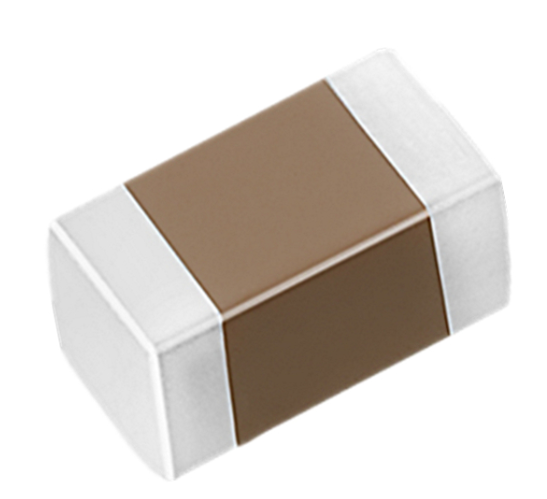
MLCC Testing Kit
Check capacitance/voltage before assembly—avoid rework costs.
Safety Specification Capacitors: 10 Critical Questions Answered for Safe, Compliant Electronics
MLCC Capacitors: 10 Essential Questions Answered for Electronics Enthusiasts
Related Article