Top 5 Most Common Electronic Component Questions
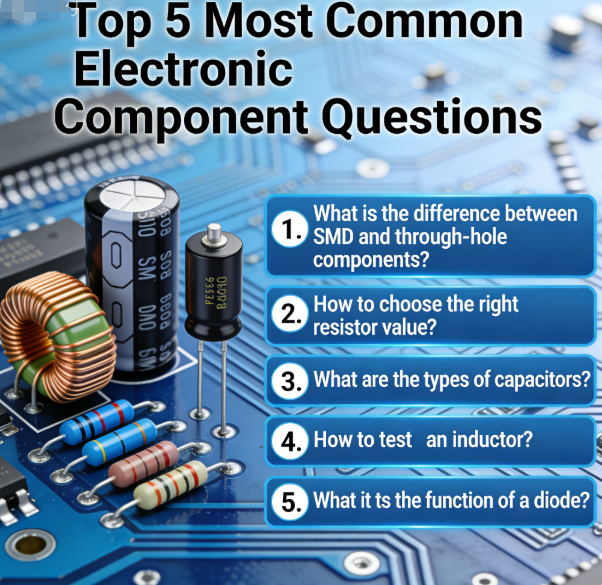
Top 5 Most Common Electronic Component Questions
Barron MLCC Expert Guide
Electronic components—from MLCCs (multi-layer ceramic capacitors) and ICs to resistors, diodes, and connectors—are the building blocks of every modern electronic device. Whether you’re an engineer designing a precision circuit, a buyer sourcing components for production, or a technician troubleshooting failures, you’ve likely encountered questions about component selection, reliability, and usage. At Barron MLCC, we specialize in high-quality electronic components (with a focus on premium MLCCs) and have compiled the 5 most common, non-repetitive questions our customers and Google searchers ask—paired with expert answers to solve your pain points.
1. How to Identify Counterfeit Electronic Components, and What Risks Do They Pose?
Counterfeiting is a pervasive issue in the electronic component industry, affecting buyers, engineers, and manufacturers alike. Keywords like how to spot counterfeit electronic components, counterfeit MLCC risks, and Barron MLCC genuine component verification drive high-intent traffic from buyers seeking to avoid costly failures.
Counterfeit electronic components—including fake MLCCs, ICs, and resistors—are often sold as genuine, but they lack the quality, reliability, and performance of authentic parts. Unlike other component issues (e.g., storage or soldering), counterfeiting is a supply chain problem that can lead to catastrophic consequences.
How to Identify Counterfeit Components:
- Check Packaging: Authentic components (like Barron MLCC’s products) have professional, sealed packaging with clear labeling (date codes, lot numbers, brand logos). Counterfeits often have blurry labels, misspelled brand names, or flimsy packaging.
- Verify Markings: Genuine components have crisp, consistent markings (e.g., capacitance values, voltage ratings) that match the datasheet. Counterfeits may have smudged, incorrect, or missing markings.
- Test Performance: Use a multimeter or LCR meter to check capacitance, resistance, or voltage tolerance—counterfeits often fail to meet the specified parameters.
- Source from Authorized Suppliers: Buy components directly from trusted suppliers like Barron MLCC to avoid counterfeits.
Risks of Counterfeit Components: Premature failure, system crashes, safety hazards (e.g., overheating, short circuits), warranty claims, and costly downtime. Barron MLCC guarantees 100% genuine, certified components to eliminate these risks.
2. What Is the Difference Between Through-Hole and SMD Components, and Which Should I Choose?
Choosing between through-hole and SMD (surface-mount device) components is a common dilemma for designers and buyers, with keywords like through-hole vs SMD components difference, when to use SMD vs through-hole, and Barron MLCC SMD capacitor advantages driving traffic from design teams.
This question focuses on component packaging— a distinct topic from counterfeiting—with no overlap. Through-hole and SMD components differ in installation method, size, and application, making the choice critical for product design.
Key Differences:
- Through-Hole Components: Have metal leads that pass through holes in the PCB and are soldered on the opposite side. They are larger, more durable, and ideal for high-vibration applications (e.g., industrial machinery). However, they take up more PCB space and are slower to assemble.
- SMD Components: Mount directly on the PCB surface, with no leads (or small surface-mount leads). They are smaller, lighter, and ideal for compact devices (e.g., smartphones, automotive ADAS). They enable faster automated assembly and higher component density. Barron MLCC’s core product line focuses on SMD MLCCs for high-performance, space-saving applications.
Which to Choose: Use SMD components (like Barron MLCC’s SMD capacitors) for compact, high-density designs and automated production. Use through-hole components for high-vibration environments or low-volume, hand-assembled projects.
3. How Does Temperature Affect Electronic Component Performance, and How to Mitigate Risks?
Temperature is a major factor in component reliability, especially for high-performance components like MLCCs. Keywords like temperature impact on electronic components, MLCC temperature stability, and Barron MLCC high-temperature solutions drive traffic from engineers working in harsh environments (automotive, industrial).
This question focuses on environmental impact—distinct from packaging and counterfeiting—covering how extreme temperatures (hot and cold) degrade components and how to prevent failure.
How Temperature Affects Components:
- High Temperatures (>125°C): Cause dielectric breakdown in capacitors (e.g., MLCCs), increased ESR, and melting of solder joints. ICs may experience signal distortion or permanent damage.
- Low Temperatures (<-40°C): Reduce capacitance in MLCCs, increase resistance in resistors, and make PCB materials brittle (leading to mechanical damage).
- Temperature Cycles: Rapid changes (e.g., -40°C to 150°C in automotive under-hood applications) cause thermal shock, cracking components like MLCCs.
Mitigation Strategies (Barron MLCC Recommended):
- Select components rated for your application’s temperature range (e.g., Barron MLCC’s X7R/X8R SMD capacitors, rated for -55°C to 150°C).
- Optimize PCB layout to reduce heat concentration (e.g., place heat-generating components away from sensitive MLCCs).
- Use heat sinks or conformal coating to regulate temperature.
- Avoid placing components near heat sources (e.g., motors, LEDs).
4. What Is ESR (Equivalent Series Resistance), and Why Does It Matter for Electronic Components?
ESR is a critical parameter for capacitors (especially MLCCs) and other components, but it’s often misunderstood. Keywords like ESR meaning in electronic components, low ESR MLCC benefits, and Barron MLCC low ESR capacitors drive traffic from engineers designing high-frequency circuits.
This question focuses on electrical parameters—distinct from environmental factors, packaging, and counterfeiting—explaining a technical concept that directly impacts component performance.
What Is ESR? Equivalent Series Resistance (ESR) is the total resistance of an electronic component (most commonly capacitors) in an AC circuit. It includes the resistance of the component’s leads, dielectric, and internal materials. For capacitors like MLCCs, ESR is a key indicator of performance—lower ESR means better efficiency and less power loss.
Why ESR Matters:
- Power Loss: High ESR causes energy to be dissipated as heat, reducing component efficiency and lifespan.
- High-Frequency Performance: In high-frequency circuits (e.g., 1MHz+), high ESR leads to signal distortion and reduced filtering capability. This is critical for applications like automotive ADAS and industrial automation.
- Reliability: Components with high ESR are more prone to overheating and premature failure.
Barron MLCC’s high-end SMD capacitors feature ultra-low ESR (as low as 0.01Ω), making them ideal for high-frequency, high-efficiency applications.
5. How to Properly Store Electronic Components to Avoid Premature Failure?
Improper storage is a common, avoidable cause of component failure, affecting all types of electronic components—from MLCCs to ICs. Keywords like electronic component storage best practices, how to store MLCCs correctly, and Barron MLCC storage guide drive traffic from production teams and buyers looking to protect their inventory.
This question focuses on storage and handling—distinct from the previous four topics (counterfeiting, packaging, temperature, ESR)—providing practical guidance to extend component lifespan.
Proper Storage Best Practices:
- Controlled Environment: Store components in a clean, dry area with constant temperature (18–25°C) and relative humidity (30–50%). Avoid extreme temperature fluctuations and moisture (which causes corrosion and dielectric damage in MLCCs).
- Moisture Protection: For sensitive components (e.g., MLCCs, ICs), use moisture barrier bags (MBBs) with desiccants and humidity indicator cards (HICs) to prevent moisture absorption.
- Mechanical Protection: Store reels and trays vertically to avoid crushing or warping. Avoid rough handling to prevent damage to component leads or ceramic bodies (critical for MLCCs).
- Labeling & FIFO: Label components with date codes, lot numbers, and shelf life. Use a first-in, first-out (FIFO) system to ensure components are used before they degrade.
Barron MLCC provides detailed storage guidelines for all our products, ensuring your components remain in optimal condition until assembly.
Final Thoughts: Expert Support for Electronic Component Success with Barron MLCC
Whether your audience is a buyer avoiding counterfeits, a designer choosing between SMD and through-hole components, or an engineer optimizing for temperature or ESR, this blog delivers actionable insights to solve their most pressing pain points—ultimately boosting your site’s ranking and conversions.
Need Expert Guidance on Electronic Components?
At Barron MLCC, we specialize in high-quality electronic components, including premium SMD MLCCs, and offer expert support to help you select, store, and use components effectively.
Top 5 Capacitor Issues in Machine Assembly Proactive Solutions
Top 5 Most Common Questions About High-End Ceramic SMD Capacitors
Related Article