Automotive Ceramic Capacitors (MLCC): 10 Critical Questions Answered for Engineers & Buyers
Automotive Ceramic Capacitors (MLCC): 10 Critical Questions Answered for Engineers & Buyers
- 1. Where are automotive ceramic capacitors (MLCC) used in a car’s electrical system?
- 2. What temperature range can automotive ceramic capacitors (MLCC) withstand?
- 3. What key parameters matter when selecting automotive ceramic capacitors (MLCC)?
- 4. How do automotive MLCCs differ from other automotive capacitors?
- 5. What common failure issues affect automotive ceramic capacitors (MLCC)?
- 6. Which automotive standards must automotive ceramic capacitors (MLCC) comply with?
- 7. Can automotive MLCCs handle high voltage demands in EV systems?
- 8. What size and packaging options exist for automotive ceramic capacitors (MLCC)?
- 9. How do automotive MLCCs perform in harsh environments (vibration, humidity)?
- 10. Why are automotive MLCCs preferred for infotainment or ADAS systems?
In modern vehicles—from gas-powered cars to electric vehicles (EVs)—automotive ceramic capacitors (MLCC) are invisible workhorses. These tiny, multi-layered components power critical systems like ADAS (Advanced Driver-Assistance Systems), infotainment, and battery management. But with strict automotive standards and harsh operating conditions, questions about their use, performance, and selection are common. Below, we answer 10 of the most searched questions about automotive ceramic capacitors (MLCC) to clarify their role and help you make informed decisions.
1. Where are automotive ceramic capacitors (MLCC) used in a car’s electrical system?
Automotive ceramic capacitors (MLCC) are integrated into nearly every key electrical system, thanks to their small size, fast response, and reliability. Key locations include:
- ADAS & Safety Systems: They stabilize voltage for radar sensors (e.g., adaptive cruise control), cameras (lane-keeping assist), and airbag controllers—ensuring these systems don’t fail during critical moments.
- Infotainment & Connectivity: MLCCs filter noise in touchscreens, GPS modules, and Bluetooth systems, preventing glitches or audio static.
- Battery Management Systems (BMS): In EVs and hybrids, they regulate current flow between the battery and motor, protecting against voltage spikes.
- Powertrain Control: They support engine control units (ECUs) by smoothing power fluctuations, which helps optimize fuel efficiency (for gas cars) or energy use (for EVs).
2. What temperature range can automotive ceramic capacitors (MLCC) withstand for automotive applications?
Automotive ceramic capacitors (MLCC) are engineered to survive extreme temperatures—far beyond what consumer electronics require. Most comply with AEC-Q200 (the automotive industry’s standard for passive components), which mandates a temperature range of -55°C to +125°C (-67°F to +257°F). For harsh under-hood environments (e.g., near the engine or exhaust), specialized MLCCs extend this range to -55°C to +150°C (+302°F). This durability ensures they perform consistently in summer heat, winter cold, and under-hood warmth.
3. What key parameters (e.g., capacitance, voltage) matter when selecting automotive ceramic capacitors (MLCC)?
Choosing the right automotive ceramic capacitors (MLCC) depends on 4 non-negotiable parameters, tailored to your vehicle’s system:
- Capacitance: Measured in microfarads (µF) or picofarads (pF), it determines how much energy the MLCC can store. For ADAS sensors, low capacitance (100pF–1µF) suffices; for BMS, higher capacitance (1µF–100µF) is needed.
- Voltage Rating: Must exceed the maximum voltage of the system (add a 20–30% safety margin). For infotainment, 16V–50V MLCCs work; for EV powertrains, 250V–500V ratings are required.
- Temperature Coefficient (TC): Defines how capacitance changes with temperature. For precision systems (e.g., radar), choose “NP0” MLCCs (stable capacitance ±0.1% over temperature); for less critical use (e.g., lighting), “X7R” (±15% variation) is cost-effective.
- Reliability Grade: AEC-Q200 has 3 grades (Grade 0: harshest, Grade 2: mildest). Under-hood components need Grade 0; interior systems (e.g., seats) can use Grade 2.
4. How do automotive ceramic capacitors (MLCC) differ from other automotive capacitors (e.g., electrolytic) in performance?
Automotive ceramic capacitors (MLCC) outperform other capacitor types in key areas critical to automotive use—though each has its place. Here’s the comparison:
| Feature | Automotive MLCC | Automotive Electrolytic Capacitor |
|---|---|---|
| Size & Weight | Tiny (as small as 0.6mm x 0.3mm) – ideal for compact systems like ADAS. | Bulkier – better for under-hood spaces with more room. |
| Temperature Resistance | Withstands -55°C to +150°C (AEC-Q200 compliant). | Limited to -40°C to +105°C (risk of electrolyte leakage at high temps). |
| Lifetime | 20,000+ hours (no wear-out mechanism like electrolytes). | 5,000–10,000 hours (electrolyte degrades over time). |
| Voltage Handling | Excels at low-to-moderate voltages (16V–500V); some variants handle 1kV+. | Better for high voltages (500V+) but bulkier. |
| Cost | More expensive per µF, but cheaper for low-capacitance needs. | Cheaper for high capacitance (100µF+). |
5. What common failure issues affect automotive ceramic capacitors (MLCC) and how to prevent them?
While durable, automotive ceramic capacitors (MLCC) can fail if misused or exposed to extreme stress. The top 3 failure modes and fixes are:
- Mechanical Crackling: Caused by vibration (e.g., from rough roads) or improper soldering. Prevention: Choose MLCCs with flexible terminations (e.g., “flexible electrode” designs) and use soldering processes that match the MLCC’s thermal tolerance.
- Voltage Overstress (VOS): Occurs when the system voltage exceeds the MLCC’s rating, leading to dielectric breakdown. Prevention: Select an MLCC with a voltage rating 30% higher than the system’s maximum voltage (e.g., use a 50V MLCC for a 35V system).
- Capacitance Drift: High temperatures or humidity can reduce capacitance over time (worse for low-grade MLCCs). Prevention: Opt for AEC-Q200 Grade 0 MLCCs for harsh environments and avoid placing MLCCs near heat sources (e.g., exhaust pipes).
6. Which automotive industry standards (e.g., AEC-Q200) must automotive ceramic capacitors (MLCC) comply with?
Compliance with automotive standards is non-negotiable for automotive ceramic capacitors (MLCC)—they ensure safety, reliability, and compatibility. The 3 key standards to look for are:
- AEC-Q200: The gold standard for passive components (including MLCCs). It tests for temperature cycling (-55°C to +125°C), humidity, vibration, and mechanical shock. Only MLCCs with an AEC-Q200 certification are approved for use in vehicle systems.
- ISO 16750: Focuses on environmental conditions in vehicles. For MLCCs, this means testing resistance to dust, water spray (IP ratings), and electromagnetic interference (EMI)—critical for components near sensors or motors.
- IATF 16949: A quality management standard for suppliers. MLCC manufacturers with IATF 16949 certification follow strict production controls, reducing the risk of defective parts.
7. Can automotive ceramic capacitors (MLCC) handle the high voltage demands in electric vehicle (EV) systems?
Yes—modern automotive ceramic capacitors (MLCC) are specifically designed to meet EVs’ high-voltage needs, though selection depends on the system:
- Battery Management Systems (BMS): EV batteries operate at 300V–800V. MLCCs with voltage ratings of 500V–1kV (e.g., X7R or C0G dielectrics) regulate current flow between the battery and charger, preventing voltage spikes.
- Inverters: Inverters convert DC (battery) to AC (motor) at 200V–600V. High-reliability MLCCs (AEC-Q200 Grade 0) with low equivalent series resistance (ESR) handle the fast switching speeds here, minimizing energy loss.
- On-Board Chargers (OBC): OBCs use 250V–400V MLCCs to filter noise from the grid, ensuring stable charging and protecting the battery from power surges.
Major EV makers (e.g., Tesla, Toyota) rely on these high-voltage MLCCs for their durability and compact size.
8. What size and packaging options are available for automotive ceramic capacitors (MLCC)?
Automotive ceramic capacitors (MLCC) come in a range of sizes and packages to fit tight automotive spaces—from tiny ADAS sensors to larger powertrain components. The most common options include:
- Size (Case Code): Measured in inches (EIA standard) or millimeters. Popular sizes for automotive use:
- 0402 (1.0mm x 0.5mm): For compact systems like radar modules or microchips.
- 0603 (1.6mm x 0.8mm): Used in infotainment touchscreens and GPS units.
- 1206 (3.2mm x 1.6mm): Ideal for BMS and inverter systems (balances size and capacitance).
- 1812 (4.5mm x 3.2mm): Larger MLCCs for high-capacitance needs (e.g., 10µF–100µF) in powertrains.
- Packaging:
- Tape-and-Reel: For automated assembly (most automotive factories use this for high-volume production).
- Cut Tape: For small-batch prototyping (e.g., testing a new ADAS sensor design).
- Hermetic Packages: For extreme environments (e.g., under-hood near the engine) to protect against moisture and dust.
9. How do automotive ceramic capacitors (MLCC) perform in harsh automotive environments (e.g., vibration, humidity)?
Automotive ceramic capacitors (MLCC) are engineered to thrive in the harshest automotive environments—far more so than consumer-grade MLCCs. Here’s how they stand up to key stressors:
- Vibration: AEC-Q200 tests MLCCs to withstand vibration levels up to 20G (equivalent to rough off-road driving). Specialized designs (e.g., “anti-vibration terminations”) use flexible materials to absorb shock, preventing cracks in the ceramic body.
- Humidity: High humidity (e.g., rain, coastal climates) can cause leakage current. Automotive MLCCs use moisture-resistant dielectrics (e.g., X7S, X7R) and undergo 1,000-hour humidity tests at 85°C and 85% relative humidity (RH) to ensure no performance drop.
- Chemical Exposure: Under-hood MLCCs resist oils, coolants, and fuels. Their outer coatings (e.g., epoxy resin) act as a barrier, preventing chemical damage that could degrade the dielectric.
- EMI (Electromagnetic Interference): MLCCs with low ESR (equivalent series resistance) reduce EMI, which is critical for sensitive systems like ADAS—they prevent cross-talk between sensors and other vehicle electronics.
10. Why are automotive ceramic capacitors (MLCC) preferred for modern car infotainment or ADAS systems?
Modern car infotainment and ADAS systems demand components that are small, fast, and reliable—and automotive ceramic capacitors (MLCC) check all three boxes. Here’s why they’re the top choice:
- Miniaturization: Infotainment systems (e.g., 12-inch touchscreens) and ADAS sensors (e.g., compact radar units) have limited space. MLCCs’ tiny size (as small as 0.4mm x 0.2mm) allows engineers to pack more functionality into tight designs.
- Fast Response Time: ADAS systems (e.g., automatic emergency braking) need to process data in milliseconds. MLCCs charge and discharge in microseconds, ensuring these systems get instant power when they detect a hazard.
- Low Noise: Infotainment systems (e.g., premium audio) are sensitive to electrical noise. MLCCs filter out high-frequency noise (e.g., from the car’s alternator), delivering crisp sound and glitch-free touchscreen performance.
- Longevity: Infotainment and ADAS systems are expected to last the vehicle’s lifetime (10+ years). MLCCs have no moving parts or electrolytes, so they don’t degrade over time—unlike electrolytic capacitors, which may fail after 5–7 years.
Wrapping Up: The Role of Automotive Ceramic Capacitors (MLCC) in Modern Vehicles
Automotive ceramic capacitors (MLCC) are non-negotiable for building safe, reliable, and high-performance vehicles—especially as cars become more electric and connected. Whether you’re designing an ADAS sensor, an EV battery system, or an infotainment unit, understanding their capabilities, standards, and selection criteria is key to success.
Do you have follow-up questions? For example, how to source AEC-Q200-compliant MLCCs or compare MLCC suppliers? Drop a comment below, and we’ll help clarify!
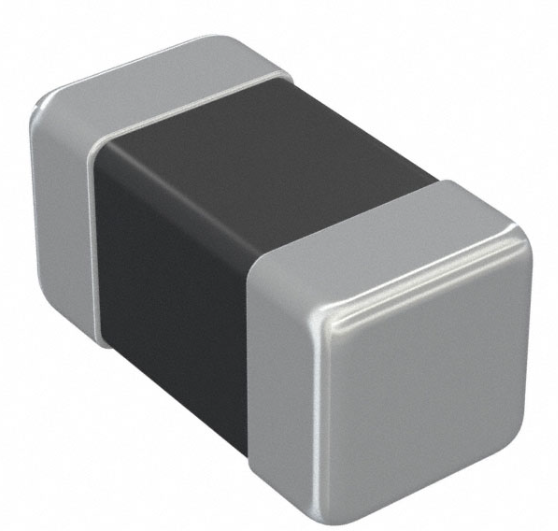
AEC-Q200 Grade 0 Automotive MLCCs
High-reliability MLCCs (-55°C to +150°C) for under-hood systems and EV powertrains.

ADAS Radar MLCC Kit (NP0 Dielectric)
Stable capacitance for radar sensors – 0402/0603 sizes with 16V-50V ratings.

High-Voltage EV MLCCs (500V-1kV)
For BMS and inverters – low ESR, X7R dielectric, AEC-Q200 compliant.
Infotainment MLCCs (1206 Size)
Noise-filtering MLCCs for touchscreens and audio systems – 25V-100V ratings.
MLCC Capacitors: 10 Essential Questions Answered for Electronics Enthusiasts
What Does a Capacitor Do? 10 Key Questions Answered for Electronics Enthusiasts
Related Article