How Moisture and Humidity Affect MLCC Storage and SMT Reliability
For electronic component distributors, warehouse managers, and surface‑mount technology (SMT) assembly supervisors, environmental storage conditions are just as critical as electrical specifications. While Multi‑Layer Ceramic Capacitors (MLCCs) are generally viewed as robust, passive components, improper warehouse storage and uncontrolled ambient humidity can introduce hidden defects that lead to soldering failures and field returns.
Understanding how moisture impacts ceramic components helps manufacturing facilities maintain strict quality control standards and protect their production lines.
The Hidden Risks of Humidity During Storage
Unlike plastic‑encapsulated integrated circuits that suffer from the "popcorn effect" due to moisture vaporization during reflow, ceramic capacitors have a different vulnerability profile when exposed to high‑humidity environments over extended periods.
Termination Oxidation and Wetting Degradation: Standard MLCCs feature multi‑layer terminations, typically consisting of a copper inner layer, a nickel barrier layer, and an outer tin (Sn) plating layer. If components are stored in high‑humidity warehouses without climate control, moisture can accelerate the oxidation of the outer tin plating. Poor solderability results in weak wetting during reflow, leading to "non‑wetting" or "de‑wetting" solder joints.
Moisture Absorption in Porous Dielectrics: Although high‑density sintered ceramic dielectrics have extremely low porosity, microscopic surface moisture films can accumulate on tape‑and‑reel packaging or reel cardboard inserts. During rapid preheating in the SMT reflow oven, trapped moisture can vaporize abruptly, causing localized thermal stress or minor surface contamination that interferes with flux activation.
Best Practices for MLCC Warehouse Management
To prevent storage‑related assembly defects, procurement and inventory management teams should enforce strict material handling protocols:
- Maintain Controlled Climate Storage: Store MLCC inventory in climate‑controlled environments with a stable temperature range (typically 5°C to 35°C) and relative humidity kept below 60% RH. Avoid wide temperature swings that cause condensation inside storage bags.
- Keep Original Packaging Sealed: Do not open factory vacuum‑sealed moisture barrier bags (MBB) until the components are ready to be loaded onto SMT production lines. If a reel is partially used, reseal the remaining components immediately with desiccants.
- Monitor Shelf Life and Stock Rotation: Implement a strict First‑In, First‑Out (FIFO) inventory policy. Although ceramic capacitors have a long shelf life when stored correctly, minimizing prolonged exposure to ambient factory floors prevents oxidation risks.
- Implement Baking Protocols When Necessary: If components have been exposed to high humidity or if packaging seals have been compromised for an extended period, consult manufacturer guidelines regarding baking procedures (typically baking at 120°C for several hours) to restore optimal solderability prior to placement.
Secure Factory‑Fresh MLCCs with Reliable Logistics
Ensure your production lines are supplied with pristine, professionally packaged surface‑mount components from barronmlcc.com. We maintain strict quality assurance and secure packaging standards to guarantee our MLCCs arrive ready for seamless SMT assembly. Contact our sales engineering team today for bulk availability and fast global shipping quotes.
Contact Us
Direct Email: hyc2355937758@gmail.com
WhatsApp & Mobile: +86 15913754866
Telephone Support: +86 18824523083
Official Web Portal: //www.barronmlcc.com
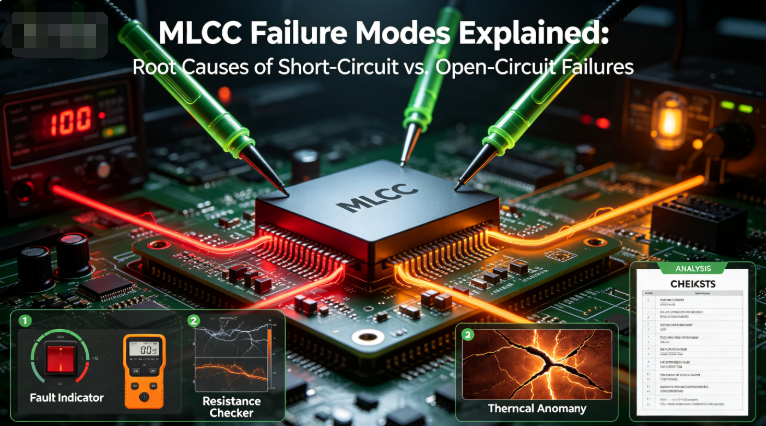
MLCC Failure Modes Explained Root Causes of Short Circuit vs Open Circuit Failures

Why Equivalent Series Resistance ESR and Equivalent Series Inductance ESL Matter in MLCC Selection

Related Article