MLCCs for Electronic Musical Instruments Supporting Audio Processing and stable
MLCCs for Electronic Musical Instruments: Supporting Audio Processing and Stable Circuit Design
MLCC capacitors for musical instruments, ceramic capacitors for digital pianos, capacitors for synthesizers, MLCC selection for audio electronics
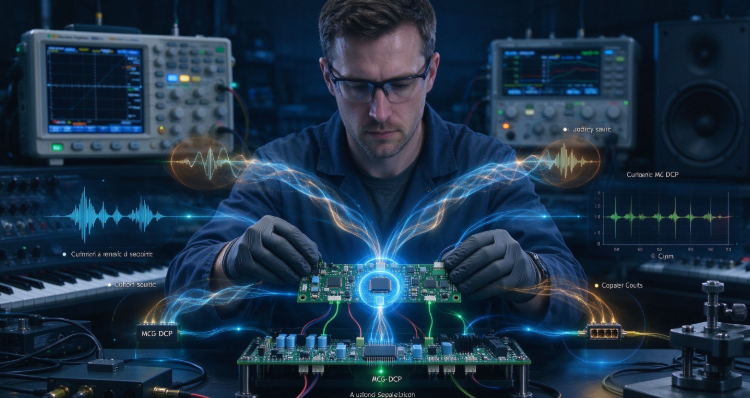
Electronic musical instruments have evolved from simple keyboards into sophisticated digital systems. Modern digital pianos, synthesizers, electronic drum kits, MIDI controllers, and digital audio devices combine sound processing, control circuits, memory, displays, and communication interfaces.
These products require stable electronic circuits to process audio signals and respond accurately to user input.
Multilayer ceramic capacitors (MLCCs) are widely used in electronic musical instruments. They support power supply decoupling, noise filtering, and selected signal-conditioning functions.
This article explores the main applications of MLCCs in electronic musical instruments and explains how engineers can select suitable components.
1. MLCCs in Digital Audio Processing Circuits
Modern digital musical instruments often use digital signal processors (DSPs), audio codecs, and microcontrollers to generate, process, and control sound.
These ICs may operate with multiple voltage rails and changing current demands.
MLCCs are commonly placed near power supply pins to provide local decoupling and help reduce high-frequency power disturbances.
Typical applications include:
- DSP power supply decoupling.
- Audio codec power filtering.
- Microcontroller decoupling.
- Memory and digital logic power filtering.
- Local filtering around voltage regulators.
X7R and X5R capacitors are commonly used for general-purpose power decoupling when their effective capacitance and operating characteristics meet the design requirements.
Engineers should follow the IC manufacturer's recommended capacitor values and PCB layout guidelines.
2. Supporting Analog Audio Circuits
Some electronic instruments include analog audio input and output circuits, such as microphone inputs, line outputs, headphone amplifiers, and analog synthesizer sections.
These circuits may require filtering, coupling, or power supply decoupling.
MLCCs can be used in selected analog circuit positions, depending on the signal requirements and component characteristics.
However, capacitor selection in audio circuits deserves particular attention.
Important factors include:
- Capacitance tolerance.
- Dielectric characteristics.
- Voltage coefficient.
- Temperature stability.
- Distortion and signal requirements.
C0G/NP0 MLCCs may be suitable for certain low-loss, stable signal applications. Other capacitor technologies may be more appropriate for particular audio coupling or filtering positions.
Engineers should evaluate the complete signal path instead of assuming that every capacitor can be replaced by an MLCC.
3. MLCCs in Synthesizer and Sound Generation Circuits
Electronic synthesizers generate sound through digital or analog circuit architectures.
Digital synthesizers may use processors and DSPs, while analog synthesizers may contain oscillators, filters, amplifiers, and voltage-controlled circuits.
MLCCs may support these systems through power decoupling and selected filtering functions.
For analog synthesizer circuits, capacitor characteristics can influence frequency response and circuit behavior.
C0G/NP0 capacitors may be considered in selected timing and frequency-related applications because of their stable capacitance characteristics.
For other power and control circuits, X7R MLCCs may be appropriate.
The final selection should be based on circuit topology, frequency requirements, and the manufacturer's design recommendations.
4. Supporting Keyboard Scanning and User Control Interfaces
Digital pianos and electronic keyboards contain many keys, buttons, knobs, and control interfaces.
A keyboard scanning circuit detects user input and sends information to the main processor.
MLCCs may be used around microcontrollers and interface ICs for local power decoupling and noise filtering.
Some designs also include touch sensors, rotary encoders, and LED control circuits.
Engineers should consider the electrical environment of these interfaces, especially when they share a PCB with switching power supplies, displays, or audio circuits.
Appropriate grounding and PCB layout help prevent unwanted interference between circuit sections.
5. MLCCs in MIDI, USB, and Wireless Interfaces
Modern musical instruments often support MIDI, USB, Bluetooth, or other communication technologies.
These interfaces allow instruments to connect to computers, recording systems, external controllers, and mobile devices.
Communication ICs and wireless modules require stable power supply conditions.
MLCCs are commonly used for:
- USB interface IC decoupling.
- MIDI control circuit power filtering.
- Wireless module power decoupling.
- Microcontroller supply filtering.
- Local filtering around communication processors.
For USB and wireless circuits, engineers should also follow the interface or module manufacturer's reference design.
Capacitor selection alone cannot guarantee communication performance. PCB routing, grounding, connector design, and electromagnetic compatibility must also be considered.
6. Power Supply Design for Electronic Musical Instruments
Electronic instruments may operate through external power adapters, USB power, or rechargeable batteries.
Their internal power systems may supply several circuit sections with different voltage and current requirements.
MLCCs can support power management circuits through input filtering, output decoupling, and local noise reduction.
When selecting capacitors, engineers should evaluate:
Effective capacitance: Class II MLCCs such as X5R and X7R may lose capacitance under DC bias.
Rated voltage: Select suitable voltage ratings with appropriate design margin.
Temperature characteristics: Check whether the capacitor can operate within the expected internal temperature range.
Transient response: Consider current changes during audio processing, display operation, and wireless communication.
The overall power system should be validated under actual operating conditions.
7. How to Select MLCCs for Electronic Musical Instruments
Different circuit sections require different capacitor characteristics.
Capacitance
Choose capacitance according to the specific power filtering, decoupling, or signal-conditioning requirements.
Dielectric Type
- C0G/NP0: Suitable for selected applications requiring stable capacitance and low dielectric loss.
- X7R: Commonly used for general-purpose power decoupling and filtering.
- X5R: May be suitable for compact power circuits when its temperature and DC-bias performance meet requirements.
Voltage Rating
Select an appropriate rated voltage and check the manufacturer's DC-bias characteristics.
Tolerance
Precision analog and frequency-related circuits may require tighter tolerance than general power supply applications.
Package Size
Common packages include 0402, 0603, and 0805. Choose according to PCB space, electrical specifications, assembly requirements, and mechanical conditions.
8. Common MLCC Selection Mistakes
Using the same capacitor specification throughout the instrument. Audio, digital, analog, and power circuits may have different requirements.
Ignoring dielectric characteristics. The dielectric can affect capacitance stability and signal behavior.
Selecting by nominal capacitance alone. Effective capacitance may be lower under applied DC voltage.
Overlooking PCB layout. Poor grounding and component placement can increase noise coupling between circuit sections.
Replacing components without reviewing the signal path. A suitable replacement must meet both electrical specifications and the circuit's actual functional requirements.
9. MLCC Sourcing Checklist for Musical Instrument Manufacturers
Before sourcing MLCCs, purchasing and engineering teams should prepare:
- Manufacturer part number or complete specifications.
- Capacitance and tolerance.
- Rated voltage.
- Dielectric type.
- Package size and termination.
- Operating temperature range.
- Required quantity.
- Approved alternative requirements.
- Relevant datasheet and quality documentation.
Providing complete specifications makes it easier to evaluate suitable component sourcing options.
Frequently Asked Questions
Q1: What are MLCCs used for in electronic musical instruments?
They are commonly used for power decoupling, noise filtering, DSP supply circuits, communication interfaces, and selected analog signal-conditioning applications.
Q2: Which MLCC dielectric is suitable for audio circuits?
C0G/NP0 may be suitable for selected stable, low-loss signal applications. X7R and X5R are commonly used for general power decoupling when their characteristics meet the circuit requirements.
Q3: Can MLCCs replace all capacitors in an audio circuit?
No. Different capacitor technologies have different electrical characteristics. Engineers should evaluate each circuit position individually.
Q4: Why is power filtering important in digital musical instruments?
DSPs, processors, displays, and communication modules can generate changing current demand. Proper power filtering and decoupling help maintain suitable supply conditions.
Q5: What should buyers provide when sourcing MLCCs for musical instruments?
Provide the required part number or specifications, capacitance, voltage rating, dielectric type, tolerance, package size, operating temperature, and target quantity.
Conclusion
Electronic musical instruments combine digital sound processing, analog audio circuits, user interfaces, and communication technologies. MLCCs support these systems through power decoupling, filtering, and selected signal-conditioning applications.
Choosing suitable MLCCs requires attention to dielectric characteristics, capacitance, voltage rating, tolerance, package size, and the requirements of each circuit section.
Visit Barron MLCC at //www.barronmlcc.com/ to explore MLCC product information and component sourcing options. You can also submit your required specifications and target quantity to discuss potential sourcing options for your project.
Need MLCC Samples or Technical Support for Your Musical Instrument Project?
Barron MLCC supplies high-reliability multilayer ceramic capacitors for audio and musical instrument electronics. Contact our engineering team to review your BOM and apply for free samples.
Email: hyc2355937758@gmail.com
WhatsApp:86+15913754866
Tel: 86+18824523083
Website: www.barronmlcc.com
Request Free SamplesMLCCs for Smart Refrigerators Supporting Compressor Control Sensors and Smart Connectivity
MLCCs for Electronic Musical Instruments Supporting Audio Processing and Stable Circuit Design
Related Article