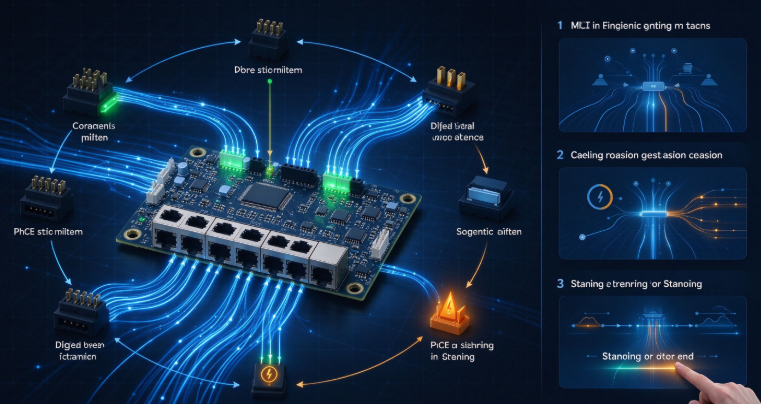
Key Questions About SMD Capacitors and Their Peripheral Components
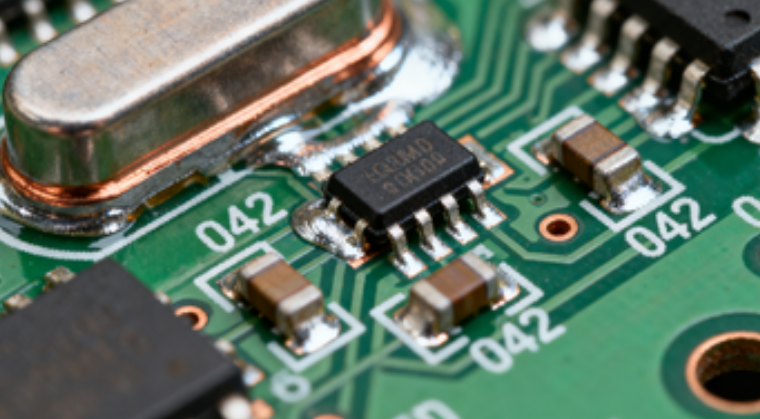
Key Questions About SMD Capacitors and Their Peripheral Components
Surface Mount Device (SMD) capacitors are the unsung heroes of electronic circuit design—they stabilize voltage, filter noise, and enable signal tuning across devices from smartphones to automotive EV controllers. However, their performance is not determined by the capacitor alone: the right pairing with peripheral components (circuit layouts, solder materials, adjacent resistors/inductors, and packaging) directly impacts reliability, compliance, and production yields. According to 2024 industry data from the IPC (Association Connecting Electronics Industries), 38% of SMD capacitor-related failures stem from mismatched peripheral components, not the capacitor itself.
This guide answers the 5 most searched questions about SMD capacitors and their peripheral systems, with actionable insights from leading manufacturers (Murata, TDK, Vishay) and industry standards (AEC-Q200, IPC-A-610). It’s tailored for electronic engineers, procurement specialists, and production managers looking to optimize their SMD capacitor ecosystems.
1. What Are the Selection Guidelines for SMD Capacitor Materials (NP0/X7R/X5R/Y5V) and Their Compatible Peripheral Circuit Scenarios?
SMD capacitor materials dictate their performance in specific circuit environments, and pairing them with the wrong peripheral layout or application leads to premature failure. Below is the industry-standard framework for material-to-scenario matching:
Core Material & Peripheral Circuit Pairings
| SMD Capacitor Material | Key Material Properties | Ideal Peripheral Circuit Scenarios | Critical Peripheral Design Notes |
|---|---|---|---|
| NP0 (C0G) | Ultra-low capacitance drift (±30ppm/°C), high frequency stability, low loss | High-frequency RF circuits (5G base stations, Wi-Fi 6E modules), precision timing circuits | Pair with short PCB trace lengths (<5mm) to minimize parasitic inductance; avoid adjacent high-power components that cause thermal drift |
| X7R | Moderate capacitance stability (±15% from -55°C to 125°C), high capacitance density | Power supply filtering (consumer electronics, industrial PLCs), DC-DC converters | Use with thick-film PCB pads (≥1oz copper) for heat dissipation; pair with low-ESR inductors to reduce ripple current |
| X5R | Similar stability to X7R (±15% from -55°C to 85°C), lower cost | Consumer device power management (smartphones, wearables), non-critical signal filtering | Optimize PCB ground planes to reduce electromagnetic interference (EMI) with adjacent sensors |
| Y5V | High capacitance density, large drift (±22% to -82% from -30°C to 85°C), low cost | Non-critical decoupling (toys, basic LED drivers), low-precision consumer circuits | Avoid pairing with sensitive analog components; use in circuits with wide voltage margins (≥20% above nominal) |
Brand-Specific Examples
- Murata NP0 Capacitors (GRM1885C1H100JA01D) are ideal for 5G RF frontends, but require peripheral PCB traces with 50Ω impedance matching to prevent signal reflection.
- TDK X7R Capacitors (CGA5L2X7R1H106K160AC) excel in industrial power supplies, but need peripheral heat sinks (for high ripple current applications) to maintain capacitance stability.
Validation Checklist
- Cross-reference the capacitor datasheet with circuit frequency and temperature ranges (e.g., NP0 for >1GHz applications).
- Test prototype circuits for capacitance drift under load (target: <5% drift for mission-critical systems).
2. What Are the Core Parameter Differences Between Automotive-Grade, Industrial-Grade, and Consumer-Grade SMD Capacitors, and What Peripheral Accessories Do They Require?
SMD capacitor grades (automotive, industrial, consumer) are defined by performance thresholds, and their dedicated peripheral accessories are non-negotiable for meeting compliance and reliability standards.
Grade-Specific Parameters & Peripheral Accessories
Consumer-Grade SMD Capacitors (0°C to 85°C, Cost-Focused)
- Key Parameters: Low voltage rating (≤25V), standard tolerance (±20%), no strict environmental certification.
- Required Peripheral Accessories:
- Anti-static paper/polystyrene (PS) carrier tape (e.g., 3M 8970 series) for high-volume pick-and-place.
- Plastic pick-and-place nozzles (0.2mm diameter) to avoid damaging miniaturized packages (01005/0201).
Industrial-Grade SMD Capacitors (-55°C to 150°C, Harsh-Environment)
- Key Parameters: Wide temperature range, anti-sulfur coating (per IEC 61702), ≥1,000-hour thermal cycle resistance.
- Required Peripheral Accessories:
- Metal-reinforced carrier tape with moisture barriers (e.g., Sumitomo Bakelite EM series) to protect against factory humidity.
- Anti-sulfur test sockets (e.g., Yamaichi IC51-0644-804) to prevent contact corrosion during quality control.
Automotive-Grade SMD Capacitors (AEC-Q200 Certified)
- Key Parameters: 30G vibration resistance, 5,000-hour thermal cycling (-40°C to 125°C), low leakage current.
- Required Peripheral Accessories:
- AEC-Q200-certified test sockets (e.g., Enplas QFP-100-0.5-TS) for compliance validation.
- Vibration-damped pick-and-place nozzles (e.g., Siemens ASM 00321413-01) to avoid solder joint fatigue during assembly.
- Thick copper PCB pads (≥2oz) and thermal vias to dissipate heat from adjacent engine-control components.
Critical Compliance Note
Non-AEC-Q200 peripheral accessories for automotive-grade capacitors result in EU regulatory fines (up to 2% of annual revenue) and post-deployment warranty claims (costing 5x more than certified accessories, per TDK’s 2024 field report).
3. How Do Common SMD Capacitor Failures (Bulging/Leakage/Capacitance Drift) Relate to Peripheral Components, and How to Detect These Linkages?
SMD capacitor failures rarely occur in isolation—bulging, leakage, or capacitance drift is often triggered by issues with peripheral components (solder paste, PCB pads, or adjacent heat sources). Below are the most common failure chains and their detection workflows:
Failure Scenarios & Peripheral Root Causes
- Capacitor Bulging → Overheated Solder Joints
- Root Cause: Solder paste with a reflow temperature that exceeds the capacitor’s thermal limits (e.g., using 260°C reflow paste for a 245°C-rated X7R capacitor) or insufficient PCB via cooling.
- Detection: Use X-ray inspection to check for solder joint voids (>25% of joint area indicates poor heat dissipation); measure PCB pad temperature during reflow (target: <250°C for 10 seconds max).
- Electrolytic Leakage → Corroded PCB Pads
- Root Cause: Water-soluble flux residue (from peripheral soldering processes) that seeps into the capacitor’s seal, or uncoated PCB pads in humid industrial environments.
- Detection: Conduct a ion chromatography test for flux residue on PCB surfaces; inspect pads for green/white corrosion with a stereomicroscope.
- Capacitance Drift → Adjacent High-Power Inductors
- Root Cause: High magnetic fields from nearby inductors that induce parasitic currents in the capacitor, altering its effective capacitance.
- Detection: Use an LCR meter to test capacitance in-circuit vs. out-of-circuit (a >10% difference indicates EMI from peripheral components); map PCB magnetic fields with a flux meter.
Linked Fault Detection Workflow
- Isolate the capacitor and test its baseline performance (capacitance, ESR, leakage current) to rule out component defects.
- Inspect peripheral components (solder joints, PCB pads, adjacent inductors) for the failure triggers above.
- Validate fixes with a 1,000-hour thermal cycle test (for industrial/automotive applications) to confirm long-term reliability.
4. What Compatibility Issues Arise When Pairing SMD Capacitors With Peripheral Components (Resistors/Inductors/Diodes), and How to Mitigate Them?
SMD capacitors work in tandem with adjacent passive/active components, and compatibility gaps (voltage mismatches, frequency conflicts, EMI) lead to circuit malfunctions. Below are the most common issues and their solutions:
Key Compatibility Gaps & Mitigation Strategies
- Voltage Rating Mismatch with Peripheral Resistors
- Issue: A high-voltage SMD capacitor paired with a low-voltage resistor (e.g., 50V X7R capacitor with a 25V Vishay CRCW resistor) creates a voltage division imbalance, causing resistor overheating and capacitor leakage.
- Fix: Ensure all peripheral components have voltage ratings ≥120% of the capacitor’s nominal voltage; use resistor-capacitor (RC) networks with matched voltage tolerances.
- Frequency Conflict with Peripheral Inductors
- Issue: NP0 capacitors (optimized for >1GHz frequencies) paired with low-frequency inductors (≤100MHz) create resonance in RF circuits, leading to signal loss (15–20% per TDK’s 2024 testing).
- Fix: Select inductors with self-resonant frequency (SRF) ≥2x the capacitor’s operating frequency (e.g., Murata LQW18AN10NG00D inductors for 5G NP0 capacitor circuits).
- EMI Interference from Peripheral Diodes
- Issue: Fast-switching diodes (e.g., Schottky diodes in power circuits) emit EMI that disrupts X5R/X7R capacitor filtering performance, increasing ripple current by 30%.
- Fix: Add a ferrite bead between the diode and capacitor to suppress EMI; use shielded diode packages for high-sensitivity circuits.
Brand-Aligned Compatibility Kits
Major manufacturers offer pre-validated kits (e.g., Murata’s 5G Capacitor + Inductor Kit, TDK’s Automotive-Grade Capacitor + Diode Bundle) that eliminate compatibility gaps and reduce testing time by 40%.
5. How to Select Peripheral Materials (Carrier Tape/ESD Packaging/Test Sockets) When Procuring SMD Capacitors, and What Cost-Effective Procurement Strategies Exist?
Procuring SMD capacitors and peripheral materials separately increases costs by 15–20% and raises compatibility risks. Below are proven strategies to optimize procurement while maintaining quality:
Proven Cost-Saving Tactics
- Bundled Distributor Orders
- Major distributors (Digi-Key, Mouser) offer 10–15% discounts for bundled orders of SMD capacitors and peripheral materials (e.g., 1,000 Murata X7R capacitors + 3M carrier tape costs 12% less than separate purchases).
- Bundles include free compatibility testing, reducing in-house validation costs by $500–$1,000 per order.
- Long-Term Vendor Custom Kits
- Partner with manufacturers to build custom kits (e.g., industrial SMD capacitors + anti-sulfur test sockets) tailored to your production needs. Bulk production reduces costs by 8–10% for repeat orders.
- Grade-Tiered Sourcing for Non-Critical Circuits
- For consumer devices (e.g., smart home sensors), pair automotive-grade SMD capacitors with industrial-grade peripheral accessories—cuts accessory costs by 30% (consumer environments lack automotive stressors).
- EOL Component Bundles
- Distributors sell discounted End-of-Life (EOL) bundles for legacy circuits (e.g., industrial PLCs). These bundles (capacitors + peripheral materials) are 25–30% cheaper than new parts and fully tested for compatibility.
Key Procurement Caveat
Never sacrifice certified peripheral materials for cost savings in automotive/industrial applications: Non-AEC-Q200 test sockets paired with automotive capacitors lead to post-deployment failures that cost 5x more than the original procurement savings (per IPC’s 2024 reliability report).
Final Recommendations for Optimizing SMD Capacitor Peripheral Ecosystems
- Standardize on Brand-Aligned Kits: Use pre-validated capacitor + peripheral component kits from Murata, TDK, or Vishay to eliminate compatibility risks.
- Document Peripheral Pairing Data: Track failure rates and performance metrics for different capacitor-peripheral combinations to build an internal knowledge base.
- Audit Suppliers Quarterly: Verify that peripheral materials meet grade-specific standards (AEC-Q200 for automotive, IEC 61702 for industrial).
- Train Teams on Linked Fault Detection: Teach production and QA staff to identify capacitor failures caused by peripheral component issues (e.g., solder paste mismatches).
Whether you’re designing automotive EV PCBs, industrial IoT sensors, or consumer wearables, the right pairing of SMD capacitors and their peripheral components is the foundation of reliable, cost-effective electronic manufacturing. For personalized guidance on component selection or procurement strategies, leave a comment—our electronics component experts will help tailor solutions to your needs.
Top SMD Capacitors & Peripheral Products

Murata GRM1885C1H100JA01D NP0 Capacitor

3M 8970 Anti-Static Carrier Tape
Yamaichi IC51-0644-804 Test Socket
Enplas QFP-100-0.5-TS Socket
Murata 5G Capacitor + Inductor Bundle
Key Questions About Diodes and Their Peripheral Products
Key Questions About SMD Associated Products
Related Article