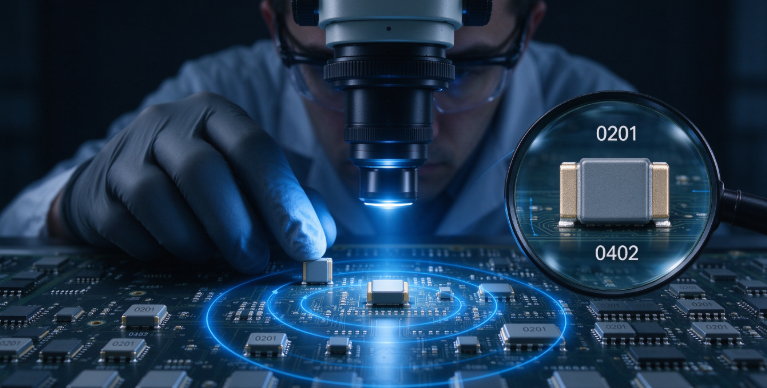
Mitigating MLCC Moisture Sensitivity Humidity Degradation and Insulation Resistance Drop
Mitigating MLCC Moisture Sensitivity, Humidity Degradation, and Insulation Resistance Drop
When electronic hardware operates in harsh tropical environments, humid industrial settings, or outdoor enclosures, environmental moisture poses a silent threat to passive components. While Multilayer Ceramic Capacitors (MLCCs) feature dense ceramic bodies that appear impervious to external elements, microscopic pathways and termination interfaces can permit moisture ingress over time.
For hardware design engineers and reliability specialists sourcing components via www.barronmlcc.com, understanding how humidity interacts with ceramic dielectrics is crucial to preventing long‑term insulation resistance (IR) degradation and field failures.
1. The Physics of Moisture‑Induced Insulation Failure
Moisture degradation in MLCCs is rarely a matter of simple surface condensation; it involves complex electrochemical and physical mechanisms that attack the internal structure of the capacitor.
Capillary Ingress via Micro‑Cracks or Termination Voids: If an MLCC contains microscopic surface pores, minor soldering micro‑cracks, or imperfect plating at the termination interface, ambient moisture can travel inward along grain boundaries or minute gaps.
Electrochemical Migration (Anodic Dissolution): When moisture combines with ionic contaminants under a continuous DC bias voltage, metal ions (such as nickel from base metal electrodes or copper/tin from terminations) migrate from the anode toward the cathode. This forms conductive metallic dendrites across the dielectric layers.
Insulation Resistance (IR) Crash: As these microscopic conductive paths develop or moisture lowers the bulk resistivity of the ceramic lattice, the insulation resistance drops exponentially—sometimes plunging from gigaohms down to a dead short circuit, resulting in thermal runaway or power supply shut down.
2. High‑Risk Operating Environments
Certain applications and deployment conditions dramatically accelerate humidity‑related capacitor failures:
Automotive Under‑Hood and Exterior Modules: Subjected to heavy humidity cycles, road salt spray, and condensation, automotive electronics require robust packaging and moisture‑resistant coatings.
Marine and Industrial Outdoor Equipment: Salt fog and high relative humidity (RH) environments create aggressive electrolytic conditions if moisture breaches the component exterior.
Unsealed Consumer and IoT Hardware: Devices deployed in tropical climates without hermetic enclosures or protective conformal coatings are prime candidates for moisture‑driven leakage current failures.
3. Engineering Best Practices for Moisture Protection
Preventing humidity‑induced MLCC failures requires a combination of component selection, board protection, and manufacturing hygiene:
Specify High‑Reliability Automotive or Industrial Grades: Choose capacitors qualified to rigorous standards like AEC‑Q200, which include stringent moisture resistance and biased humidity testing (such as THB testing at 85°C / 85% RH under rated voltage).
Apply Conformal Coating or Potting: Protect assembled PCBs with specialized acrylic, silicone, or polyurethane conformal coatings to create an effective moisture barrier over solder joints and component bodies.
Maintain Strict PCB Cleanliness: Remove flux residues and ionic contaminants during board assembly. Ionic residues act as electrolytes when exposed to moisture, accelerating electrochemical migration.
Securing Environmental Resilience with HLAIPOPNY
Building electronic systems capable of withstanding humid, corrosive, and demanding field conditions requires uncompromising component selection and rigorous quality assurance.
To explore our inventory of moisture‑resistant, high‑reliability surface‑mount capacitors engineered for extreme environments, visit us at www.barronmlcc.com.
HLAIPOPNY — Engineering environmental durability and uncompromised electrical reliability into every layer of electronic manufacturing.
What specific conformal coating types or environmental ingress protection (IP) ratings do your current hardware enclosures require for field deployment?
Contact Us:
Email: hyc2355937758@gmail.com
WhatsApp:8615913754866
Tel: 86+18824523083
Website: www.barronmlcc.com
Managing MLCC Ripple Current Ratings Self Heating and Thermal Limits
Inside the Layers Understanding MLCC Internal Voids Delamination and Destructive Physical Analysis DPA
Related Article
But how do engineers choose the right MLCC for an IoT application? Here are the key factors to consider.

Multilayer ceramic capacitors (MLCCs) are commonly used in these circuits