MLCC Capacitors for LED Lighting What Designers Should Know
MLCC Capacitors for LED Lighting: What Designers Should Know
LED lighting systems are designed to be energy-efficient, compact, and reliable. Behind the LED chips, however, there are electronic circuits that control power, reduce electrical noise, and maintain stable operation.
Multilayer ceramic capacitors (MLCCs) are commonly used in these circuits. But not every ceramic capacitor is suitable for every LED lighting design. The right choice depends on the circuit location, voltage conditions, temperature, and required electrical performance.
Here are the key points engineers and component buyers should understand when sourcing MLCCs for LED lighting applications.
1. Where Are MLCC Capacitors Used in LED Lighting?
An LED lighting system may contain several types of electronic circuits, depending on its design.
MLCCs may be used in:
- Power supply circuits: Supporting local filtering and decoupling around control and power components.
- LED driver circuits: Helping manage high-frequency noise and switching behavior where the circuit design requires it.
- Control circuits: Stabilizing supply rails for microcontrollers, communication interfaces, and other electronic devices.
- Signal and sensing circuits: Filtering unwanted high-frequency interference in suitable circuit configurations.
The exact capacitor requirements differ between a simple LED bulb, a commercial lighting fixture, an industrial high-bay light, and a smart lighting system.
Before selecting a component, identify its function in the circuit rather than choosing an MLCC based only on the product category.
2. Why Does the Dielectric Type Matter?
The dielectric determines important characteristics such as capacitance stability, temperature behavior, and voltage-dependent capacitance.
Two common choices are X7R and C0G/NP0.
X7R MLCCs are widely used where relatively high capacitance is needed in a compact package. Their capacitance can change with applied DC voltage, temperature, and aging, so the effective value must be checked under operating conditions.
C0G/NP0 MLCCs offer excellent capacitance stability and low losses, making them useful in precision or frequency-sensitive circuits. However, they generally provide less capacitance than X7R parts of comparable size.
Neither type is automatically best for every LED driver. The circuit function and performance requirements should determine the choice.
3. Check the Actual Voltage Conditions
LED lighting circuits can include low-voltage control electronics, switching power converters, and other sections with very different voltage requirements.
The capacitor's rated voltage must be appropriate for the maximum voltage it will experience, including relevant transients and startup conditions.
For Class II MLCCs, such as X7R, DC bias can also reduce effective capacitance. A component labeled with a nominal capacitance may therefore provide less capacitance when operating at its actual DC voltage.
Before approving a part, check:
- Normal operating voltage
- Expected voltage spikes and transients
- Required voltage margin
- Effective capacitance at the operating bias
- Manufacturer recommendations for the application
Do not assume that a capacitor is suitable simply because its rated voltage exceeds the circuit's normal voltage.
4. Temperature and Long-Term Operation
LED lighting products may operate for extended periods, sometimes inside enclosed fixtures with limited airflow. The temperature around the driver electronics can therefore be different from room temperature.
The selected MLCC must be suitable for the expected operating temperature range. Its capacitance characteristics should also meet the circuit's requirements across that range.
When evaluating a part, review the temperature range and electrical characteristics in the manufacturer's datasheet. Also consider the temperature conditions near power components and other heat sources.
A component's temperature rating is not a guarantee that the entire lighting system will achieve a particular service life. Overall reliability also depends on the driver design, thermal management, assembly quality, and other components.
5. High-Frequency Noise and Switching Circuits
Many LED drivers use switching power conversion. Switching can create high-frequency noise that affects circuit performance or electromagnetic compatibility.
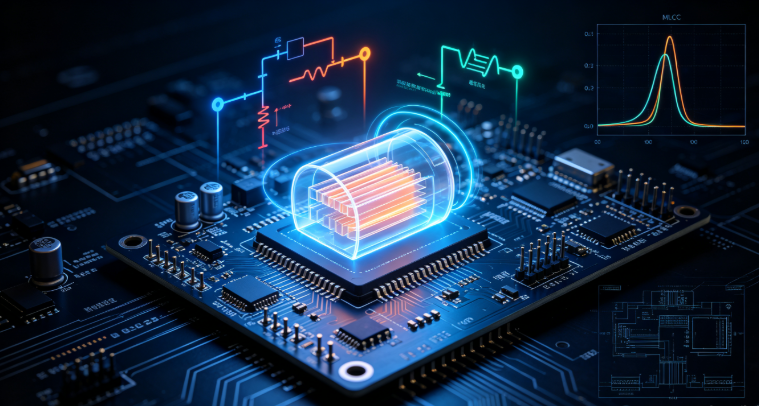
MLCCs are often used for local decoupling and filtering because suitable parts can provide low impedance over relevant frequency ranges.
However, their performance depends on more than nominal capacitance. Package size, mounting layout, equivalent series inductance (ESL), equivalent series resistance (ESR), and self-resonant frequency can all matter.
For noise-sensitive designs, engineers should evaluate the capacitor's impedance behavior and PCB layout. A capacitor placed far from the circuit node it is intended to support may not provide the expected high-frequency performance.
The best solution is the one validated in the actual circuit, not simply the part with the largest capacitance value.
6. PCB Assembly and Mechanical Reliability
LED driver boards often use automated surface-mount technology (SMT), making standard SMD MLCCs convenient for high-volume assembly.
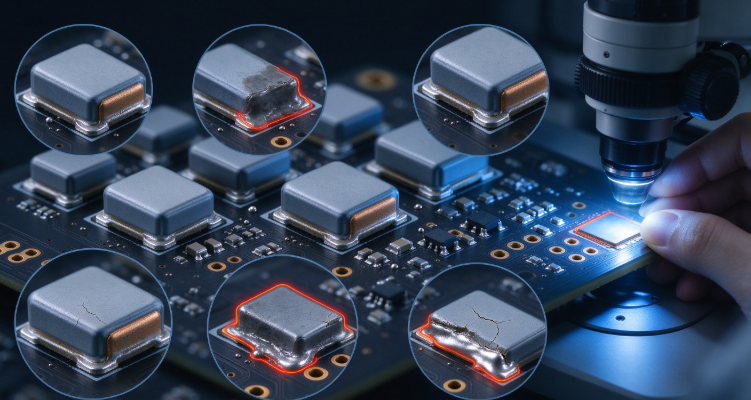
Even so, the assembly process matters. Excessive thermal stress during soldering, uneven solder joints, or mechanical bending of the PCB can damage ceramic capacitors.
To reduce unnecessary risk:
- Follow the component manufacturer's recommended soldering profile.
- Use an appropriate PCB footprint and solder-paste design.
- Avoid excessive board bending during depanelization and assembly.
- Inspect solder joints and component placement during production.
- Investigate repeated failures rather than replacing components without finding the cause.
These practices help support consistent assembly quality, although they cannot eliminate every possible failure mechanism.
7. What Should Buyers Check Before Ordering?
When purchasing MLCCs for LED lighting, confirm that the quoted part matches the engineering requirements.
A practical checklist includes:
| Parameter | What to confirm |
|---|---|
| Capacitance | Required nominal and effective capacitance |
| Rated voltage | Suitable for normal operation and relevant transients |
| Dielectric | X7R, C0G/NP0, or another specified type |
| Tolerance | Acceptable capacitance variation |
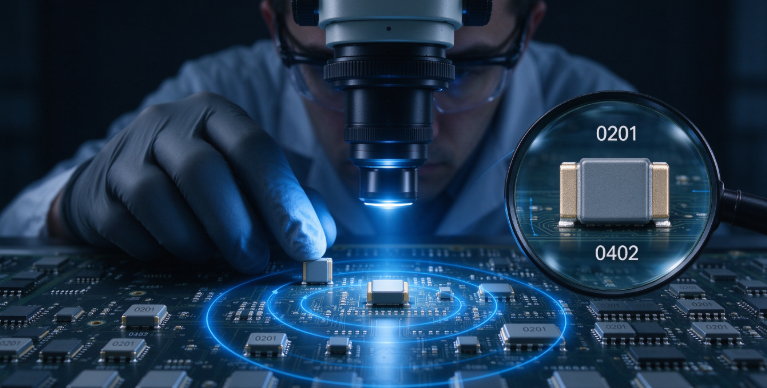
| Package size | PCB footprint and assembly compatibility |
Additional items to verify include operating temperature range, soft termination requirements, and compliance with lighting industry standards if required.
Conclusion
MLCCs are widely used in LED drivers and lighting control circuits. Designers must consider dielectric selection, DC bias derating, thermal environment, high-frequency impedance, and mechanical reliability. Choosing the right MLCC helps stabilize power rails, suppress switching noise and extend fixture service life.
If you are sourcing MLCC capacitors for LED lighting projects, share your circuit specs, operating temperature, package and quantity requirements. Our engineering team can recommend suitable MLCC options for your LED driver design.


Contact Us
Email: hyc2355937758@gmail.com
WhatsApp: +86 15913754866
Tel: +86 18824523083
Website: barronmlcc.com
Why Do MLCC Capacitors Have No Markings How to Identify Them
Related Article
The short answer is that most standard multilayer ceramic capacitors (MLCCs) are non-polarized. However