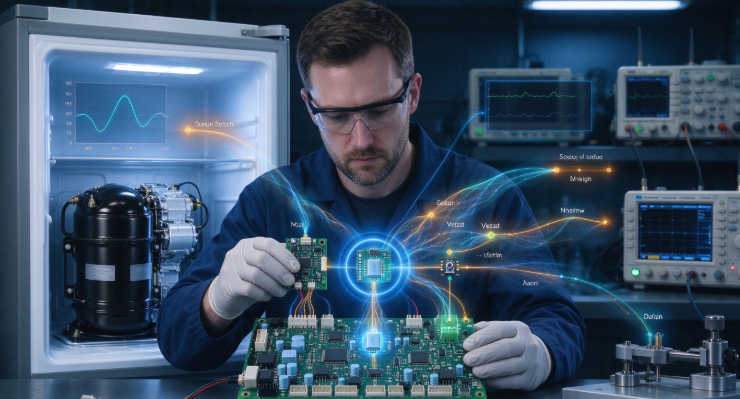
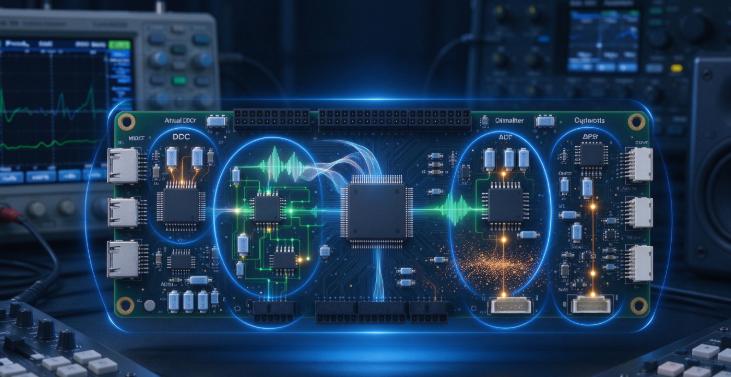
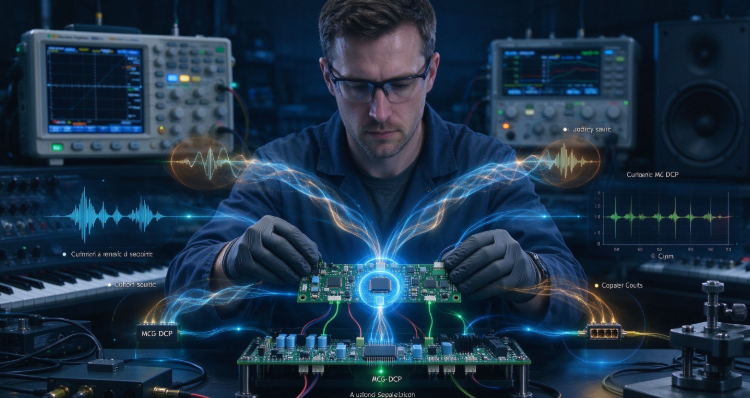
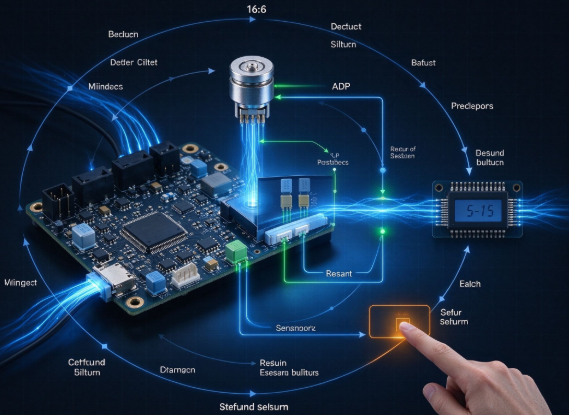
MLCCs for Smart Pet Feeders Supporting Motor Control Sensors and Wireless Connectivity
MLCCs for Smart Pet Feeders: Supporting Motor Control, Sensors, and Wireless Connectivity
MLCC capacitors for pet feeders, ceramic capacitors for smart pet devices, capacitors for automatic pet feeders, MLCC selection for smart home electronics
Smart pet feeders are becoming increasingly popular in modern homes. These devices allow pet owners to schedule feeding times, control food portions, and manage feeding activities through mobile applications. Some advanced models also include cameras, microphones, weight sensors, and wireless connectivity.
Behind these functions is an electronic system that combines motor control, sensor processing, power management, and communication circuits.
Multilayer ceramic capacitors (MLCCs) are widely used in these electronic systems. They help provide local power decoupling, filter electrical noise, and support stable operation of different circuit modules.
This article explores where MLCCs are used in smart pet feeders and what engineers should consider when selecting suitable components.
1. MLCCs in Automatic Food Dispensing Systems
The food dispensing mechanism is one of the main functional parts of an automatic pet feeder.
Depending on the product design, it may use a DC motor, stepper motor, or another actuator to rotate an auger, turn a feeding wheel, or release a measured portion of food.
Motor operation can create changes in current demand and electrical noise. These disturbances may affect nearby electronic circuits if the power system and PCB layout are not properly designed.
MLCCs may be used around motor driver ICs and power management circuits for local decoupling and high-frequency filtering.
Typical applications include:
- Power supply decoupling for motor driver ICs.
- Filtering around voltage regulators.
- Local filtering for control circuits.
- Supporting stable power delivery to digital electronics.
Engineers should also consider the motor's startup current, stall conditions, and switching behavior. MLCCs are not a replacement for appropriately sized bulk capacitors or motor suppression components where those are required.
2. Supporting Portion Control and Weight Sensors
Some smart pet feeders use load cells or other sensing technologies to estimate the amount of food dispensed.
These sensors may connect to a signal conditioning circuit and an analog-to-digital converter (ADC). The resulting data can be processed by a microcontroller to manage feeding portions.
MLCCs may be used in these circuits for:
- Power supply decoupling.
- Filtering selected sensor signals.
- Supporting stable ADC supply rails.
- Reducing high-frequency noise in suitable circuit locations.
For sensitive measurement circuits, capacitor selection should consider dielectric stability, tolerance, temperature characteristics, and the sensor manufacturer's recommended circuit.
C0G/NP0 capacitors may be suitable for certain precision filtering applications, while X7R capacitors are commonly used for general power decoupling.
The capacitor network should be designed around the actual sensor and ADC requirements rather than assuming that a larger capacitance always improves measurement performance.
3. MLCCs in Wireless Communication Modules
Many smart pet feeders connect to home Wi-Fi networks or communicate with mobile applications through wireless modules.
Wireless transmission can create short periods of higher current demand. If the power supply cannot respond adequately, the module may experience voltage fluctuations or unstable operation.
MLCCs are commonly placed near wireless module power pins to provide local decoupling and help manage high-frequency power disturbances.
Important considerations include:
- Recommended capacitor values from the wireless module datasheet.
- Effective capacitance under DC bias.
- Power supply transient response.
- PCB layout and grounding.
- Placement close to the module's supply pins.
Engineers should follow the module manufacturer's reference design because wireless performance depends on the complete RF and power supply layout, not just the capacitor selection.
4. Supporting Cameras and Audio Functions
Some premium pet feeders include cameras for remote monitoring, microphones for audio interaction, or speakers for voice messages.
These features introduce additional electronic modules, including image sensors, audio amplifiers, and digital signal processors.
MLCCs may be used in these circuits for:
- Local decoupling around image processing ICs.
- Filtering camera module power rails.
- Power supply decoupling for audio amplifiers.
- Filtering in selected analog audio circuits.
The requirements vary depending on the component and circuit architecture. For example, an audio amplifier's power supply network may have different requirements from a camera sensor's supply pins.
Engineers should check the relevant IC datasheets and reference designs before selecting capacitance values and dielectric types.
5. Power Management for Standby and Battery Operation
Not every smart pet feeder operates continuously from an external adapter. Some products include backup batteries or use battery power for selected functions.
In these designs, the electronics may spend long periods in standby mode and wake up when a feeding schedule begins, a user sends a command, or a sensor detects an event.
MLCCs support local power management and decoupling in these systems.
When selecting capacitors, engineers should consider:
Effective capacitance: Class II MLCCs such as X5R and X7R can lose capacitance under DC bias.
Operating temperature: Temperature changes may affect the available capacitance and other electrical characteristics.
Transient current demand: Motor activation and wireless transmission can create different load conditions.
Standby current: The overall power budget depends on the complete circuit, including regulators, processors, sensors, and communication modules.
MLCC selection alone does not determine battery life. The complete power architecture and operating schedule must be evaluated.
6. Choosing the Right MLCC for Smart Pet Feeder Electronics
Different circuit functions require different capacitor characteristics. Engineers should evaluate the following specifications before selecting an MLCC.
Capacitance
Select capacitance according to the circuit's filtering, decoupling, or signal conditioning requirements. Consider the effective capacitance under operating conditions rather than relying only on the nominal value.
Rated Voltage
Choose a voltage rating that meets the circuit's operating conditions and design margin. Check the manufacturer's DC-bias characteristics, particularly for Class II MLCCs.
Dielectric Type
- X7R: Commonly used for general-purpose decoupling and filtering.
- X5R: Suitable for some compact power circuits when its temperature and DC-bias characteristics meet the requirements.
- C0G/NP0: Useful for selected applications requiring high capacitance stability and low dielectric loss.
Package Size
Common packages include 0402, 0603, and 0805. The appropriate size depends on PCB space, capacitance, voltage rating, assembly requirements, and mechanical conditions.
Mechanical Reliability
Pet feeders may contain moving parts and motors that generate vibration. PCB mounting, component placement, soldering quality, and mechanical protection should be considered as part of the overall design.
7. Common MLCC Selection Mistakes
- Selecting components only by nominal capacitance. Effective capacitance may be lower than expected under applied DC voltage.
- Ignoring motor-related disturbances. Motor driver circuits should be evaluated for startup current, switching noise, and inductive transients.
- Using identical capacitors throughout the PCB. Motor drivers, wireless modules, sensors, and processors may have different requirements.
- Overlooking wireless module recommendations. Incorrect capacitor selection or poor placement can affect power stability.
- Approving alternative parts without checking specifications. Compare dielectric type, package size, voltage rating, tolerance, temperature range, and DC-bias performance before substitution.
8. MLCC Sourcing Checklist for Pet Feeder Manufacturers
Before purchasing MLCCs for smart pet feeder production, engineering and purchasing teams should prepare:
- Manufacturer part number or complete specifications.
- Required capacitance and tolerance.
- Rated voltage and dielectric type.
- Package size and termination.
- Operating temperature range.
- Required purchasing quantity.
- Approved alternative requirements.
- Relevant datasheet and quality documentation.
Providing clear specifications helps buyers evaluate potential component sourcing options more efficiently.
Frequently Asked Questions
Q1: What are MLCCs used for in smart pet feeders?
MLCCs are commonly used for power decoupling, noise filtering, sensor interfaces, motor driver power circuits, and wireless communication modules.
Q2: Can MLCCs improve the reliability of automatic food dispensing?
They can support power filtering and decoupling in the control electronics. However, dispensing reliability also depends on motor selection, mechanical design, firmware, power supply capability, and system testing.
Q3: Which MLCC dielectric is suitable for smart pet feeder circuit boards?
X7R and X5R are common options for general power decoupling. C0G/NP0 may be appropriate for selected precision or low-loss circuits. The final choice depends on the circuit requirements.
Q4: Are MLCCs suitable for battery-powered pet feeders?
Yes. MLCCs are widely used in battery-powered electronics. Engineers should evaluate effective capacitance, voltage rating, temperature characteristics, and the overall power budget.
Q5: What specifications should buyers provide when sourcing MLCCs?
Buyers should provide the part number or required capacitance, voltage rating, dielectric type, tolerance, package size, quantity, and operating temperature requirements.
Conclusion
Smart pet feeders combine mechanical dispensing systems with electronic control, sensing, and wireless communication. MLCCs support these functions through power decoupling, filtering, and selected signal-conditioning applications.
For manufacturers, selecting the right MLCC requires careful evaluation of capacitance, voltage rating, dielectric type, package size, and operating conditions.
Explore MLCC Products & Sourcing Solutions
To explore MLCC products and component sourcing options, visit Barron MLCC at //www.barronmlcc.com/. You can also submit your required specifications and target quantity to discuss suitable sourcing options for your project.
Email: hyc2355937758@gmail.com
WhatsApp: 86+15913754866
Tel: 86+18824523083
Website: www.barronmlcc.com
MLCCs for Electronic Weighing Scales Supporting Load Cell Signals and Stable Measurement Circuits
MLCCs for Smart Irrigation Controllers Supporting Valve Control Outdoor Electronics and Low Power Design
Related Article