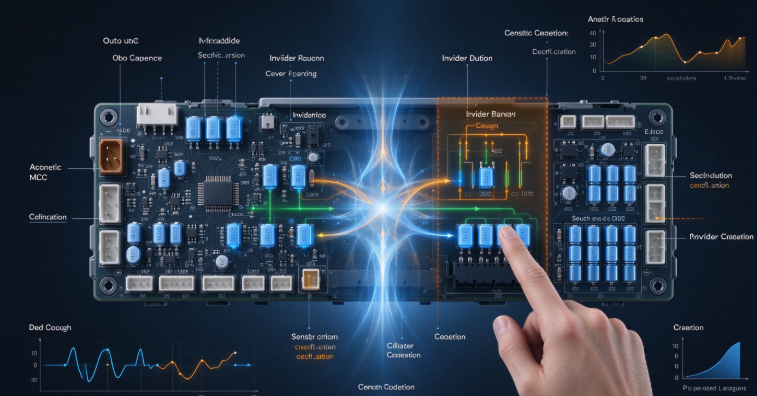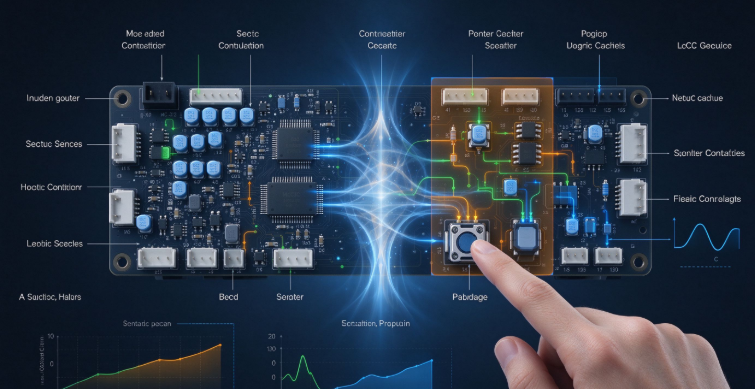
MLCCs for Medical Laboratory Analyzers Supporting Precision Measurement and Stable Electronic Systems
MLCCs for Medical Laboratory Analyzers: Supporting Precision Measurement and Stable Electronic Systems
Medical laboratory analyzers are widely used in clinical laboratories and testing facilities. These instruments process samples and collect measurement data through optical, electrical, thermal, and mechanical systems.
Modern analyzers often combine light sources, photodetectors, precision analog circuits, motors, sensors, and embedded processors. Each subsystem depends on carefully designed electronic circuits.
Multilayer Ceramic Capacitors (MLCCs) are common components in these systems. They provide local power decoupling and filtering, helping electronic circuits operate within their designed electrical conditions.
For engineers and procurement teams, understanding the different applications of MLCCs can help improve component selection and sourcing decisions.
1. Optical Detection and Photodetector Circuits
Many laboratory analyzers use optical measurement techniques. Depending on the instrument, light may pass through a sample or interact with it before reaching a photodetector.
The detector converts received light into an electrical signal. This signal is often very small and requires amplification and processing.
MLCCs may be used in these circuits for:
- Decoupling operational amplifiers and analog ICs.
- Filtering noise from low-voltage power supplies.
- Supporting stable power rails for detector electronics.
- Filtering signals in suitable analog circuit configurations.
For sensitive analog applications, engineers may consider C0G/NP0 capacitors where stable capacitance and low dielectric loss are important. The actual selection depends on the circuit topology, signal bandwidth, and component requirements.
2. Precision Analog Signal Processing
After a sample is measured, the analyzer's electronic system must process the resulting signals. This may involve amplification, filtering, analog-to-digital conversion, and digital data processing.
Power supply noise can affect sensitive analog circuits, so local decoupling is an important part of PCB design.
MLCCs are commonly placed near the power pins of:
- Operational amplifiers.
- Analog-to-digital converters.
- Voltage reference circuits.
- Signal-processing ICs.
- Microcontrollers and digital processors.
Different circuit sections may require different capacitance values and dielectric materials. Engineers should follow IC datasheets and reference layouts instead of applying one capacitor value to every circuit.
3. Sample Handling and Precision Motion Control
Automated laboratory analyzers may use motors, pumps, valves, and mechanical positioning systems to move samples and reagents.
These subsystems can introduce switching noise and transient disturbances into the instrument's electrical environment.
MLCCs may support the associated control electronics through:
- Local decoupling around motor-driver ICs.
- High-frequency filtering on power rails.
- Noise filtering for control and feedback circuits.
- Power stabilization for digital control electronics.
The required capacitor specifications depend on the driver topology, operating voltage, switching frequency, and PCB layout.
MLCCs do not replace dedicated motor protection or transient suppression components. The complete circuit should follow the relevant driver manufacturer's design recommendations.
4. Temperature Monitoring and Thermal Control
Some laboratory analyzers use controlled temperature conditions during sample preparation, incubation, or measurement.
Electronic systems may monitor temperature through thermistors, resistance temperature detectors, or other sensing technologies. A controller then manages the relevant heating or cooling hardware.
MLCCs may be used in the low-voltage electronics to:
- Decouple temperature sensor interface ICs.
- Filter power supply noise.
- Support stable operation of microcontrollers.
- Assist with filtering in signal-conditioning circuits.
For measurement-related circuits, capacitor stability may matter. C0G/NP0 can be considered for certain precision applications, while X7R or X5R may be suitable for general-purpose decoupling.
5. Power Management and Digital Communication
Modern analyzers contain multiple electronic subsystems that may operate from different voltage rails. These can include optical modules, processors, display systems, communication interfaces, and motor drivers.
MLCCs are frequently used in DC-DC converter circuits and local decoupling networks.
Their applications may include:
- Input and output filtering, where specified by the converter design.
- Local decoupling for processors and memory.
- High-frequency noise filtering.
- Supply stabilization for communication ICs.
Capacitor selection should account for effective capacitance under DC bias, ripple current conditions, operating temperature, and the converter manufacturer's recommendations.
6. How to Select MLCCs for Laboratory Analyzer Electronics
Because laboratory analyzers contain both precision analog circuits and digital control systems, engineers should select capacitors according to their specific circuit functions.
Capacitance and Tolerance: Precision analog circuits may require tighter capacitance tolerances than general-purpose power decoupling circuits.
Dielectric Material: C0G/NP0 is useful for certain circuits requiring stable capacitance. X7R and X5R are common options for general decoupling and filtering.
Rated Voltage: Select a suitable voltage rating based on actual operating conditions and the manufacturer's derating recommendations.
DC Bias Performance: Class II MLCCs can lose effective capacitance under DC voltage. Review manufacturer DC bias curves.
Temperature Range: Consider the analyzer's internal operating temperature and any temperature changes near heating modules.
Package Size: Common sizes such as 0402, 0603, 0805, and 1206 may be used depending on board layout and electrical requirements.
Reliability and Traceability: For equipment manufacturers, review component documentation, manufacturer part numbers, lot information, and applicable quality requirements during sourcing.
7. What Procurement Teams Should Consider
Sourcing components for laboratory analyzer manufacturers often involves detailed technical specifications and long-term product support considerations.
Before requesting an MLCC quotation, buyers should prepare:
- Required capacitance and tolerance.
- Rated voltage.
- Dielectric type.
- Package size.
- Operating temperature range.
- Preferred manufacturer or part number.
- Required quantity.
- Approved alternative requirements, if applicable.
When comparing alternative MLCCs, check the complete datasheet rather than matching only the capacitance and package size. Differences in DC bias behavior, temperature characteristics, and electrical performance may affect circuit suitability.
Frequently Asked Questions
Q1: Where are MLCCs used in medical laboratory analyzers?
They may be used in optical detector circuits, analog signal processing, motor-driver electronics, temperature-monitoring systems, power supplies, and digital control boards.
Q2: Which MLCC dielectric is suitable for precision measurement circuits?
C0G/NP0 is often considered where capacitance stability and low dielectric loss are important. The final choice depends on the circuit design and measurement requirements.
Q3: Are X7R capacitors suitable for laboratory analyzer control boards?
Yes. X7R MLCCs are commonly considered for general-purpose power decoupling and filtering. Engineers should verify effective capacitance under actual voltage and temperature conditions.
Q4: Why is noise filtering important in optical measurement electronics?
Optical detector circuits may process small electrical signals. Proper power supply decoupling, grounding, PCB layout, and signal filtering help manage unwanted electrical noise.
Q5: What should buyers check when sourcing MLCCs for laboratory equipment?
Important specifications include capacitance, tolerance, voltage rating, dielectric, package size, temperature range, manufacturer part number, and required documentation.
Conclusion
Medical laboratory analyzers combine optical detection, precision signal processing, sample handling, temperature monitoring, and digital control. MLCCs support these electronic systems through local decoupling and filtering.
Selecting suitable components requires attention to circuit function, dielectric characteristics, voltage rating, temperature performance, and effective capacitance under DC bias.
Get MLCC Samples & Quotation For Your Project
Visit www.barronmlcc.com to explore MLCC product information. If you are sourcing capacitors for laboratory analyzer electronics, submit your required specifications and target quantities to inquire about suitable sourcing options.
Email: hyc2355937758@gmail.com
WhatsApp:8615913754866
Tel: 86+18824523083
Website: www.barronmlcc.com
MLCCs for Smart Coffee Machines Supporting Temperature Control Pressure Sensing and Reliable Brewing
Related Article