MLCCs for Smart Dishwashers Supporting Water Sensing Heating Control and Reliable Cleaning Cycles
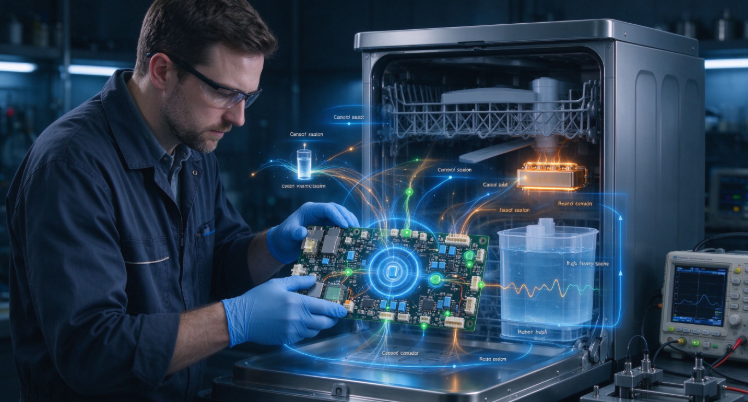
MLCCs for Smart Dishwashers: Supporting Water Sensing, Heating Control, and Reliable Cleaning Cycles
MLCC capacitors for home appliances, dishwasher control board capacitors, MLCC for water sensors, ceramic capacitors for heating control
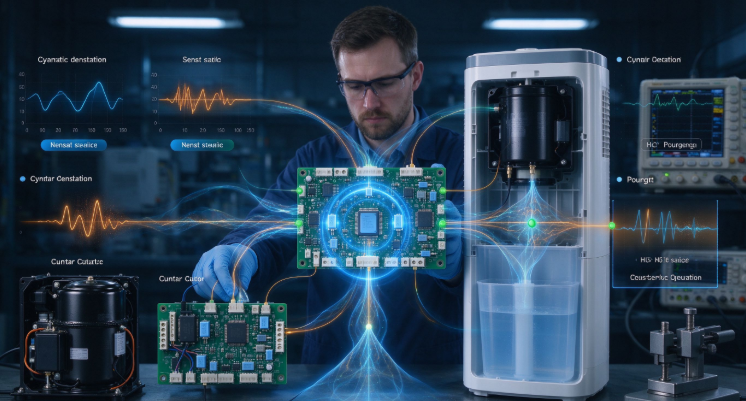
Smart dishwashers combine water circulation, temperature control, electronic sensing, and automatic cleaning programs. Unlike traditional appliances, modern models use electronic control boards to adjust washing conditions according to water quality, load conditions, and selected cleaning modes.
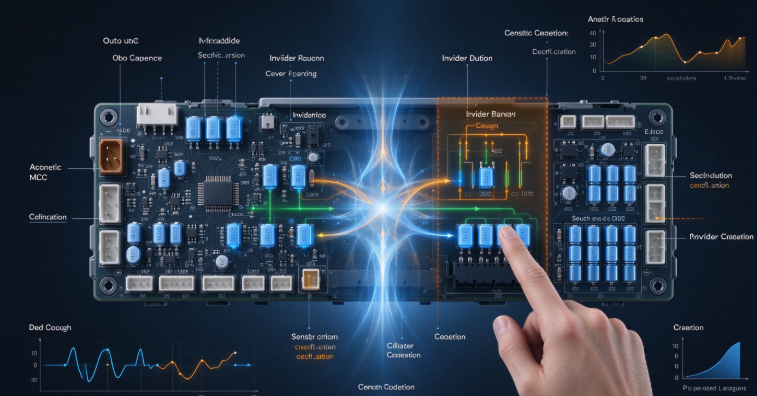
Multilayer Ceramic Capacitors (MLCCs) are important passive components in these control systems. They help stabilize power supplies, filter electrical noise, and support signal conditioning in different electronic circuits.
Understanding where MLCCs are used can help engineers and purchasing teams select suitable components for dishwasher control boards.
1. Turbidity Sensors and Water Quality Detection
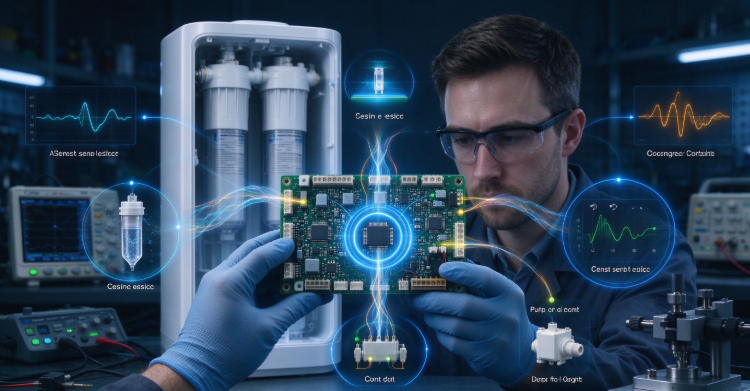
Many smart dishwashers use turbidity sensors to measure how cloudy the water becomes during washing. This information helps the controller estimate the amount of food residue in the water and adjust the cleaning cycle.
The sensor circuit may contain amplifiers, signal-processing components, and a microcontroller interface. MLCCs can be used for:
- Filtering high-frequency noise in sensor power supplies.
- Decoupling operational amplifiers and signal-processing ICs.
- Supporting stable voltage rails for sensor electronics.
- Reducing unwanted noise in sensitive measurement circuits when properly designed.
For circuits requiring stable electrical characteristics, engineers may consider C0G/NP0 capacitors where capacitance values and circuit requirements allow. X7R or other suitable dielectric types may be used for general power filtering.
2. Circulation Pump and Spray System Control
The circulation pump moves water through the dishwasher's spray arms. Its operation affects water pressure, circulation, and cleaning performance.
Electronic control circuits may use motor drivers, switching devices, and feedback signals to regulate pump operation.
MLCCs can support these circuits through:
- Local power decoupling for motor-driver ICs.
- High-frequency noise filtering.
- Power supply stabilization for control electronics.
- Filtering around current-sensing and feedback circuits where appropriate.
The correct capacitor selection depends on the motor-drive topology, switching frequency, voltage conditions, and PCB layout.
MLCCs are not substitutes for motor protection components or dedicated transient suppression devices. Engineers should follow the motor-driver manufacturer's reference design and protection recommendations.
3. Heating Element and Temperature Control
Water temperature is an important factor in dishwasher cleaning programs. Electronic control systems monitor temperature and manage the heating element to maintain the required washing conditions.
The heating system may include temperature sensors, switching circuits, and a controller.
MLCCs can be used in low-voltage control electronics for:
- Decoupling temperature-monitoring ICs.
- Filtering noise on sensor supply lines.
- Stabilizing power rails for the main controller.
- Supporting signal conditioning in temperature measurement circuits.
Designers should pay particular attention to the electrical environment around the heating system. High-power switching circuits may generate noise and voltage disturbances, so capacitor placement and the overall filtering strategy are important.
4. Leakage Detection and Water-Level Monitoring
Water leakage protection is an important function in modern dishwashers. Depending on the design, the appliance may use float switches, water-level sensors, or other detection methods.
These circuits communicate with the main control board and may need to operate reliably in an electrically noisy environment.
MLCCs can help filter supply noise and stabilize the power rails used by detection and monitoring electronics.
For sensor circuits, engineers should consider capacitance tolerance, temperature characteristics, leakage requirements, and signal response. The selected capacitor must match the actual sensing circuit rather than being chosen only by nominal capacitance.
5. Automatic Dispenser and Wash-Cycle Management
Smart dishwashers may automatically control detergent dispensers, rinse-aid systems, and multiple washing stages.
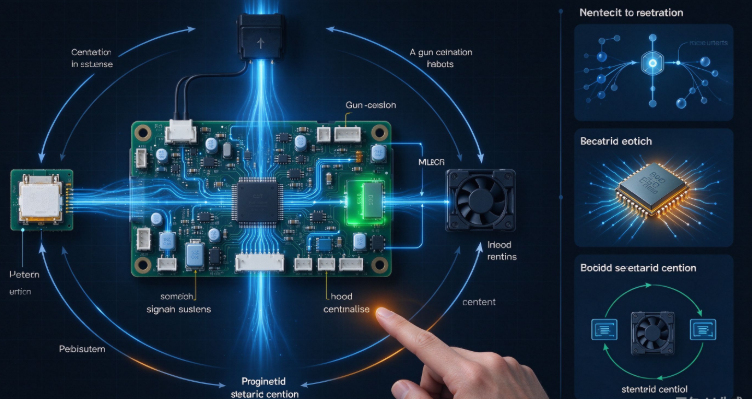
The control board coordinates these functions with water circulation, temperature, and sensor feedback. MLCCs are commonly used around microcontrollers, logic ICs, and driver circuits to provide local decoupling and reduce high-frequency supply disturbances.
For compact control boards, package size and placement are also important. Capacitors should be positioned close to the relevant IC power pins, following the manufacturer's layout guidance.
6. How to Select MLCCs for Dishwasher Control Boards
When selecting MLCCs for dishwasher electronics, engineers and purchasing teams should review several key specifications.
- Rated Voltage: Choose a voltage rating suitable for the actual circuit conditions, including operating voltage and expected transients. Apply appropriate derating based on the component manufacturer's recommendations.
- Capacitance: Select capacitance according to the circuit's filtering, decoupling, or signal-conditioning requirements.
- Dielectric Material: X7R and X5R are commonly considered for general-purpose decoupling. C0G/NP0 may be suitable for circuits requiring greater capacitance stability.
- Package Size: Common case sizes such as 0603, 0805, and 1206 may be considered depending on capacitance, voltage, board space, and assembly requirements.
- Temperature Performance: Review the operating temperature range and capacitance variation under actual conditions.
- DC Bias Characteristics: Class II ceramic capacitors can lose effective capacitance under DC voltage. Check the manufacturer's DC bias curves instead of relying only on the nominal capacitance.
- Reliability Requirements: Consider humidity exposure, thermal cycling, vibration, PCB flex, and the expected service environment of the appliance.
7. Why MLCC Selection Matters for Appliance Manufacturers
A dishwasher control board must coordinate several functions while operating in an environment involving moisture, heat, and electrical switching.
Selecting suitable MLCCs can help engineers develop more stable electronic circuits and improve component-level design consistency.
For manufacturers and procurement teams, a clear component specification also makes sourcing and replacement easier. Comparing capacitance, voltage rating, dielectric, package size, tolerance, and manufacturer part numbers can reduce selection errors during purchasing.
Frequently Asked Questions
Q1: Where are MLCCs used in smart dishwashers?
MLCCs may be found in power supply circuits, microcontroller decoupling networks, sensor interfaces, motor-driver circuits, and temperature-monitoring electronics.
Q2: Which dielectric is commonly used for dishwasher control boards?
X7R and X5R are commonly considered for general-purpose power filtering and decoupling. C0G/NP0 may be used in circuits requiring more stable capacitance.
Q3: Why should engineers check DC bias when selecting MLCCs?
Class II MLCCs can lose capacitance under applied DC voltage. Checking effective capacitance helps ensure the component meets the circuit's requirements.
Q4: Can MLCCs be used in dishwasher motor-drive circuits?
Yes. They may be used for local decoupling and high-frequency filtering around motor-driver electronics. The complete circuit may also require dedicated protection and filtering components.
Q5: What information should buyers provide when sourcing dishwasher MLCCs?
Useful information includes the required capacitance, rated voltage, tolerance, dielectric, package size, preferred manufacturer, target quantity, and any required operating-temperature or reliability specifications.
Conclusion
Smart dishwashers rely on coordinated electronic systems for water sensing, circulation, heating, leakage detection, and automatic wash-cycle management. MLCCs support these systems by providing local decoupling and filtering in control and sensor circuits.
Choosing the right capacitor requires more than matching nominal capacitance. Voltage derating, DC bias, dielectric characteristics, package size, and operating conditions should all be considered.
Barron MLCC provides product information for multilayer ceramic capacitors used in electronic applications. Visit www.barronmlcc.com to explore MLCC options. Buyers can also submit their required specifications and target quantities to inquire about suitable sourcing options.
Contact Us For MLCC Inquiry
Email: hyc2355937758@gmail.com
WhatsApp:8615913754866
Tel: 86+18824523083
Website: www.barronmlcc.com
MLCCs for Smart Washing Machines Supporting Inverter Control Motor Drive and Reliable Operation
Related Article