MLCCs for Smart Dehumidifiers Supporting Compressor Control Humidity Sensing and Reliable Operation
MLCCs for Smart Dehumidifiers: Supporting Compressor Control, Humidity Sensing, and Reliable Operation
ceramic capacitors for dehumidifiers, capacitors for humidity sensors, MLCC applications in home appliances, MLCC selection for compressor control
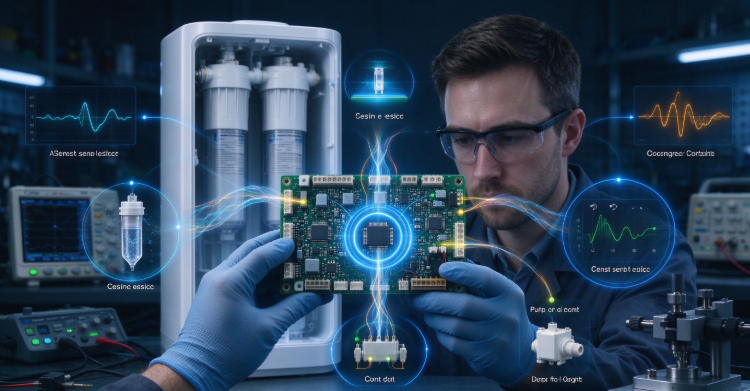
Smart dehumidifiers are widely used in homes, offices, basements, warehouses, and other spaces where humidity needs to be controlled. Modern products often include humidity sensors, compressors, fan motors, electronic control boards, digital displays, and wireless communication functions.
Unlike simple household appliances, smart dehumidifiers combine sensing, power control, and mechanical operation in one system. Their electronic circuits must manage different loads while operating for extended periods.
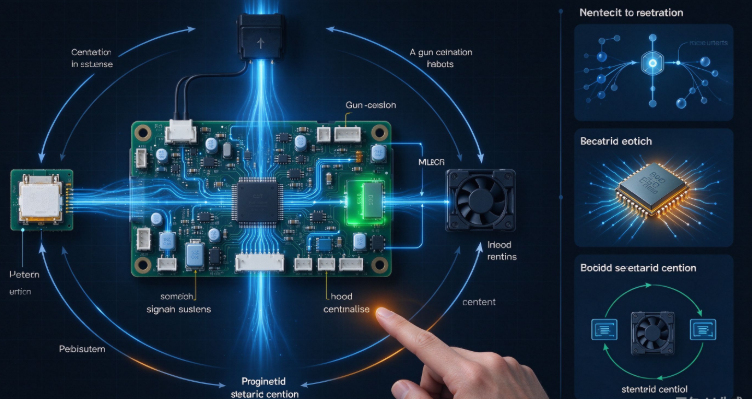
Multilayer ceramic capacitors (MLCCs) are commonly used in dehumidifier control boards. They provide local power decoupling and filtering in compact electronic circuits.
This article explains the main applications of MLCCs in smart dehumidifiers and the key factors engineers should consider when selecting them.
1. Humidity Sensor and Measurement Circuits
Humidity sensors provide information about the moisture level in the surrounding air. The controller uses this information to determine when the compressor and fan should operate.
Depending on the product design, the sensor may use capacitive, resistive, or integrated digital sensing technology.
MLCCs may be used around sensor interface circuits for:
- Local power supply decoupling
- Filtering around sensor ICs
- Noise reduction on selected signal paths
- Power filtering for analog-to-digital conversion circuits
For sensitive measurement applications, capacitor stability and leakage characteristics may matter. C0G/NP0 capacitors may be considered for selected precision circuits, while X5R and X7R are commonly used for general power decoupling.
The final selection should follow the sensor manufacturer's reference design. Humidity measurement accuracy depends on the complete sensing system, including sensor calibration, placement, airflow, and signal processing.
2. Compressor Control and Power Electronics
The compressor is a major part of many dehumidifiers. It helps cool the evaporator so moisture can condense from the air.
Depending on the design, a dehumidifier may use a fixed-speed compressor or an inverter-driven compressor.
MLCCs may be used in supporting control electronics, including:
- Power supply filtering around control ICs
- Local decoupling for compressor control circuits
- Filtering around gate driver or control interface ICs
- Decoupling for microcontrollers and monitoring circuits
In inverter-based designs, component selection must follow the power semiconductor and driver manufacturer's recommendations.
Compressor circuits can involve high voltages and switching transients. MLCCs should not be treated as replacements for safety-rated capacitors, snubber networks, surge protection, or other components specifically required by the power circuit.
3. Fan Motor Drive Circuits
Dehumidifiers use fans to move air through the evaporator and condenser sections.
Some products use AC motors, while others use DC or brushless DC (BLDC) motors.
MLCCs may be used in supporting fan control electronics for:
- Power decoupling around motor driver ICs
- Filtering on low-voltage control power rails
- Local decoupling for fan control processors
- Input and output filtering around voltage regulators
Motor switching can introduce electrical noise and transient voltages. Designers should evaluate the complete motor drive circuit and include suitable protection components where required.
The capacitor values and placement should follow the motor driver reference design.
4. Water Level Detection and Drainage Control
As moisture is removed from the air, condensed water collects in a tank or flows through a drainage system.
Many smart dehumidifiers include a water level sensor that detects when the tank is full. The controller can then stop operation or activate a warning.
Some models also include a drainage pump.
MLCCs may support these circuits through:
- Power decoupling for water level detection ICs
- Filtering around control circuits
- Local decoupling for pump driver electronics
- Filtering on selected low-voltage power rails
If the design uses inductive loads such as pumps or solenoid valves, additional transient protection may be necessary. The protection method should be determined by the load and driver circuit design.
5. Main Control Board and Power Management
The main control board coordinates humidity measurements, compressor operation, fan speed, drainage, display functions, and safety-related operating conditions.
It may contain a microcontroller, voltage regulators, sensor interfaces, and communication circuits.
MLCCs are commonly used for:
- Microcontroller power decoupling
- Input and output filtering around DC-DC converters
- Local filtering for sensor interface ICs
- Power supply noise reduction
Engineers should consider regulator stability requirements, effective capacitance under DC bias, and the recommended layout for each IC.
The control board should also be designed to handle the different electrical noise sources generated by compressor and motor operation.
6. Display and Wireless Connectivity
Modern dehumidifiers may feature digital displays, touch controls, Wi-Fi, or Bluetooth connectivity.
These functions allow users to check humidity readings, select operating modes, and control the appliance remotely.
MLCCs may be used in display and communication circuits for:
- Power decoupling around display driver ICs
- Local filtering for touch controllers
- Power supply decoupling for wireless modules
- RF matching networks where specified
X5R and X7R are common choices for general power decoupling. C0G/NP0 may be suitable for selected RF matching applications that require stable capacitance.
Engineers should follow the display and wireless module manufacturers' reference designs.
7. Temperature, Humidity, and Mechanical Reliability
Dehumidifiers operate in environments with changing humidity and temperature. Internal components may also experience heat from compressors, power electronics, and motor circuits.
The PCB design should account for these operating conditions.
Important considerations include:
- Temperature range: Select MLCCs with suitable operating temperature characteristics for their actual circuit locations.
- Moisture protection: Consider enclosure sealing, PCB coating, and connector protection according to the product's environmental requirements.
- Mechanical vibration: Compressor and fan operation may create vibration that should be considered in PCB mounting and component placement.
- PCB bending: Assembly, enclosure installation, and mechanical stress can contribute to ceramic capacitor cracking.
- Voltage derating: Check rated voltage and effective capacitance under actual operating conditions.
Product reliability depends on the complete electrical, mechanical, and environmental design rather than capacitor selection alone.
8. How to Select MLCCs for Smart Dehumidifiers
Engineers should match each capacitor to its specific circuit function.
- Capacitance: Select the required value according to the sensor, control, or power circuit specifications.
- Rated Voltage: Choose a suitable voltage rating with appropriate design margin.
- Dielectric Material: X5R and X7R are commonly used for general filtering and decoupling. C0G/NP0 may be suitable for selected precision or RF circuits.
- Package Size: Common packages include 0402, 0603, and 0805. The choice depends on electrical requirements, PCB space, and assembly conditions.
- DC Bias Performance: Class II MLCCs can lose effective capacitance under applied DC voltage. Review the manufacturer's DC bias curves.
- Temperature Range: Confirm that the capacitor meets the expected operating temperature conditions.
- Mechanical Reliability: Consider vibration, board flexure, mounting points, and termination options where appropriate.
9. Common MLCC Selection Mistakes
When designing smart dehumidifier control boards, engineers and purchasing teams should avoid several common mistakes:
- Selecting capacitors only by nominal capacitance
- Ignoring DC bias effects
- Using general-purpose capacitors without checking sensor circuit requirements
- Overlooking noise from compressor and fan switching
- Ignoring temperature and moisture conditions
- Replacing components without checking the full datasheet
- Treating MLCCs as substitutes for required power circuit protection components
A complete selection process should consider electrical specifications, mechanical conditions, and the operating environment of the finished appliance.
Frequently Asked Questions
Q1: Where are MLCCs used in smart dehumidifiers?
They are commonly used in humidity sensor circuits, compressor control electronics, fan motor drivers, water level detection circuits, microcontrollers, and wireless communication modules.
Q2: Which MLCC dielectric is suitable for dehumidifier control boards?
X5R and X7R are commonly used for general power filtering and decoupling. C0G/NP0 may be considered for selected precision or RF applications.
Q3: Can MLCCs improve humidity measurement accuracy?
MLCCs can support sensor power filtering and stable circuit operation. However, measurement accuracy depends on the sensor itself, calibration, placement, airflow, and signal processing.
Q4: Are MLCCs used in compressor drive circuits?
They may be used in supporting control and power supply circuits. The exact components required depend on the compressor architecture and the manufacturer's reference design.
Q5: What information should buyers provide when sourcing MLCCs for dehumidifiers?
Useful information includes capacitance, tolerance, rated voltage, dielectric type, package size, operating temperature range, preferred manufacturer, and required quantity.
Conclusion
Smart dehumidifiers combine humidity measurement, compressor control, fan operation, water level detection, and wireless connectivity.
MLCCs support these functions through local decoupling, power filtering, and selected precision or RF applications. Choosing suitable components requires attention to capacitance, rated voltage, dielectric material, DC bias performance, temperature range, and mechanical conditions.
For more MLCC product information and sourcing options, visit Barron MLCC at //www.barronmlcc.com/. You can also submit your required specifications and target quantities to discuss suitable component options for your smart dehumidifier projects.
Contact Us For MLCC Inquiry
Email: hyc2355937758@gmail.com
WhatsApp:8615913754866
Tel: 86+18824523083
Website: www.barronmlcc.com
MLCCs for Smart Air Purifiers Supporting Air Quality Sensors Fan Control and Reliable Operation
Related Article