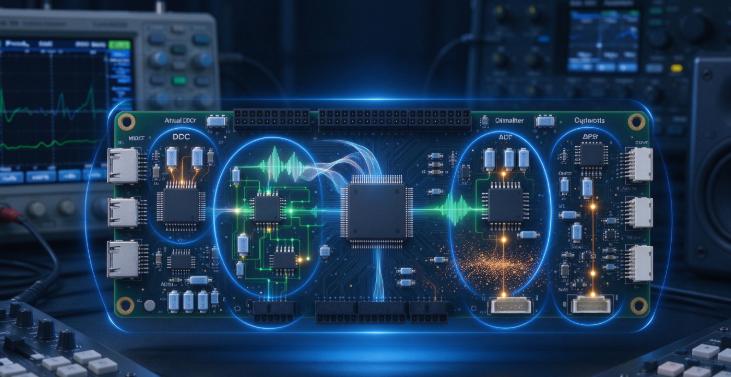
MLCCs for Digital Photo Frames Supporting Display Quality Image Processing and Stable Performance
MLCCs for Digital Photo Frames: Supporting Display Quality, Image Processing, and Stable Performance
SE ceramic capacitors for digital displays, capacitors for digital photo frames, MLCC applications, MLCC selection guide
Digital photo frames have become popular consumer electronic products for displaying family photos, videos, and digital artwork. Unlike traditional photo frames, modern models may include high-resolution displays, image processors, flash memory, Wi-Fi, Bluetooth, and touchscreen controls.
These functions depend on multiple electronic circuits working together. Stable power delivery and effective noise filtering are important for maintaining reliable operation.
Multilayer ceramic capacitors (MLCCs) are widely used in digital photo frame circuit boards. Their compact size and electrical characteristics make them suitable for applications where PCB space is limited.
This article explores the main applications of MLCCs in digital photo frames and explains what engineers should consider when selecting them.
1. Display Power Supply and Driver Circuits
The display is one of the most important parts of a digital photo frame. Depending on the product, it may use an LCD or another display technology.
Display modules contain driver ICs and supporting power circuits that require stable operating voltages.
MLCCs are commonly used for:
- Local decoupling around display driver ICs
- Input and output filtering in display power circuits
- High-frequency noise reduction
- Filtering on selected voltage rails
X5R and X7R capacitors are common choices for general-purpose power filtering. Engineers should check the effective capacitance under actual operating voltage and temperature conditions.
The recommended capacitor values should follow the display module manufacturer's reference design.
2. Image Processing and Main Control Boards
Digital photo frames use processors or system-on-chip devices to decode image files, manage playlists, control the display, and handle user commands.
These processors can have multiple power rails and changing current demands during operation.
MLCCs are often placed close to processor power pins to provide local decoupling and reduce high-frequency supply impedance.
Typical considerations include:
- Required capacitance for each power rail
- Capacitor placement near IC power pins
- DC bias effects on effective capacitance
- Voltage and temperature ratings
- PCB layout and grounding
The processor manufacturer's hardware design guidelines should be the starting point for capacitor selection.
3. Flash Memory and Data Storage
Many digital photo frames use flash memory or removable storage to store photos and videos.
Memory devices require suitable power supply conditions during reading, writing, and data transfer.
MLCCs may be used around memory power pins and supporting circuits for local decoupling and power filtering.
Engineers should consider the memory manufacturer's recommended capacitance and placement requirements. A capacitor's nominal value alone does not determine whether it is suitable for a memory circuit.
4. Wi-Fi and Bluetooth Connectivity
Wireless connectivity allows users to transfer photos from smartphones, computers, or cloud-based services.
Wi-Fi and Bluetooth modules may experience changing current consumption during transmission and reception. Their power supplies should be designed to meet the module manufacturer's requirements.
MLCCs may be used for:
- Power supply decoupling
- High-frequency filtering
- RF matching networks where specified
- Local filtering around communication ICs
C0G/NP0 capacitors may be suitable for selected RF matching applications because of their stable capacitance characteristics. X7R and X5R capacitors are commonly used for general power decoupling.
Engineers should follow the wireless module reference design and consider antenna placement, grounding, and PCB layout.
5. Touchscreen and User Interface Circuits
Some digital photo frames feature touchscreens that allow users to select photos, change settings, and control playback.
The touch interface may include a touch controller, display driver, and supporting signal circuits.
MLCCs can be used for local power decoupling and filtering around these components.
However, touchscreen performance also depends on sensor design, firmware, PCB layout, grounding, and electrical noise from other circuits. Capacitors are only one part of the overall design.
6. Standby Power and Energy Consumption
Digital photo frames may remain connected to power for long periods, even when the display is turned off or the device is in standby mode.
For this reason, designers often consider standby power consumption when developing the power management system.
MLCCs can support power supply filtering and decoupling, but their presence alone does not guarantee lower standby power consumption.
Engineers should also evaluate:
- Power management IC efficiency
- Processor sleep modes
- Display power control
- Wireless module standby behavior
- Leakage current and overall circuit design
Capacitor selection should be based on the electrical requirements of each power rail.
7. Choosing the Right MLCC for Digital Photo Frames
Selecting an MLCC requires a clear understanding of its application and operating conditions.
Capacitance: Choose the capacitance according to the circuit requirements and manufacturer recommendations.
Rated Voltage: Check the maximum operating voltage and allow suitable design margin.
Dielectric Type: X5R and X7R are common for general-purpose filtering and decoupling. C0G/NP0 may be appropriate for selected precision or RF circuits.
Package Size: Common packages include 0402, 0603, and 0805. The choice depends on PCB space, capacitance, voltage rating, and assembly requirements.
DC Bias Performance: Class II ceramic capacitors can lose effective capacitance under applied DC voltage. Check the manufacturer's DC bias curves.
Temperature Characteristics: Confirm that the capacitor's operating temperature range is suitable for the finished product.
Tolerance: General power circuits and RF matching networks may have different tolerance requirements.
8. Common Sourcing Considerations
For digital photo frame manufacturers, selecting suitable MLCCs is important during product development and mass production.
Before requesting a quotation, purchasing teams should prepare:
- Required capacitance and tolerance
- Rated voltage
- Dielectric type
- Package size
- Operating temperature range
- Preferred manufacturer or acceptable alternatives
- Target purchasing quantity
When comparing alternative part numbers, check the complete specifications, including dielectric characteristics and DC bias performance.
This helps engineering and purchasing teams avoid selecting components that are only similar in appearance or nominal capacitance.
Frequently Asked Questions
Q1: Where are MLCCs used in digital photo frames?
They are commonly used in display power circuits, processors, flash memory, wireless modules, touchscreen controllers, and power management circuits.
Q2: Which MLCC dielectric is commonly used in digital photo frames?
X5R and X7R are widely used for general power decoupling and filtering. C0G/NP0 may be considered for selected RF or precision circuits.
Q3: Are small MLCC packages suitable for compact digital photo frames?
Yes. Small packages such as 0402 and 0603 can help reduce PCB space. However, engineers should verify the required capacitance, rated voltage, and DC bias performance.
Q4: Do MLCCs improve display image quality?
MLCCs can help support stable power supplies and reduce certain types of electrical noise. Actual image quality also depends on the display panel, driver, image processor, and system design.
Q5: What information is needed when sourcing MLCCs for digital photo frames?
Useful information includes capacitance, tolerance, voltage rating, dielectric type, package size, manufacturer preference, and required quantity.
Conclusion
Digital photo frames combine display technology, image processing, data storage, and wireless connectivity in a compact electronic product.
MLCCs support these functions through local decoupling, power filtering, and selected RF applications. Choosing suitable components requires attention to capacitance, voltage rating, dielectric type, package size, temperature range, and actual operating conditions.
For more MLCC product information and sourcing options, visit Barron MLCC at //www.barronmlcc.com/. You can also submit your required specifications and target quantities to discuss suitable component options for your digital photo frame projects.
Contact Us:
EM: hyc2355937758@gmail.com
WhatsApp:8615913754866
Tel: 86+18824523083
Website: www.barronmlcc.com
MLCCs for POS Terminals Supporting Stable Power Secure Payments and Reliable Connectivity

Related Article