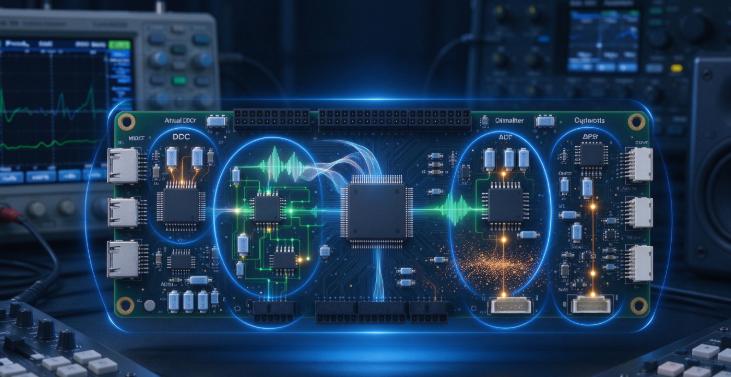
MLCCs for POS Terminals Supporting Stable Power Secure Payments and Reliable Connectivity
MLCCs for POS Terminals: Supporting Stable Power, Secure Payments, and Reliable Connectivity
POS terminal capacitors, ceramic capacitors for payment terminals, MLCC applications, capacitor selection for POS devices
Point-of-sale (POS) terminals are widely used in retail stores, restaurants, supermarkets, hotels, and other businesses. Modern POS devices do much more than process card payments. They may include touchscreens, NFC readers, barcode scanners, wireless communication modules, printers, and secure payment processors.
These functions place different demands on the electronic circuits inside a POS terminal. Stable power, effective noise control, and reliable signal performance are important for everyday operation.
Multilayer ceramic capacitors (MLCCs) are commonly used in these circuits because of their compact size, low equivalent series resistance, and suitability for high-frequency applications.
This article explains where MLCCs are used in POS terminals and what engineers should consider when selecting them.
1. Power Management and Voltage Regulation
A POS terminal contains several electronic components that operate at different voltage levels. The main processor, memory, touchscreen, communication modules, and payment circuits may each require dedicated power rails.
MLCCs are often placed near voltage regulators and integrated circuits to provide local decoupling and reduce high-frequency power supply noise.
Typical applications include:
- Input and output filtering around DC-DC converters
- Local decoupling for processors and memory
- Power supply filtering for communication modules
- Noise reduction on sensitive electronic circuits
X7R and X5R MLCCs are common choices for general power filtering and decoupling. However, engineers should check the actual capacitance under the operating DC voltage, temperature, and frequency conditions.
2. NFC and Contactless Payment Circuits
Contactless payment is an important feature of modern POS terminals. NFC technology allows customers to make payments by placing a compatible card, smartphone, or wearable device near the reader.
NFC circuits operate at high frequencies and require carefully designed antenna and matching networks.
Depending on the circuit design, capacitors may be used for:
- Antenna matching networks
- Resonant circuits
- RF filtering
- Power supply decoupling for NFC controller ICs
C0G/NP0 ceramic capacitors are often considered for applications where stable capacitance and low dielectric loss are important.
The correct capacitance and component tolerance should follow the NFC controller and antenna design requirements. A capacitor should not be selected based only on its nominal value.
3. Wireless Communication Modules
Many POS terminals support Wi-Fi, Bluetooth, or cellular communication. These connections allow payment information and transaction records to be transmitted to payment systems.
Wireless modules can be sensitive to power supply noise, especially during periods of high transmission activity.
MLCCs may be used for:
- Local power decoupling
- High-frequency supply filtering
- RF matching networks where specified by the circuit design
- Noise control around communication ICs
Engineers should pay attention to the module manufacturer's reference design. Component placement, PCB layout, grounding, and capacitor characteristics all affect actual circuit performance.
4. Touchscreen and Display Circuits
Touchscreens and displays are common features in modern POS terminals. They provide transaction information, menu options, and customer interaction.
Display circuits may contain processors, display drivers, touch controllers, and interface circuits.
MLCCs can support these circuits through:
- Power supply decoupling for display driver ICs
- Filtering on selected power rails
- Local decoupling for touch controller circuits
- Noise reduction in sensitive electronic sections
The required capacitor values depend on the display module and controller specifications. Engineers should also consider the effects of switching noise and PCB layout.
5. Barcode Scanners and Peripheral Interfaces
Some POS terminals include barcode scanning functions or connect to external scanners, receipt printers, cash drawers, and other peripherals.
These interfaces can introduce electrical noise or create changing current demands.
MLCCs may be used around interface controllers and local power supplies to help maintain stable operating conditions.
However, capacitors alone cannot replace appropriate circuit protection. ESD protection devices, current limiting, and interface protection components may also be required, depending on the design.
6. Compact PCB Design and Component Selection
POS terminals often combine many functions within a limited PCB area. Engineers must balance component size, electrical performance, cost, and assembly requirements.
Common MLCC package sizes include 0402, 0603, and 0805, although the appropriate size depends on capacitance, voltage rating, layout, and mechanical requirements.
Important selection factors include:
Capacitance: Select values according to the power supply, filtering, or RF circuit requirements.
Rated Voltage: Choose a suitable voltage rating and check the reduction in effective capacitance under DC bias.
Dielectric Material: X7R and X5R are commonly used for general-purpose decoupling. C0G/NP0 may be more suitable for selected precision or RF applications.
Tolerance: RF matching and timing-related circuits may require tighter capacitance tolerances than general power filtering applications.
Package Size: Smaller packages save PCB space, but they may offer lower capacitance or voltage ratings for a given design.
Operating Temperature: Check the temperature range of the terminal and the capacitor's specified operating conditions.
7. Common MLCC Selection Mistakes
When choosing capacitors for POS terminal designs, engineers and buyers should avoid several common mistakes.
- Ignoring DC bias: The effective capacitance of Class II MLCCs can decrease significantly under applied voltage.
- Using the wrong dielectric: A capacitor suitable for power decoupling may not be suitable for an RF matching network.
- Ignoring component tolerance: Small capacitance variations can affect sensitive RF circuits.
- Overlooking PCB layout: Long traces and poor grounding can reduce the effectiveness of decoupling capacitors.
- Selecting parts by package size alone: Electrical specifications and operating conditions must also be considered.
- Ignoring mechanical stress: PCB bending and assembly stress can contribute to ceramic capacitor cracking.
A complete selection process should consider the circuit function, electrical requirements, operating environment, and manufacturer's technical documentation.
8. How to Source MLCCs for POS Terminal Manufacturing
For POS terminal manufacturers, stable component sourcing is important during product development and mass production.
Before requesting a quotation, purchasing teams should prepare the following information:
- Required capacitance and tolerance
- Rated voltage
- Dielectric type
- Package size
- Operating temperature range
- Preferred manufacturer or acceptable alternatives
- Estimated order quantity
When comparing alternative part numbers, buyers should verify the full electrical specifications rather than comparing capacitance and package size alone.
This helps reduce the risk of selecting an unsuitable replacement.
Frequently Asked Questions
Q1: Where are MLCCs used in POS terminals?
MLCCs are commonly used in power management, processor decoupling, NFC circuits, wireless communication modules, display circuits, and peripheral interfaces.
Q2: Which dielectric is suitable for POS terminal applications?
X7R and X5R are commonly used for general power filtering and decoupling. C0G/NP0 is often considered for circuits requiring stable capacitance, such as selected RF applications. The final choice depends on the circuit design.
Q3: Are small-package MLCCs suitable for compact POS devices?
Yes. Small packages such as 0402 and 0603 can help save PCB space. However, engineers should verify capacitance, voltage rating, DC bias performance, and assembly requirements.
Q4: Can MLCCs improve NFC payment performance?
MLCCs can be used in NFC matching and filtering circuits. However, overall NFC performance also depends on antenna design, PCB layout, controller configuration, and surrounding materials.
Q5: What information should buyers provide when sourcing POS terminal MLCCs?
Buyers should provide capacitance, tolerance, rated voltage, dielectric, package size, manufacturer preference, and required quantity.
Conclusion
MLCCs are important components in modern POS terminals. They support power decoupling, filtering, NFC circuits, wireless communication, display electronics, and peripheral interfaces.
Choosing the right capacitor requires more than matching capacitance and package size. Engineers and purchasing teams should also consider dielectric characteristics, voltage derating, tolerance, temperature range, and application requirements.
For more MLCC product information and sourcing options, visit Barron MLCC at //www.barronmlcc.com/. You can also submit your required specifications and target quantities to discuss suitable component options for your POS terminal projects.
Contact Us:
EM: hyc2355937758@gmail.com
WhatsApp:8615913754866
Tel: 86+18824523083
Website: www.barronmlcc.com
MLCCs for Digital Photo Frames Supporting Display Quality Image Processing and Stable Performance
MLCCs for Smart Garage Door Openers Supporting Motor Control Wireless Communication
Related Article