MLCCs for Industrial Battery Formation and Testing Equipment Supporting Accurate Measurement and Stable Control
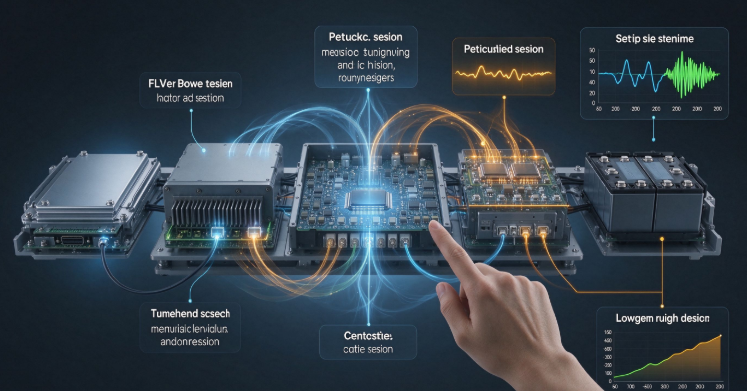
MLCCs for Industrial Battery Formation and Testing Equipment: Supporting Accurate Measurement and Stable Control
Battery manufacturers rely on specialized equipment to test and condition battery cells before they enter the next stage of production. Formation and testing systems are commonly used to charge and discharge cells under controlled conditions, collect electrical data, and evaluate battery performance.
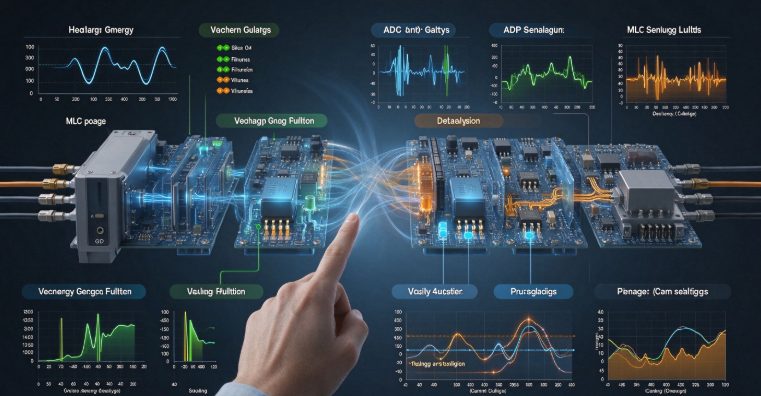
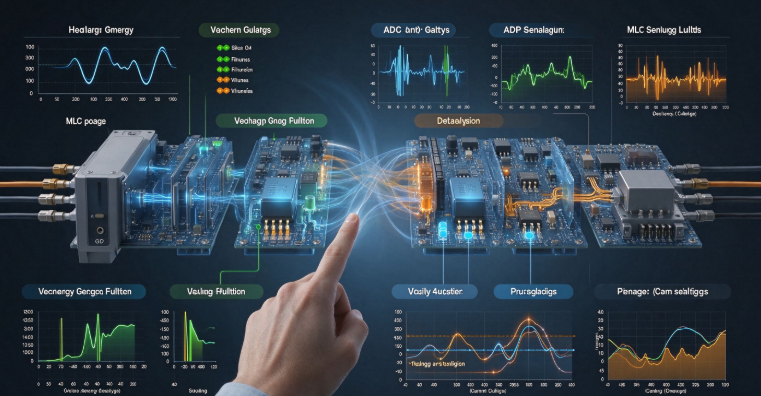
These machines often contain multiple testing channels. Each channel may include voltage measurement circuits, current monitoring circuits, control boards, communication interfaces, and power management modules.
Multilayer ceramic capacitors (MLCCs) are widely used in electronic circuits within this equipment. They support power supply decoupling, signal filtering, and stable operation of measurement and control electronics.
Selecting suitable MLCCs requires understanding the different electrical functions inside battery formation and testing systems.
1. MLCCs in Battery Cell Voltage Sampling Circuits
Voltage measurement is one of the key functions of battery testing equipment.
During charging and discharging, the system monitors cell voltage to record electrical performance and evaluate whether the cell meets defined test conditions.
Voltage sampling circuits may include:
- Precision voltage dividers
- Operational amplifiers
- Multiplexers
- Analog-to-digital converters (ADCs)
- Signal filtering networks
MLCCs may be used in these circuits for local power decoupling and selected filtering functions.
For precision measurement positions, engineers should consider capacitance tolerance, temperature stability, and dielectric characteristics. C0G/NP0 capacitors may be appropriate for certain stable RC filtering or timing applications when supported by the circuit design.
The complete measurement accuracy also depends on the voltage reference, amplifier, ADC, PCB layout, calibration, and other circuit components. An MLCC alone cannot guarantee measurement accuracy.
2. Capacitors in Charge and Discharge Control Boards
Battery formation equipment needs electronic control circuits to manage charging and discharging processes.
Depending on the equipment architecture, control boards may contain microcontrollers, DSPs, gate drivers, communication ICs, and monitoring devices.
MLCCs can support these circuits through:
- Local power supply decoupling
- High-frequency noise filtering
- Bypassing near digital IC power pins
- Filtering selected control signal paths
X7R or X5R MLCCs are commonly considered for general-purpose power decoupling. However, engineers should check the effective capacitance under actual DC bias, temperature, and operating conditions.
Capacitors used near gate drivers or switching control circuits should also be selected according to the semiconductor manufacturer's reference design.
MLCCs support the electronic control circuitry; they do not replace dedicated power-stage components or transient protection networks.
3. MLCCs for Current Measurement and Signal Conditioning
Battery testing systems need to measure current during different charging and discharging stages.
Depending on the design, current measurement may use shunt resistors, current sensors, or other measurement methods.
The resulting signals may pass through amplifiers, filters, and ADCs before being processed by the controller.
In these circuits, MLCCs may be used for:
- Power decoupling around measurement amplifiers
- Filtering unwanted high-frequency noise
- Supporting selected analog signal-conditioning networks
- Bypassing ADC power supply pins
For signal-filtering applications, capacitance tolerance and temperature stability can influence the filter response.
Engineers should calculate the required filter characteristics and verify that the selected capacitor does not interfere with the intended measurement bandwidth.
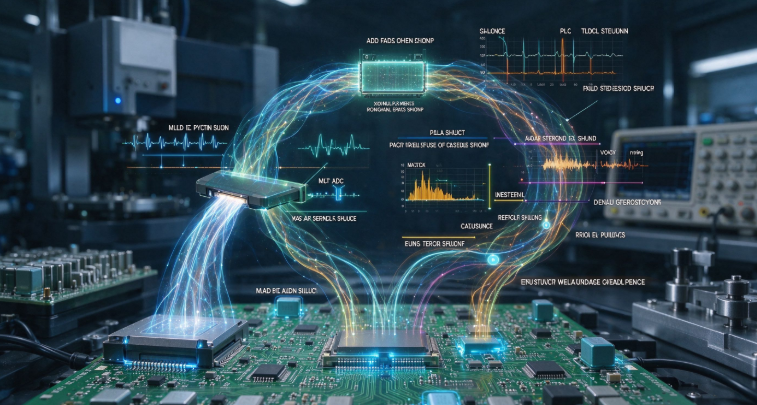
4. Supporting Multi-Channel Data Acquisition Systems
Large battery formation systems may test many cells simultaneously.
Their data acquisition boards can contain multiple ADC channels, multiplexers, processors, memory devices, and communication interfaces.
Each section may have different power supply and filtering requirements.
MLCCs are commonly used near integrated circuits to provide local decoupling and reduce high-frequency power supply disturbances.
Important selection considerations include:
- Required capacitance and voltage rating
- Effective capacitance under DC bias
- ESR and ESL characteristics
- Package size and PCB layout
- Temperature operating range
- Manufacturer recommendations for each IC
A suitable combination of capacitors should be selected according to the power distribution network and actual circuit requirements.
5. Choosing the Right MLCC Dielectric
Different circuit positions require different capacitor characteristics.
| Dielectric | Potential Application | Key Consideration |
|---|---|---|
| C0G/NP0 | Selected precision filters and timing circuits | Stable capacitance and low dielectric loss |
| X7R | General power decoupling and filtering | Check DC bias and temperature effects |
| X5R | Compact, general-purpose decoupling | Verify operating temperature and effective capacitance |
The best dielectric depends on the circuit function. C0G/NP0 is not automatically required for every measurement-board capacitor, and X7R or X5R should not be selected without checking their actual operating characteristics.
Engineers should follow the reference design and component datasheets.
6. Considerations for Industrial Operating Conditions
Battery formation and testing equipment may operate for long production shifts and experience changing ambient temperatures.
Some systems also contain switching power stages that generate electrical noise.
When selecting MLCCs, engineers should review:
Voltage margin: Confirm that the rated voltage is suitable for the actual voltage across the capacitor, including relevant transient conditions.
Temperature range: Check the component's specified operating temperature and capacitance behavior.
DC bias: Class II MLCCs may lose effective capacitance under applied DC voltage. Review manufacturer data under realistic conditions.
Mechanical stress: Large boards, heavy connectors, and repeated equipment handling can create PCB stress. Consider suitable package sizes and termination options where mechanical stress is a concern.
Component consistency: For production equipment manufacturers, consistent specifications and traceable sourcing help support BOM management and maintenance planning.
7. MLCC Sourcing for Battery Testing Equipment Manufacturers
Battery testing equipment manufacturers may use many MLCC specifications across different control boards and measurement modules.
Before sourcing components, purchasing teams should confirm:
- Exact manufacturer part number
- Capacitance and tolerance
- Rated voltage
- Dielectric type
- Package size
- Operating temperature range
- Required quantity
- Approved alternative specifications, if applicable
Avoid replacing an existing capacitor based only on package size and nominal capacitance. Differences in dielectric, voltage rating, DC bias behavior, and electrical characteristics may affect circuit performance.
A complete datasheet comparison is recommended before approving any alternative part.
Frequently Asked Questions
Q1: Where are MLCCs used in battery formation equipment?
They may be used in voltage sampling circuits, current measurement boards, control electronics, ADC power supplies, communication interfaces, and data acquisition systems.
Q2: Which MLCC dielectric is suitable for battery testing equipment?
C0G/NP0 may be suitable for selected precision filtering and timing circuits. X7R and X5R are commonly considered for general power decoupling, subject to actual operating conditions.
Q3: Why is DC bias important when selecting MLCCs?
Class II ceramic capacitors can experience capacitance reduction under DC voltage. Engineers should verify effective capacitance at the actual operating voltage rather than relying only on the nominal value.
Q4: Can MLCCs improve battery charging accuracy?
MLCCs can support the power and signal-conditioning circuits used in measurement systems. However, overall charging accuracy depends on the complete measurement architecture, calibration, control algorithms, and other components.
Q5: What information should buyers provide when sourcing MLCCs?
Buyers should provide the manufacturer part number, capacitance, tolerance, rated voltage, dielectric, package size, required quantity, and any approved substitution requirements.
Conclusion
Industrial battery formation and testing equipment depends on reliable measurement, control, and data acquisition electronics. MLCCs support these functions through power decoupling and filtering in different circuit sections.
Choosing the right capacitor requires attention to dielectric characteristics, DC bias, voltage rating, temperature range, and the requirements of each circuit position.
For battery equipment manufacturers and electronic component buyers, careful specification matching is an important step in maintaining consistent production and avoiding unsuitable substitutions.
Visit Barron MLCC at //www.barronmlcc.com/ to explore MLCC product information. You can also submit your required specifications and target quantities to discuss suitable sourcing options for your project.
EM: hyc2355937758@gmail.com
WhatsApp:8615913754866
Tel: 86+18824523083
www.barronmlcc.com
MLCCs for Smart Grid Power Quality Analyzers Supporting Accurate Signal Measurement
MLCCs for Electronic Toll Collection Systems Supporting Reliable Vehicle Communication
Related Article