MLCCs for Industrial X-Ray Inspection Systems Supporting Precision Imaging Electronics
MLCCs for Industrial X-Ray Inspection Systems: Supporting Precision Imaging Electronics
MLCC for X-ray equipment, industrial X-ray detector capacitors, ceramic capacitors for inspection systems, X-ray imaging circuit components, capacitors for industrial imaging electronics
Industrial X-ray inspection systems are widely used in electronics manufacturing, automotive production, aerospace manufacturing, and quality control. They allow manufacturers to examine internal structures without cutting or damaging the inspected product.
For example, X-ray inspection can help identify soldering defects in printed circuit board assemblies, inspect hidden connections in electronic packages, and examine internal structures in manufactured components.
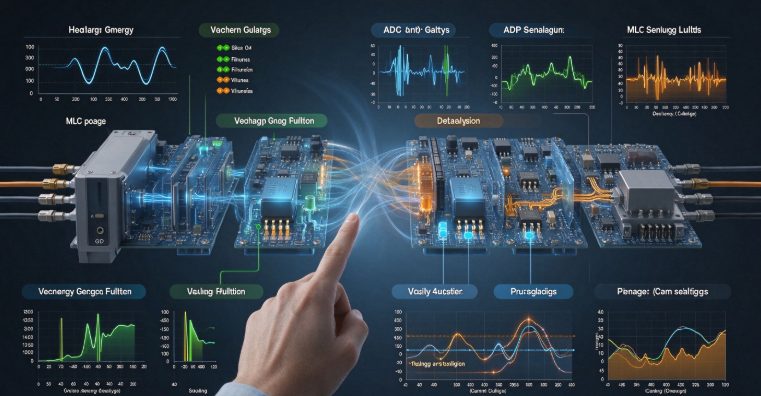
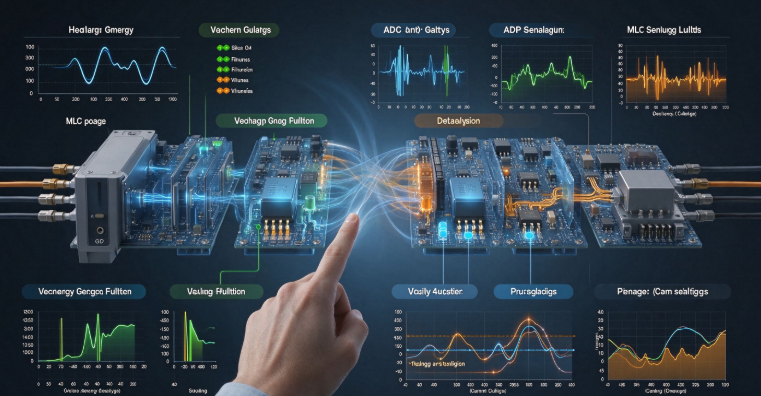
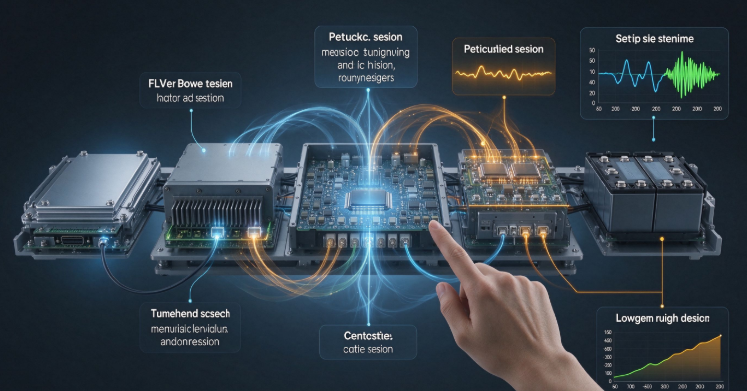
Behind these imaging functions are sophisticated electronic systems. They include X-ray detectors, analog front-end circuits, image acquisition boards, digital processors, and power management modules.
Multilayer ceramic capacitors (MLCCs) are commonly used in these electronic circuits. They support power supply decoupling, filtering, and signal processing functions.
For equipment manufacturers, choosing suitable MLCCs requires attention to electrical stability, noise performance, temperature conditions, and PCB design.
1. MLCCs in X-Ray Detector Readout Circuits
The detector is one of the most important parts of an industrial X-ray inspection system.
After X-rays pass through an inspected object, the detector converts the received radiation into electrical signals. Depending on the detector technology, these signals may be processed by photodiodes, sensor arrays, or specialized detector electronics.
The readout circuit must handle small signals and maintain consistent electrical performance.
MLCCs may be used in supporting circuits for:
- Local power decoupling near detector ICs.
- Filtering power supply noise.
- Bypassing sensitive analog circuit power pins.
- Supporting signal-processing components.
In low-noise detector electronics, capacitor selection should consider dielectric characteristics, capacitance tolerance, parasitic inductance, and the frequency requirements of the circuit.
C0G/NP0 capacitors may be suitable for selected precision positions when their electrical characteristics match the design. X7R capacitors are often considered for general power decoupling.
2. Capacitors in Analog Front-End Circuits
Detector signals may be very small and require amplification before digital conversion.
An analog front end (AFE) can include amplifiers, filters, signal conditioning circuits, and analog-to-digital converters.
MLCCs may support these circuits through power supply filtering and local decoupling.
Important selection considerations include:
Noise performance: Power supply disturbances can affect sensitive analog electronics. Proper filtering and grounding are important.
Capacitance stability: Capacitor variation may influence the response of selected analog filters.
Dielectric characteristics: C0G/NP0 and Class II dielectrics have different temperature and voltage characteristics.
PCB layout: Grounding, trace length, and component placement influence noise coupling and circuit performance.
Engineers should follow the AFE manufacturer's recommended circuit design and verify performance across the intended operating conditions.
3. MLCCs for High-Speed Image Acquisition Boards
After analog signals are converted into digital data, image acquisition boards collect and transfer large amounts of information for processing.
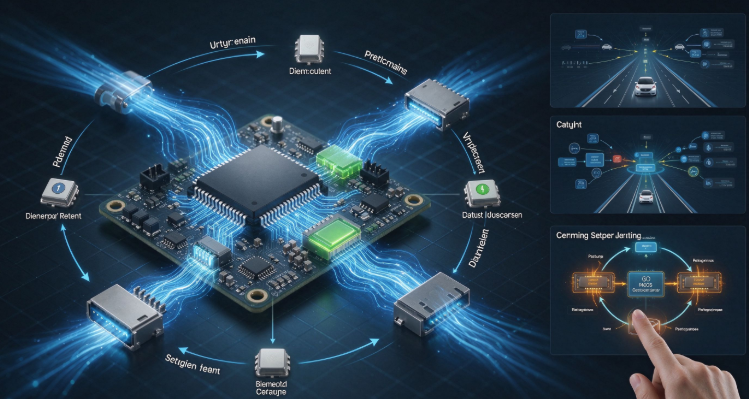
These boards may contain FPGAs, memory devices, processors, and high-speed interfaces.
MLCCs are commonly used near these ICs to provide local power decoupling.
Typical applications include:
- FPGA power supply decoupling.
- Memory IC bypass capacitors.
- Processor power rail filtering.
- High-speed interface IC decoupling.
- Local filtering around voltage regulators.
As image resolution and acquisition speed increase, power distribution becomes more demanding.
Engineers should check the effective capacitance of Class II MLCCs under DC bias and consider ESR, ESL, package size, and PCB layout.
The recommended decoupling network should follow the requirements of each IC manufacturer.
4. MLCCs in X-Ray Generator Control Electronics
Industrial X-ray systems include generator electronics that control the electrical conditions required by the X-ray source.
These systems may contain control processors, monitoring circuits, feedback electronics, and power conversion stages.
MLCCs can support low-voltage control and monitoring circuits through power decoupling and filtering.
However, the high-voltage generation section has different electrical and insulation requirements. Ordinary low-voltage MLCCs should not be assumed suitable for high-voltage energy storage or insulation applications.
For high-voltage circuits, engineers must select components specifically designed and rated for the intended electrical stress and follow the equipment manufacturer's design requirements.
5. Temperature and Mechanical Reliability
Industrial X-ray inspection equipment may operate continuously in manufacturing environments.
Its electronic boards can experience temperature changes, cooling airflow, vibration, and mechanical stress.
These conditions should be considered when selecting MLCCs.
Key factors include:
- Operating temperature: Confirm that the rated temperature range covers actual operating conditions.
- DC bias: Check effective capacitance at the circuit's working voltage.
- Mechanical stress: Consider PCB bending, mounting, and soldering conditions.
- Package size: Balance board space with electrical and mechanical requirements.
- Termination type: Flexible termination may be considered where PCB flex stress is a concern.
- Component consistency: Confirm exact part numbers and specifications across production batches.
For sensitive detector and imaging circuits, component stability should be evaluated alongside the complete system design.
6. How to Select MLCCs for Industrial X-Ray Equipment
Different circuit sections have different capacitor requirements. A suitable component for digital power decoupling may not be appropriate for a precision analog filter.
The following table provides a practical selection reference.
| Circuit Section | MLCC Selection Focus |
|---|---|
| Detector readout | Low noise, stable capacitance, suitable tolerance |
| Analog front end | Dielectric stability and filtering requirements |
| Image acquisition board | Effective capacitance, ESR, ESL, and package size |
| Processor and FPGA | Power rail decoupling and IC recommendations |
| Control electronics | Voltage rating and temperature range |
| High-voltage generator | Only components specifically qualified for the actual high-voltage design |
Before finalizing a part number, engineers should check the manufacturer's datasheet and evaluate performance under real operating conditions.
7. What Buyers Should Check When Sourcing MLCCs
For industrial imaging equipment manufacturers, component consistency and sourcing reliability are important throughout product development and mass production.
Purchasing teams should confirm:
- Complete manufacturer part number.
- Nominal capacitance and tolerance.
- Rated voltage and dielectric type.
- Package size and termination.
- Operating temperature range.
- Datasheet and relevant technical documentation.
- Lot identification and traceability requirements.
- Engineering approval for any alternative component.
When comparing replacement MLCCs, capacitance and voltage alone are not enough. Dielectric characteristics, DC bias performance, dimensions, and electrical behavior should also be reviewed.
Frequently Asked Questions
Q1: Where are MLCCs used in industrial X-ray inspection systems?
They may be used in detector readout electronics, analog front ends, image acquisition boards, digital processors, and low-voltage control circuits.
Q2: Which dielectric is suitable for X-ray detector electronics?
C0G/NP0 may be considered for selected precision analog positions, while X7R is commonly used for general power decoupling. The correct choice depends on the circuit requirements.
Q3: Why is low noise important in X-ray inspection equipment?
Detector circuits process electrical signals generated from received X-ray energy. Unwanted electrical noise can affect signal quality and image processing, so power supply and PCB design require careful attention.
Q4: Can ordinary MLCCs be used in X-ray high-voltage generators?
Not automatically. High-voltage circuits require components specifically rated and qualified for their voltage, insulation, and transient conditions.
Q5: What information should buyers provide when sourcing MLCCs for X-ray equipment?
Buyers should provide the complete part number, capacitance, rated voltage, tolerance, dielectric, package size, required quantity, and documentation requirements.
Conclusion
Industrial X-ray inspection systems depend on precise detector electronics, analog signal processing, image acquisition, and digital computing.
MLCCs support these functions through power decoupling, filtering, and local bypassing. Their selection should reflect the electrical requirements of each circuit, particularly in sensitive detector and imaging applications.
For industrial inspection equipment manufacturers and component buyers, accurate specifications and consistent sourcing help support stable product development and production.
Visit Barron MLCC at //www.barronmlcc.com/ to explore MLCC product information. You can also submit your required specifications and target quantities to discuss suitable sourcing options for your project.
EM: hyc2355937758@gmail.com
WhatsApp:8615913754866
Tel: 86+18824523083
www.barronmlcc.com
MLCCs for Electronic Toll Collection Systems Supporting Reliable Vehicle Communication
MLCCs for Optical Transceiver Modules Supporting High Speed Fiber Optic Communication
Related Article