MLCCs for Industrial Battery Formation and Testing Equipment Supporting Stable Multi-Channel Electronics
MLCCs for Industrial Battery Formation and Testing Equipment: Supporting Stable Multi-Channel Electronics
MLCC for battery testing equipment, ceramic capacitors for battery cyclers, MLCC for battery manufacturing, capacitors for battery test systems
Battery manufacturing involves more than assembling cells. Before batteries enter the market, manufacturers need to perform formation, charging, discharging, capacity testing, and other production checks.
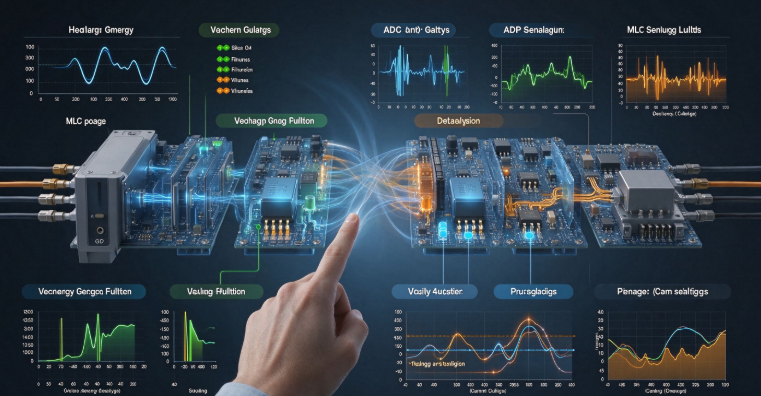
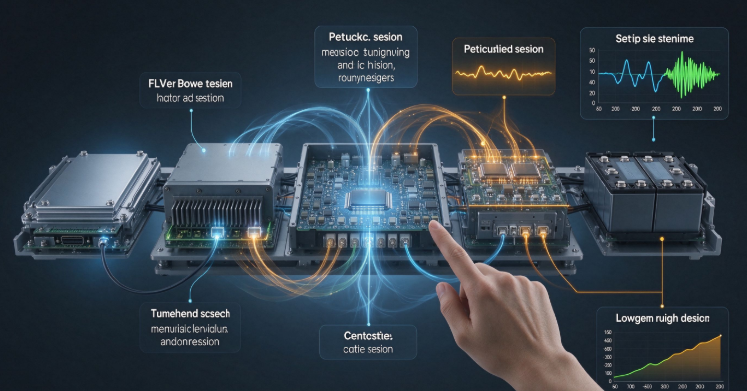
Industrial battery formation and testing equipment plays an important role in this process. These systems often contain multiple independent testing channels, power conversion circuits, measurement boards, communication modules, and temperature monitoring systems.
Multilayer ceramic capacitors (MLCCs) are widely used in the electronic circuits inside this equipment. They help with local power decoupling, noise filtering, and signal conditioning.
Choosing suitable MLCCs can help equipment designers meet the electrical requirements of different circuit sections.
1. MLCCs in Battery Formation Systems
During the formation process, newly manufactured battery cells undergo controlled charging and discharging cycles.
Formation equipment typically includes power conversion modules, control boards, voltage and current measurement circuits, and communication interfaces.
MLCCs may be used in several areas:
- Power supply decoupling for control ICs
- Filtering in DC-DC converter control circuits
- Local noise reduction near microcontrollers
- Signal conditioning in measurement circuits
The exact capacitor requirements depend on the circuit topology, operating voltage, switching frequency, and component datasheets.
For general power decoupling, X7R and X5R MLCCs are commonly considered. Engineers should evaluate their effective capacitance under actual DC bias and temperature conditions.
2. Multi-Channel Battery Charging and Discharging Circuits
Large battery testing systems may contain dozens or hundreds of independent channels.
Each channel may control a separate battery cell or module. This creates demanding requirements for stable power distribution and consistent electronic operation.
MLCCs can support these channel circuits by providing local decoupling around control ICs, gate drivers, and other electronic components.
When designing multi-channel boards, engineers should consider:
- Power supply ripple and switching noise
- Local capacitor placement
- Channel-to-channel interference
- PCB layout and grounding
- Actual operating voltage and temperature
It is important to remember that MLCCs are not a replacement for the main energy storage components in high-current charging and discharging paths. Their role should be evaluated according to the specific circuit position.
3. Voltage and Current Measurement Boards
Battery testing equipment needs to measure charging voltage, discharging voltage, and current during different operating stages.
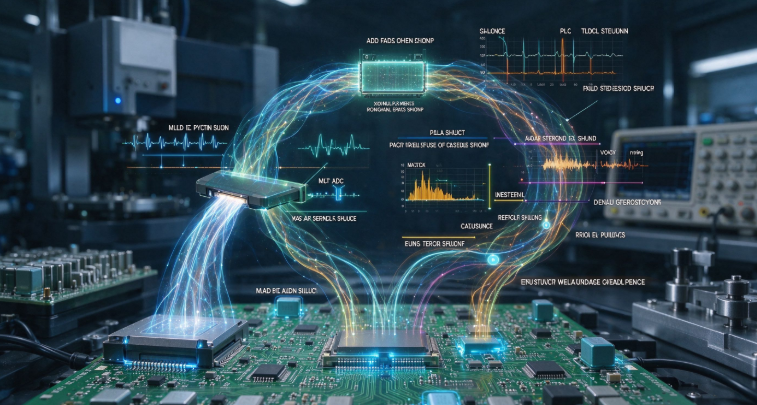
Measurement boards may include amplifiers, analog switches, ADCs, reference circuits, and signal filtering networks.
MLCCs may be used in these circuits for:
Signal filtering: Capacitors can work with resistors and amplifiers to form low-pass filters that reduce unwanted high-frequency noise.
Power decoupling: Local capacitors help support the power supply requirements of sensitive measurement ICs.
Reference circuit filtering: Some ADC reference circuits require external capacitors. The recommended component type and value should follow the IC manufacturer's design guidance.
For precision measurement paths, capacitance tolerance, temperature coefficient, and dielectric stability may be important. C0G/NP0 capacitors can be considered for certain precision filtering positions when their available capacitance and voltage ratings meet the design requirements.
4. DC-DC Converters and Power Control Modules
Battery formation equipment often uses power conversion circuits to regulate voltage and current.
These circuits may operate with switching frequencies and load conditions that change during charging and discharging.
MLCCs can be used in converter input and output filtering networks, as well as around controller ICs.
However, capacitor selection should consider more than nominal capacitance.
Important parameters include:
- Rated voltage
- Effective capacitance under DC bias
- Equivalent series resistance (ESR)
- Ripple current and temperature rise
- Package size and thermal conditions
The converter manufacturer's reference design should be reviewed before changing capacitor values or types. The complete power network must be validated under the intended operating conditions.
5. Temperature Monitoring and Control Electronics
Battery formation and testing systems often monitor temperature during charging and discharging.
Temperature sensors are connected to control boards that process measurement signals and communicate with the main system controller.
MLCCs may be used around sensor interfaces, analog front-end circuits, and power supply pins.
For circuits where capacitor stability directly affects signal filtering, engineers should pay attention to dielectric characteristics and temperature variation.
The sensor itself, circuit calibration, PCB design, and measurement software also influence the final temperature reading. An MLCC alone cannot guarantee measurement accuracy.
6. Communication Between Testing Channels
Multi-channel battery testing systems need to exchange operating data with central controllers and factory management systems.
Communication interfaces may include Ethernet, RS-485, CAN, or other industrial communication technologies.
MLCCs are commonly used in the power supply circuits of communication ICs and interface modules.
For these positions, engineers should consider:
- IC power supply recommendations
- Power rail noise
- PCB layout
- Operating temperature
- Required voltage rating and capacitance
For high-speed interfaces, signal integrity depends on the complete circuit design. MLCC selection should follow the interface IC manufacturer's recommendations rather than relying on capacitance values alone.
7. How to Select MLCCs for Battery Testing Equipment
Different circuit positions require different capacitor characteristics. Before placing a bulk order, engineers and purchasing teams should confirm the following specifications.
Capacitance: Confirm the nominal value and required tolerance according to the circuit design.
Voltage rating: Check the maximum working voltage and appropriate design margin.
Dielectric type: X7R and X5R are common options for general decoupling. C0G/NP0 may be suitable for certain precision signal circuits.
DC bias performance: Class II MLCCs may experience significant capacitance reduction under DC voltage. Check the manufacturer's DC bias curves.
Temperature characteristics: Consider the equipment's internal temperature and the operating environment.
Package size: Confirm the PCB footprint and assembly requirements.
Frequency characteristics: For switching power supplies and filtering circuits, evaluate impedance and ESR across the relevant frequency range.
A suitable MLCC should match the electrical requirements of its actual circuit position.
8. What Should Buyers Check Before Sourcing?
Industrial battery testing equipment manufacturers may purchase MLCCs in large quantities for repeated production runs.
Before sourcing components, purchasing teams should prepare a clear specification list.
Recommended information includes:
- Manufacturer and part number
- Capacitance and tolerance
- Rated voltage
- Dielectric type
- Package size
- Required quantity
- Approved alternative models, if applicable
When considering an alternative part, compare the full electrical specifications rather than only the capacitance and voltage rating.
For critical measurement and power circuits, engineering verification should be completed before introducing a substitute into mass production.
Frequently Asked Questions
Q1: Where are MLCCs used in battery formation equipment?
They may be used in power conversion boards, control circuits, measurement modules, temperature monitoring interfaces, and communication circuits.
Q2: Which dielectric type is commonly used for power decoupling?
X7R and X5R MLCCs are common choices for general power decoupling. Their effective capacitance under operating voltage and temperature should be checked.
Q3: Are C0G capacitors suitable for battery measurement circuits?
They can be suitable for certain precision filtering and signal-processing positions because of their stable capacitance characteristics. The actual value and voltage rating must match the circuit requirements.
Q4: Can MLCCs replace bulk capacitors in battery cyclers?
Not automatically. MLCCs and bulk capacitors have different electrical characteristics and circuit roles. The power network should be designed and verified as a complete system.
Q5: What information should buyers provide when sourcing MLCCs?
Provide the part number, capacitance, tolerance, voltage rating, dielectric type, package size, and target quantity. This information helps suppliers identify relevant sourcing options.
Conclusion
Industrial battery formation and testing equipment relies on multiple electronic systems working together, including power conversion, channel control, precision measurement, temperature monitoring, and industrial communication.
MLCCs support these systems through local decoupling and filtering functions. However, different circuit positions require different electrical characteristics.
By checking capacitance, voltage rating, dielectric type, DC bias performance, and package size, equipment manufacturers can make more informed component selection and sourcing decisions.
Visit Barron MLCC at //www.barronmlcc.com/ to explore MLCC product information. You can also submit your required specifications and target quantities to discuss suitable sourcing options for your battery manufacturing equipment.
EM: hyc2355937758@gmail.com
WhatsApp:8615913754866
Tel: 86+18824523083
www.barronmlcc.com
MLCCs for Smart Grid Power Quality Analyzers Supporting Accurate Signal Measurement
Related Article