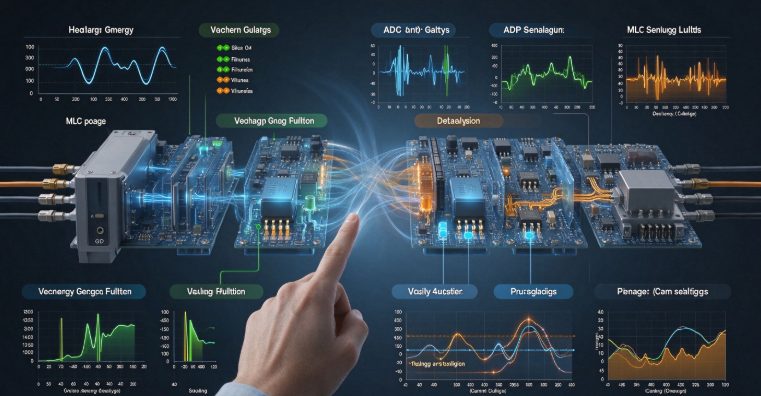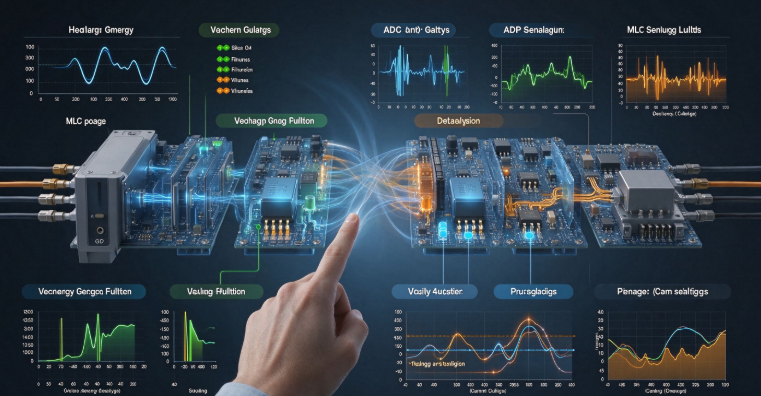
MLCCs for Smart Grid Protection Relays Supporting Accurate Monitoring and Reliable Control
MLCCs for Smart Grid Protection Relays: Supporting Accurate Monitoring and Reliable Control
Modern power grids need electronic protection systems to monitor electrical conditions and respond to abnormal operating events. Smart grid protection relays help detect problems such as overcurrent, overvoltage, underfrequency, and other electrical faults.
These devices receive electrical measurements, process signals, evaluate protection settings, and send control commands to associated equipment.
Inside a protection relay are many electronic circuits, including analog input stages, signal conditioning circuits, microcontrollers, communication interfaces, and power management modules.
Multilayer ceramic capacitors (MLCCs) are used in many of these circuits for power decoupling, filtering, and signal conditioning.
Choosing suitable MLCCs requires attention to electrical characteristics, measurement stability, temperature conditions, and long-term component consistency.
1. MLCCs in Current and Voltage Measurement Circuits
Protection relays need reliable electrical measurements before they can evaluate abnormal grid conditions.
Depending on the system design, current transformers (CTs) and voltage transformers (VTs) provide measurement signals to the relay's input circuits.
These signals may pass through several stages before reaching an analog-to-digital converter (ADC).
MLCCs may be used in supporting circuits for:
- Filtering unwanted high-frequency noise.
- Decoupling power supplies for measurement ICs.
- Supporting analog signal conditioning networks.
- Reducing local power supply disturbances.
The capacitor used in a measurement filter has a different function from one used for ordinary power bypassing.
For precision measurement circuits, engineers should consider capacitance tolerance, temperature coefficient, dielectric losses, and long-term stability. C0G/NP0 capacitors may be appropriate for selected precision filtering positions when their values match the circuit design.
2. Capacitors in Analog Signal Conditioning Circuits
Electrical signals from measurement transformers may require scaling, filtering, and buffering before digital conversion.
Analog front-end circuits can include operational amplifiers, differential amplifiers, filters, and protection-related input components.
MLCCs may support these circuits through carefully designed filtering and power decoupling networks.
Important design considerations include:
- Filter response: Capacitance tolerance and stability can influence the cutoff frequency of an RC filter.
- Signal bandwidth: Filtering must remove unwanted noise without affecting the electrical information required by the protection algorithm.
- Temperature variation: Changes in capacitance can affect the response of precision analog circuits.
- PCB layout: Grounding, routing, and component placement influence noise coupling and measurement quality.
Engineers should calculate filter values based on the complete circuit and verify performance under realistic operating conditions.
3. MLCCs for ADC and Digital Signal Processing Boards
After analog signals are conditioned, ADCs convert them into digital data for further processing.
Modern protection relays may use microcontrollers, digital signal processors, or FPGAs to evaluate electrical measurements and execute protection logic.
These ICs can have different power supply requirements.
MLCCs are commonly placed near IC power pins to provide local high-frequency decoupling.
Typical applications include:
- ADC analog supply decoupling.
- Digital processor power bypassing.
- FPGA power rail filtering.
- Clock circuit power supply decoupling.
- Local filtering around memory and interface ICs.
For these applications, engineers should check the IC manufacturer's recommended capacitor values and PCB layout.
X7R MLCCs are often considered for general-purpose decoupling, while the required effective capacitance must be verified at the actual DC operating voltage.
4. MLCCs in Protection Relay Power Supplies
Protection relays may use internal power conversion circuits to generate several low-voltage rails for processors, measurement circuits, displays, and communication modules.
These power supplies can experience switching noise and changing load conditions.
MLCCs may be used at the input and output of DC-DC converters when their electrical characteristics are compatible with the regulator design.
Selection factors include:
- Rated voltage and operating voltage margin.
- Effective capacitance under DC bias.
- ESR and ESL.
- Temperature range.
- Ripple current and circuit-specific stress conditions.
- Regulator stability requirements.
Not every MLCC is suitable for every switching regulator. Engineers should follow the regulator manufacturer's recommendations, including capacitance, ESR, and layout requirements.
5. Capacitors in Trip Command and Control Interface Circuits
When a protection relay identifies a fault condition, it may send a control command to an associated circuit breaker or other switching equipment.
The output interface can include isolation components, driver circuits, relay contacts, and control electronics.
MLCCs may support the low-voltage electronic sections through power decoupling and suitable filtering.
However, the switching and inductive-load portions of the circuit require their own protection and suppression design. An ordinary MLCC should not be treated as a direct replacement for a properly selected surge suppressor, snubber, or other transient protection component.
Engineers must evaluate voltage transients, isolation requirements, switching conditions, and the applicable system design specifications.
6. Temperature and Long-Term Stability Considerations
Protection relays may operate continuously in substations, industrial electrical rooms, outdoor cabinets, and other environments with changing temperatures.
Component selection should account for both the operating environment and the electrical function of each capacitor.
| Selection Factor | Engineering Consideration |
|---|---|
| Dielectric | Match C0G/NP0, X7R, or another suitable type to the circuit |
| Capacitance | Verify the value required by the actual circuit |
| DC Bias | Check effective capacitance at operating voltage |
| Temperature | Confirm the specified operating temperature range |
| Tolerance | Consider its effect on analog filter and timing circuits |
| Voltage Rating | Apply an appropriate design margin |
| Mechanical Reliability | Consider PCB bending and assembly stress |
For precision analog filters, stable capacitance may be especially important. For digital power decoupling, effective capacitance and high-frequency impedance may be more relevant.
A single capacitor specification should not be applied to every circuit section.
7. What Buyers Should Check When Sourcing MLCCs
Protection relay manufacturers often need consistent components for production batches, maintenance programs, and long product lifecycles.
Before purchasing MLCCs, buyers should confirm:
- Manufacturer and complete part number.
- Nominal capacitance and tolerance.
- Rated voltage and dielectric type.
- Package size and termination.
- Operating temperature range.
- Datasheet and relevant technical documentation.
- Lot identification and traceability requirements.
- Whether any proposed alternative has been reviewed and approved by engineering.
If an alternative MLCC is being considered, matching capacitance and voltage alone is not enough. Engineers should also compare dielectric characteristics, effective capacitance, package dimensions, and electrical performance.
For protection-related equipment, all component changes must follow the product's engineering verification and qualification process. An MLCC does not independently guarantee the accuracy or safety of a protection relay.
Frequently Asked Questions
Q1: Where are MLCCs used in smart grid protection relays?
They may be used in measurement circuits, analog signal conditioning, ADC power supplies, digital processing boards, communication interfaces, and low-voltage control electronics.
Q2: Which dielectric is suitable for protection relay circuits?
C0G/NP0 may be suitable for selected precision filtering circuits. X7R is commonly considered for general power decoupling. The final choice depends on the circuit requirements.
Q3: Why is capacitance stability important in measurement circuits?
Capacitance variation can change filter characteristics and affect the response of analog circuits. Engineers should select components based on the required measurement bandwidth and stability.
Q4: Can MLCCs directly protect circuit breakers from switching surges?
No. MLCCs may support electronic control circuits, but switching surge protection requires a properly designed protection network and components selected for the actual transient conditions.
Q5: What information should buyers provide when sourcing MLCCs for protection relays?
Buyers should provide the complete part number, capacitance, voltage, tolerance, dielectric, package size, required quantity, and any documentation or traceability requirements.


Conclusion
Smart grid protection relays depend on electronic circuits to measure electrical conditions, process signals, and communicate control commands.
MLCCs support these systems through power decoupling, signal filtering, and local bypassing. Their selection should reflect the different requirements of measurement circuits, digital processing boards, and power supply sections.
For manufacturers and purchasing teams, accurate specifications and consistent component sourcing are important parts of developing reliable power system electronics.
Visit Barron MLCC at https://www.barronmlcc.com/ to explore MLCC product information. You can also submit your required specifications and target quantities to discuss suitable sourcing options for your project.
Request free MLCC samples or download our MLCC selection whitepaper for your smart grid protection relay design.
Email: hyc2355937758@gmail.com
WhatsApp:8615913754866
Tel: 86+18824523083
Website: www.barronmlcc.com
MLCCs for Railway Passenger Information Systems Supporting Clear Displays and Reliable Communication
MLCCs for Medical Ultrasound Equipment Supporting Signal Quality and Stable Imaging Electronics
Related Article