MLCCs for Wind Turbine Control Systems Supporting Power Conversion and Reliable Operation
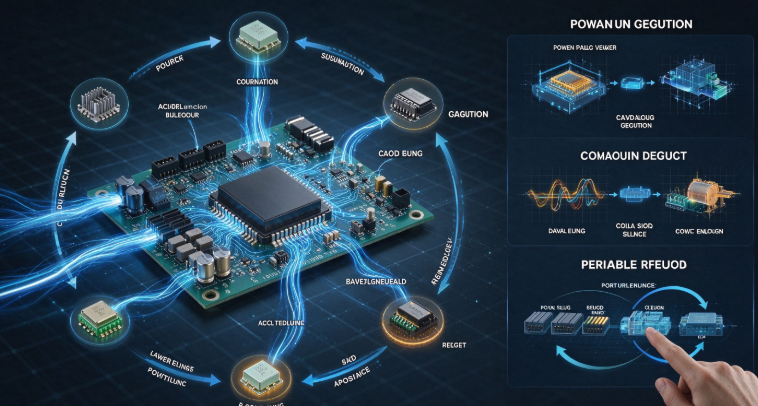
MLCCs for Wind Turbine Control Systems: Supporting Power Conversion and Reliable Operation
Wind turbines convert wind energy into electrical power through coordinated mechanical and electronic systems. Modern turbines use sophisticated controllers to manage rotor speed, blade angles, generator operation, and power delivery.
These systems operate in demanding environments. Temperature changes, vibration, electrical switching, and outdoor exposure can all influence electronic equipment.
Multilayer Ceramic Capacitors (MLCCs) are widely used in wind turbine control electronics. They support local power decoupling, high-frequency filtering, and signal conditioning across different circuit boards.
For wind turbine manufacturers and component procurement teams, understanding these applications can help improve MLCC selection and sourcing decisions.
1. Converter Control and Power Electronics
Wind turbines commonly use power converters to manage the electrical output of the generator and connect the generated power to the grid.
Depending on the turbine architecture, converter systems may include rectifiers, DC links, inverters, gate drivers, and digital control boards.
MLCCs may be used in these systems for:
- Local decoupling around converter control ICs.
- High-frequency filtering on low-voltage supply rails.
- Power stabilization for gate-driver electronics.
- Noise filtering in voltage and current feedback circuits.
MLCCs can provide high-frequency filtering, but they do not automatically replace bulk DC-link capacitors. Film and electrolytic capacitors may be required for energy storage and ripple-current demands, depending on the converter design.
2. Blade Pitch Control Systems
Pitch control adjusts the angle of turbine blades to regulate rotor speed and optimize energy capture under changing wind conditions.
The pitch system may use electric or hydraulic actuators, motor drivers, position sensors, and local controllers.
MLCCs may support the electronic control circuits through:
- Decoupling motor-driver ICs.
- Filtering low-voltage control power.
- Stabilizing microcontroller supply rails.
- Supporting sensor interface electronics.
Pitch control systems can experience electrical disturbances from actuator operation and switching devices. Engineers should consider the motor-driver topology, operating voltage, and required transient protection when designing the complete circuit.
3. Yaw Control and Wind Direction Monitoring
The yaw system rotates the nacelle to align the turbine with the wind direction. It may include motors, gear systems, wind direction sensors, encoders, and control electronics.
MLCCs can be used in the associated electronics for local decoupling and filtering.
Typical applications include:
- Power filtering for wind direction sensor interfaces.
- Decoupling of yaw motor controller ICs.
- Noise filtering around encoder interfaces.
- Power stabilization for local control boards.
Sensor circuits may require careful filtering to avoid unwanted electrical noise while preserving the response speed of the measurement system.
4. Generator Monitoring and Electrical Feedback
Wind turbine controllers monitor generator operating conditions to support power regulation and system protection.
Depending on the design, measurement circuits may monitor voltage, current, rotational speed, and other operating parameters.
MLCCs may be used in:
- Analog front-end power decoupling.
- Voltage and current sensing interfaces.
- Signal conditioning circuits.
- Microcontroller and digital processor supply networks.
For precision analog circuits, C0G/NP0 capacitors may be considered where stable capacitance is important. X7R and X5R are common options for general-purpose decoupling.
The complete measurement circuit determines the required capacitance and filtering characteristics.
5. Vibration and Condition Monitoring
Wind turbines operate under changing mechanical loads and environmental conditions. Condition-monitoring systems may use accelerometers, vibration sensors, temperature sensors, and other monitoring devices.
These sensors help collect data for maintenance analysis and equipment monitoring.
MLCCs may support these systems by:
- Decoupling sensor interface ICs.
- Filtering power supply noise.
- Stabilizing analog front-end circuits.
- Supporting signal conditioning around data acquisition electronics.
For vibration measurement, engineers should pay attention to signal bandwidth and response time. An unsuitable filtering network may remove useful signal information.
6. Communication and Remote Monitoring
Wind turbines often communicate with supervisory control systems and remote monitoring platforms. Communication networks allow operators to review operating conditions, receive alarms, and manage turbine performance.
Communication electronics may include Ethernet interfaces, industrial communication modules, processors, and isolated interfaces.
MLCCs are commonly used around these devices for:
- Local IC decoupling.
- High-frequency supply filtering.
- Noise management in digital circuits.
- Power stabilization for communication modules.
The capacitor configuration should follow the communication IC manufacturer's reference design, especially for high-speed interfaces.
7. How to Select MLCCs for Wind Turbine Control Systems
Wind turbine electronics may operate in environments involving vibration, temperature changes, electrical noise, and long maintenance intervals.
Engineers should consider the following specifications when selecting MLCCs.
Capacitance and Tolerance: Select values according to the requirements of the control, measurement, or filtering circuit.
Rated Voltage: Consider actual operating voltage and expected transients. Apply appropriate voltage derating based on manufacturer guidance.
Dielectric Material: X7R and X5R are commonly considered for general-purpose decoupling. C0G/NP0 may be suitable for circuits requiring more stable capacitance.
DC Bias Characteristics: Class II MLCCs can lose effective capacitance under DC voltage. Check manufacturer DC bias curves.
Temperature Range: Consider the temperature conditions inside the nacelle, control cabinets, and outdoor equipment enclosures.
Package Size: Common case sizes such as 0603, 0805, 1206, and larger packages may be considered according to board space and electrical requirements.
Mechanical Reliability: Vibration, thermal cycling, and PCB bending should be considered. Flexible or soft-termination MLCCs may be evaluated where mechanical stress is a concern.
Environmental Requirements: Review humidity exposure, enclosure protection, and the actual operating environment of the control board.
8. What Procurement Teams Should Check Before Ordering
For wind turbine manufacturers, component consistency and traceability are important, especially when control boards are used across multiple turbine models.
Before requesting a quotation, buyers should prepare:
- Manufacturer part number or approved specification.
- Capacitance and tolerance.
- Rated voltage.
- Dielectric material.
- Package size.
- Operating temperature range.
- Required quantity.
- Acceptable alternative manufacturers.
- Any special reliability or qualification requirements.
When evaluating alternative components, compare the complete datasheets. Differences in DC bias, temperature performance, package dimensions, and termination structure may affect application suitability.
Engineering approval should be obtained before replacing components in important control or monitoring circuits.
Frequently Asked Questions
Q1: Where are MLCCs used in wind turbine control systems?
They may be used in converter control boards, pitch and yaw controllers, generator monitoring circuits, vibration sensor interfaces, and communication electronics.
Q2: Can MLCCs be used in wind turbine power converters?
Yes. They may be used for high-frequency decoupling and filtering in converter control and switching circuits. Other capacitor technologies may still be required for bulk energy storage.
Q3: Which MLCC dielectric is commonly used in turbine control boards?
X7R and X5R are common options for general decoupling. C0G/NP0 may be suitable for precision measurement or timing circuits.
Q4: Why is mechanical reliability important for wind turbine MLCCs?
Wind turbines experience vibration and changing mechanical loads. PCB stress and component mounting conditions can influence ceramic capacitor reliability.
Q5: What should buyers provide when sourcing MLCCs for wind turbines?
Useful information includes capacitance, voltage rating, tolerance, dielectric, package size, temperature range, manufacturer part number, required quantity, and any application-specific qualification requirements.
Conclusion
Wind turbine control systems combine power conversion, blade pitch adjustment, yaw control, generator monitoring, vibration sensing, and remote communication. MLCCs support these electronic systems through local decoupling and filtering.
Selecting suitable components requires attention to voltage rating, capacitance, dielectric characteristics, DC bias, temperature performance, and mechanical stress.
Get MLCC Samples & Quotation For Your Project
Visit www.barronmlcc.com to explore MLCC product information. If you are sourcing capacitors for wind turbine control electronics, submit your required specifications and target quantities to inquire about suitable sourcing options.
Email: hyc2355937758@gmail.com
WhatsApp:8615913754866
Tel: 86+18824523083
Website: www.barronmlcc.com
MLCCs for Railway Signaling Systems Supporting Reliable Detection and Signal Control
MLCCs for Battery Energy Storage Systems Supporting BMS Power Conversion and Reliable Monitoring
Related Article