When Domestic Substitution Becomes Mere Wordplay Whose Trust Are We Burning
Introduction: Why a Perfect‑Parameter BOM Cannot Rescue a Collapsed Production Line?
Within today’s industrial manufacturing sector, “domestic substitution” and “supply‑chain independence” have become the most resonant themes of our era. At industry summits, grand narratives about breaking bottleneck technologies and ending overseas monopolies draw thunderous applause from the audience.
Behind the applause on the showroom floor, however, workshops often face an awkward reality.
The procurement department of a well‑known industrial control enterprise intended to follow strategic guidance while lowering BOM costs. They comprehensively replaced batches of core imported passive components and discrete devices on circuit boards with certain domestic alternatives boasting “identical specifications at nearly half the price”.
Initial sample testing went smoothly, and lab paper‑based performance even outperformed original‑component data. The project team celebrated, believing they had fulfilled strategic goals while cutting substantial expenditure.
Yet disaster struck once large batches of these so‑called “domestic‑hero” devices were deployed to outdoor communication base stations and new‑energy charging piles nationwide. After heavy rainfall cycles of temperature fluctuation and power‑grid surge shocks, mass intermittent system freezes and module burn‑outs occurred. Customer complaints poured in. Technical teams traveled nationwide carrying toolkits for urgent on‑site repairs.
Staring at badly burned circuit boards, the chief engineer lamented: “We support local domestic suppliers, but some of these supposed alternatives merely copy datasheet parameters. They are half‑finished disasters wrapped in wordplay.”
I. Tearing Down Three Facades of Shoddy Substitution
Why do many cost‑driven alternative components collapse under real‑world operating conditions? Today’s electronic‑component market is flooded with three types of deceptive wordplay that are extremely hard to detect.
Paper‑Only Performance on Datasheets
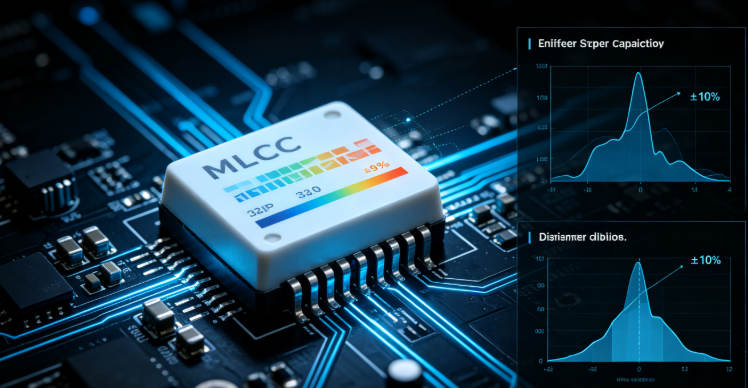
An original datasheet specifies 50V rated voltage and 10μF capacitance, and copycat alternatives replicate these exact figures. What they omit: under actual DC bias or transient high‑voltage surges, effective capacitance may drop sharply, leaving components extremely vulnerable.
Corner‑Cutting Manufacturing Processes
Crystal wafer purity, dielectric powder formulation, encapsulation resin thermal rating, terminal plating thickness — these life‑defining hidden indicators never appear on datasheets. Low‑cost manufacturers cut corners on these invisible attributes, shifting all hidden risks downstream to end users.
Treating Lab Prototype Qualification as Mass‑Production Certification
< substitute may pass testing inside constant‑temperature laboratory environments. Once scaled for industrial mass production, batch consistency, thermal‑shock resistance and failure rates spiral out of control. Procuring such parts equals blind‑box gambling for your production floor, not genuine supply‑chain substitution.Genuine substitution is never achieved by rewriting PPT parameters or engaging in price‑war competition. It demands fundamental material R&D, continuous process iteration and rigorous real‑condition validation.
II. How To Avoid Pitfalls: Select Reliable Partners With True Core Competence
Amid the sweeping supply‑chain reconstruction movement, forward‑thinking enterprises have reached a clear conclusion: supporting local suppliers and pursuing cost efficiency must never come at the expense of quality bottom lines.
To enable steady digital transformation and supply‑chain upgrading, enterprises must identify robust component partners proven by long‑term exposure to harsh real‑world operating conditions.
Reject Concept‑Driven Hype; Rely On Real Measured Data
When evaluating alternative components, never trust datasheet figures and attractive quotations alone. Subject samples to strict boundary testing including extreme temperature cycling, high‑current surges and mechanical vibration simulating real‑site working conditions.
Source From Manufacturers With Deep In‑House Production & Packaging Expertise
Trusted component suppliers implement strict industrial‑grade standards and comprehensive outgoing inspection workflows including X‑ray inspection and full electrical performance testing. Only excellent batch‑to‑batch consistency of every basic component can stabilize production yield for your modern manufacturing lines.
Build Brand Moat Through Accumulated Technical Know‑How
Choose suppliers who deliver high‑quality hardware plus professional component selection consultation and risk assessment support starting from schematic‑design phases. Let specialists handle specialized work, and make every component substitution an actual upgrade for your end‑product performance.
III. Safeguard Trust, Make Every Delivery Count
The most valuable currency in business is trust earned from customers.
Do not allow superficial marketing wordplay and low‑cost traps to erode your hard‑won brand reputation. Choose thoroughly validated components featuring stable batch performance proven under harsh operating environments. Deliver every product with full confidence and integrity.
Need Reliable MLCC & Passive Component Solutions?
Get professional technical support, sample evaluation and BOM substitution risk assessment from Barron MLCC engineering team.
Uncovering the Boiled Frog Trap in Hardware Industry How Hidden Costs Are Slowly Eroding Your Profits
From Fire Fighters to Behind the Scenes Winners Why Executives Must Prioritize Risk Mitigation at the RD Stage
Related Article